


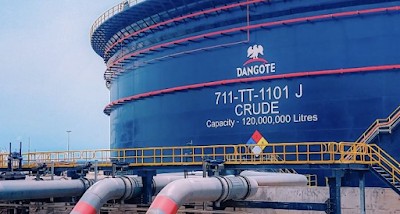





A growing number of Nigerians acknowledge the stabilising role of local refining in cushioning the country from deeper supply shocks
#GlobalOilPrice Debate: Nigerians Applaud Dangote Refinery’s Role in Easing Local PMS Supply Pressure
The conversation around petrol pricing in Nigeria continues to generate mixed reactions across social media, with citizens debating the implications of global oil market realities on domestic fuel costs.
While concerns remain about rising pump prices, a growing number of commentators acknowledge the stabilizing role of local refining in cushioning the country from deeper supply shocks.
Many energy observers note that Nigeria’s fuel pricing environment is increasingly shaped by international crude oil benchmarks, geopolitical tensions, and global supply constraints.
In recent weeks, discussions have intensified following adjustments in pump prices, prompting public reflection on the benefits of domestic refining capacity versus the risks of complete import dependence.
One social media commentator, O.L.Oì.Y.EÌ (@stilldey4u), captured the tone of the debate in a widely circulated post, noting that although prices are rising, supply appears more stable, queues have reduced, and Nigeria may still be better positioned than during periods of heavy reliance on imported petroleum products.
The post referenced commentary by Ayodele Adio, noting that while Nigerians are paying more for petrol, the country may be avoiding a worse outcome that could have resulted from global shortages and supply disruptions.
Across platforms, several users expressed the view that the Dangote Refinery has strengthened Nigeria’s energy resilience and reduced vulnerability to external shocks, although a minority continue to question pricing outcomes.
According to ndukwemeruwa (@ndukwemeruwa), “Thank God for Dangote refinery,” suggesting appreciation for the refinery’s role in maintaining supply stability.
Free Business (@Frezelee) noted that recent global tensions have shown why energy independence is critical, adding that Africa benefits from having refining capacity on the continent.
African_Brother (@Busaka_Mwoke) described the refinery as a strategic continental asset, stating that Africa now has the capacity to meet more of its own petroleum needs.
Manjul Vic (@VictorManjul) observed that without the refinery’s operations, Nigeria could still be heavily exposed to imported fuel prices at even higher levels.
Gift Essien (@OfficialKhartel) stated that the presence of the refinery has helped prevent Nigerians from paying significantly higher pump prices than currently experienced.
JustCruise (@Akpregal) attributed improved fuel availability to what he described as the “Dangote effect,” linking local refining to reduced dependence on imports.
X Griot (@Tamzi006) described the development of refining capacity as a move toward energy sovereignty, emphasizing the importance of domestic processing of crude oil.
Princeish (@princewisdom93) suggested that many critics underestimate the complexity of global pricing structures, adding that crude oil prices influence local fuel costs regardless of refining location.
Abubakar M Kareto (@amkar_) noted that refined petroleum prices remain influenced by global crude benchmarks, adding that market realities must be considered in evaluating pump prices.
Olayinka (@ThePlantain) pointed out that crude oil prices have increased globally, stating that refiners sourcing crude at international rates are affected by the same market conditions.
ZEFGO GADGETS (@Zeeg__) stated that global market price increases inevitably affect domestic petroleum pricing outcomes.
Akin Damilare (@4kinSquare) acknowledged that market forces are increasingly determining pump prices within a deregulated environment.
Chydmma (@delish_farms) noted that market realities continue to shape pricing outcomes across the value chain.
BOSA (@ObasaSanmi) explained that crude oil operates within an international pricing framework, meaning domestic refining does not fully insulate consumers from global volatility.
Kzy (@adekzy) observed that the refinery is likely to play a stronger role in stabilizing supply during periods of global uncertainty.
Korobochka (@cirnosad) referenced global supply disruptions, noting that geopolitical developments often influence crude availability and pricing.
Big_Wale (@Olawale_ynwa) suggested that recent developments highlight the importance of strengthening domestic refining capacity.
Ayo Fakurade (@deygee) expressed optimism that continued investment in refining will strengthen Nigeria’s long-term energy outlook.
However, some social media users expressed concern about rising pump prices and their impact on household costs.
According to Nafisah Sambo (@One_Sexy_Missus), questions remain about whether the refinery should translate more quickly into lower fuel prices for consumers.
Analyst (@Analysts_) expressed frustration over recent price increases, reflecting broader public sensitivity to cost of living pressures.
Zikky1 (@Zicky001) questioned market competition dynamics, highlighting the need for continued public education on how global pricing systems operate.
Industry analysts say the ongoing discourse reflects a broader transition within Nigeria’s petroleum sector, as the country adjusts to a deregulated market environment influenced by global crude pricing dynamics.
They note that while price sensitivity remains high among consumers, the expansion of domestic refining capacity is widely considered a critical factor in strengthening long-term energy stability and reducing exposure to supply disruptions.
Observers maintain that sustained public communication on how global oil pricing works, as well as the role of local refining in stabilizing supply, will remain important in shaping public understanding as market conditions evolve. Read More