

The Independent National Electoral Commission (INEC) has issued a strong warning to broadcast media organisations, stressing their pivotal role in protecting Nigeria’s democracy as the country prepares for the 2027 general elections.
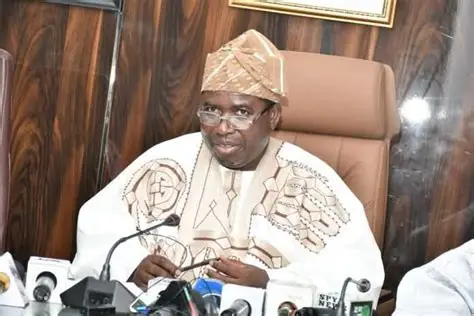
Speaking at the 81st General Assembly of the Broadcasting Organisations of Nigeria (BON) in Abuja on Wednesday, INEC Chairman, Prof. Joash Amupitan, called on broadcasters to uphold the highest standards of fairness, professionalism, and accuracy in political coverage.
Amupitan described the media as the backbone of democratic expression, cautioning that how the airwaves are managed under the Electoral Act 2026 will significantly influence public trust and electoral credibility.
“Your airwaves have become the primary infrastructure of our democracy,” he said. “If they are clear, the nation sees the truth; if clouded by misinformation, the sovereign will of the people is threatened.”
Highlighting key provisions of the Electoral Act 2026, the INEC boss reiterated that all political parties and candidates must be granted equal access to media platforms. He also warned against the misuse of state-owned media for partisan advantage.
According to him, the law clearly stipulates that state resources, including media outlets, must not be used to favour or disadvantage any political actor. He further noted that broadcast time must be evenly allocated to parties at comparable hours.
Amupitan also cautioned media organisations against airing inflammatory content, stressing that political messaging must not include language capable of inciting ethnic, religious, or sectional tensions.
The commission reminded broadcasters of restrictions on campaign publicity close to election day, noting that any form of political broadcast or advertisement within 24 hours before or on polling day constitutes an offence.
Despite acknowledging improvements introduced by the Electoral Act 2026, Amupitan raised concerns over enforcement challenges, regulatory overlaps, and the growing influence of digital platforms, warning that these factors could weaken compliance.
To address these gaps, he proposed stronger collaboration among stakeholders, including INEC, BON, security agencies, and the judiciary, to ensure accountability and effective enforcement.
With preparations intensifying, the commission revealed that only 283 days remain until the Presidential and National Assembly elections scheduled for January 16, 2027, while governorship and state assembly elections will follow 304 days later.
Amupitan urged broadcasters to take proactive steps in combating misinformation, encouraging real-time fact-checking to prevent the spread of fake news.
“Do not wait for post-mortem analysis,” he said. “Stop falsehoods on your morning shows before they reach the afternoon news.”
He also challenged media executives to promote voter participation, warning that declining voter turnout poses a serious threat to democracy.
On ethical conduct, the INEC chairman cautioned against prioritising profit over public interest, urging broadcasters to resist the lure of lucrative political advertising at the expense of balanced reporting.
In a stark warning, Amupitan described misinformation as the most dangerous threat in the upcoming elections.
“The greatest weapon in 2027 will not be a gun, but a lie spread by a smartphone and amplified by an uncritical broadcast station,” he said.
He concluded by urging the media to preserve the integrity of Nigeria’s information space, ensuring that the airwaves serve as a platform for truth rather than a channel for chaos as political activities gather momentum.