


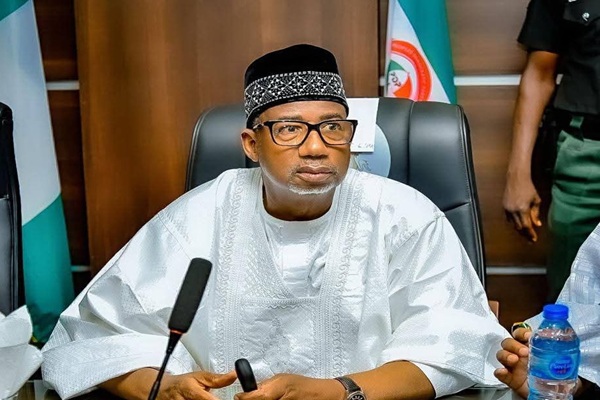
Governor Bala Mohammed of Bauchi State is navigating one of the most uncertain phases of his political career, as the crisis rocking the Peoples Democratic Party (PDP) continues to erode his base and influence.
Once a dominant figure within the party, Mohammed now appears politically stranded, with growing indications that he may soon become effectively “partyless” if urgent strategic decisions are not made.
Amid the PDP’s internal disarray, the governor has reportedly explored alternative platforms. Initial talks with the African Democratic Congress (ADC) yielded little progress due to leadership instability within the party. Attention has since shifted to the ruling All Progressives Congress (APC), though negotiations have proven difficult.
Sources suggest Mohammed approached the APC with a proposal for a 60:40 sharing formula for elective positions—an arrangement reminiscent of political bargaining styles seen in Lagos. However, the APC is said to be reluctant, insisting on retaining control of key positions, particularly as Mohammed is an outgoing governor and will not be on the ballot.
In a further bid to secure political relevance, emissaries have also been dispatched to the Peoples Redemption Party (PRP), though the party’s current structure and influence remain limited.
Observers say the governor’s next move will be critical in determining his long-term political survival, as he weighs options across multiple parties.
Meanwhile, legal and political debates continue to shape the landscape in Oyo State. Controversy surrounds a state law that restricts Ibadan high chiefs from contesting for the governorship—a provision many analysts argue contradicts the 1999 Constitution’s guarantees of freedom of association.
The case of High Chief Sharafadeen Alli has reignited the debate, with critics describing the restriction as outdated and urging its review to prevent unnecessary political limitations.
Traditional authority also plays a role, as the Olubadan of Ibadanland is widely regarded as the paramount ruler, with other titleholders operating under his hierarchy—further complicating interpretations of the law.
In another development, opposition efforts targeting electoral official Ojo Amupitan have drawn criticism from political observers. Some argue that focusing on removing the electoral umpire is misplaced, insisting that electoral success depends more on grassroots engagement than legal battles.
Questions have also been raised about the absence of seasoned politician Femi Lanlehin from Oyo’s active political scene. Despite a distinguished past that includes roles in the National Assembly and advisory positions, his current low profile has puzzled many within the state’s political circles.
Elsewhere, former APC National Chairman John Odigie-Oyegun recently sparked conversation after mistakenly chanting the APC slogan at an ADC event—a slip many attribute to lingering political affiliations as he adjusts to his new party.
As Nigeria’s political terrain gradually shifts ahead of the 2027 elections, the maneuverings of key figures like Bala Mohammed underscore the fluidity—and uncertainty—defining the nation’s evolving power dynamics.