
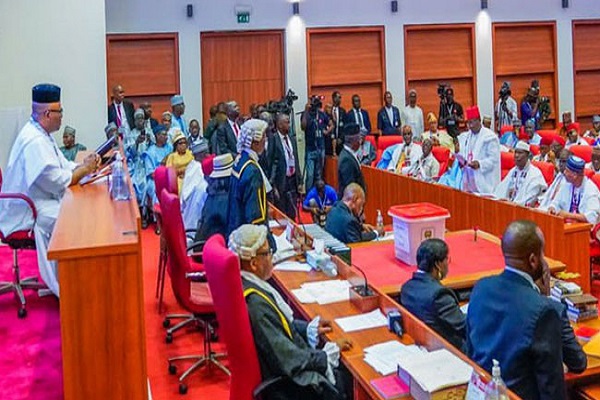





The Senate has sounded the alarm over significant lapses in Nigeria’s public health emergency preparedness following the confirmation of a fresh COVID-19 case in Cross River State.
Lawmakers in the Red Chamber called for swift and coordinated intervention to prevent a potential outbreak, highlighting longstanding weaknesses in the nation’s surveillance systems, funding structure, and rapid response capacity.
The resolution came after the adoption of a motion sponsored by Senator Ipalibo Harry Banigo (APC, Rivers West), who, during her lead debate, warned that systemic shortcomings could further strain Nigeria’s already fragile healthcare system if left unaddressed.
Banigo disclosed that the confirmed case involves a 53-year-old foreign national who entered Nigeria through Murtala Muhammed International Airport in Lagos on March 17 before traveling to Calabar the same day. The individual reportedly developed symptoms on April 12 and tested positive on April 16 following PCR confirmation at the national reference laboratory.
She raised concerns about the case timeline, noting it exceeds the typical incubation period and may indicate possible local transmission. According to her, additional suspected cases have already been identified, with contact tracing and laboratory investigations ongoing.
The senator also pointed to critical shortages of essential medical supplies—including viral transport media, PCR reagents, rapid test kits, and personal protective equipment—as major obstacles to effective outbreak response. She added that the Nigeria Centre for Disease Control (NCDC) is grappling with delayed budget releases, procurement challenges, and inadequate funding since 2025.
Banigo emphasized that Nigeria’s federal and state governments must strengthen coordination and ensure sustained financing for public health responses. Drawing from past experiences with COVID-19, Lassa fever, and Ebola preparedness efforts, she warned that delayed detection and fragmented responses could worsen the situation.
She further cautioned that existing gaps may lead to delayed containment, wider spread across states, and increased risk to frontline health workers, many of whom lack adequate protective gear. Persistent shortages, she said, could also undermine public trust and weaken the country’s epidemic intelligence system.
Following deliberations, the Senate urged the Federal Ministry of Health and Social Welfare alongside the NCDC to intensify nationwide surveillance, testing, and contact tracing efforts. It also called on the Ministries of Finance and Budget and National Planning to fast-track the release of funds and consider emergency financing options.
Additionally, the NCDC has been directed to present a comprehensive report on Nigeria’s preparedness levels, covering stockpiles, laboratory capacity, and surveillance gaps.
The Senate stressed the importance of effective public health communication to combat misinformation and ease public anxiety, while also urging state governments to boost funding, improve procurement processes, and strengthen local response systems.
Lawmakers warned that failure to urgently address funding constraints and supply chain issues could trigger avoidable public health crises, putting millions of Nigerians at risk.