


Keir Starmer has announced his resignation as UK Prime Minister and Labour leader following months of political pressure, triggering a leadership contest amid internal party unrest and electoral setbacks
Keir Starmer Resigns as UK PM After Labour Turmoil, Leadership Contest Opens
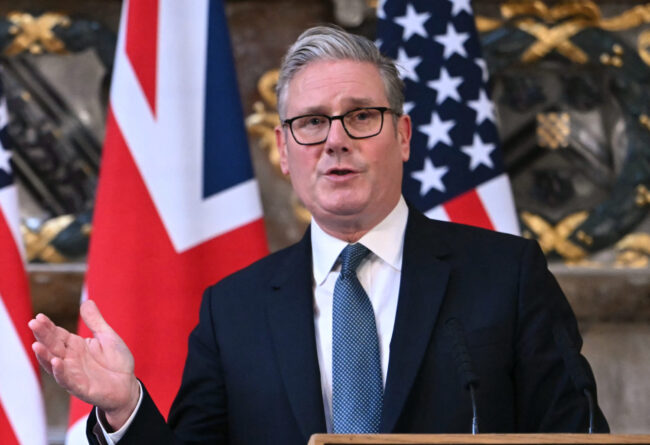
Keir Starmer has announced he will step down as leader of the Labour Party and as UK Prime Minister, bringing an end to months of escalating political pressure and setting the stage for a fiercely contested leadership race within the ruling party.
The announcement follows mounting dissatisfaction within Labour after heavy losses in May’s local elections and growing rebellion from lawmakers frustrated with his leadership style and policy direction. Despite leading Labour to one of its largest parliamentary majorities in the 2024 general election, his authority has steadily weakened amid internal divisions and declining public support.
In a statement delivered outside 10 Downing Street shortly after 9:30 a.m. in London, Keir Starmer said he would remain in office until a leadership contest concludes to ensure an orderly transition of power. He said every decision in office had been about “putting the country I love first”, while also paying tribute to his “fantastic wife, Vic”, describing her as a “rock”. He added that he hopes to be the “best dad I can to my beautiful children, who are my pride and joy”.
The political shockwave was intensified by the rapid rise of Greater Manchester Mayor Andy Burnham, who is expected to enter Parliament following a decisive by-election victory, clearing the way for an anticipated leadership challenge. Burnham, who has led Greater Manchester since 2017, warned in his victory speech that Labour had a “final chance to change”.
The UK is now set to see its seventh prime minister in just a decade, reflecting an era of unprecedented political instability. Starmer, who had insisted he would resist pressure to resign, is understood to have reconsidered his position after Burnham’s emphatic by-election win and intensifying internal opposition.
International reaction also followed the unfolding crisis. US President Donald Trump posted on his Truth Social platform that “Keir Starmer will resign”, later adding, “I wish him well”, while criticising his handling of immigration and energy policy.
Within Labour, senior figures including Foreign Secretary Yvette Cooper were reportedly among those urging him to step aside, while Business Secretary Peter Kyle said Starmer had been “making time to reflect on the political realities, challenges and opportunities that he finds himself in”.
Reports also indicated that more than 100 of Labour’s 403 MPs had called for his resignation, with internal discussions suggesting preparations for a transition had been underway. Even speculation around a carefully managed exit timeline, potentially extending into the summer and culminating at the party conference in September, had been circulating in political circles.
Starmer’s leadership, which began in July 2024, has been marked by policy reversals, scandals, ministerial resignations, and mounting dissatisfaction within the party. At one point in March, he narrowly survived an internal crisis linked to controversy over the appointment of former ambassador Peter Mandelson.
As Britain braces for another leadership contest, Starmer’s departure signals the start of a defining political battle within Labour, one that could reshape the direction of the party and the country at a moment of deep political uncertainty.