

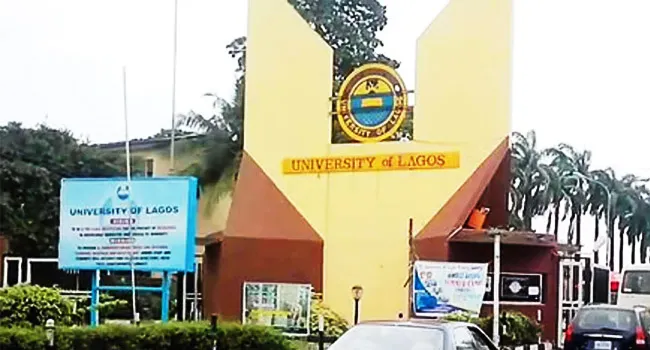




The University of Lagos (UNILAG) has commissioned a new Bioinformatics and Computational Biology Learning Hub to strengthen research, practical training and manpower development in emerging fields of biological sciences.
The facility, located at the Faculty of Life Sciences, was donated by the university’s immediate past Deputy Vice-Chancellor, Academics and Research, Prof. Bolanle Oboh.
Speaking at the commissioning ceremony, UNILAG Vice-Chancellor, Prof. Folasade Ogunsola, urged members of the university community to take the lead in developing solutions to societal challenges rather than waiting for external intervention.
Ogunsola said the establishment of the learning hub demonstrated the importance of initiating innovative projects even when their eventual outcomes might not be immediately clear.
According to her, UNILAG possesses the human resources, including academics and students, required to make meaningful contributions to solving some of the challenges confronting society.
She, however, noted that achieving the university’s broader objectives would require strategic partnerships with individuals and organisations both within Nigeria and internationally.
The vice-chancellor also appealed to members of the university community to contribute to the growth and development of the institution, stressing that contributions, regardless of their size, could have a significant impact.
Earlier, the Dean of the Faculty of Life Sciences, Prof. Ganiu Oyetibo, said the hub was established in response to the increasing role of computational analysis in contemporary biological research.
Oyetibo explained that technological advancements, particularly genome sequencing, had led to the generation of massive amounts of biological data.
He noted that sophisticated computational tools and expertise were now required to analyse and interpret such data and transform it into useful scientific knowledge.
The dean identified the shortage of professionals trained in bioinformatics and computational biology as a significant gap within Nigeria’s scientific ecosystem.
He therefore urged students and researchers to take full advantage of the new facility to enhance research, foster innovation and promote collaboration.
The donor, Prof. Oboh, also spoke about the process that culminated in the establishment of the hub and stressed the need to strengthen computational capabilities within the biological sciences.
She further highlighted the importance of collaboration and network-building, noting that strong partnerships would enable students and researchers to access the expertise, knowledge and resources required to advance their work.
The new facility is expected to provide a platform for practical learning and research while contributing to the development of skilled professionals capable of supporting Nigeria’s growing needs in bioinformatics and computational biology.