


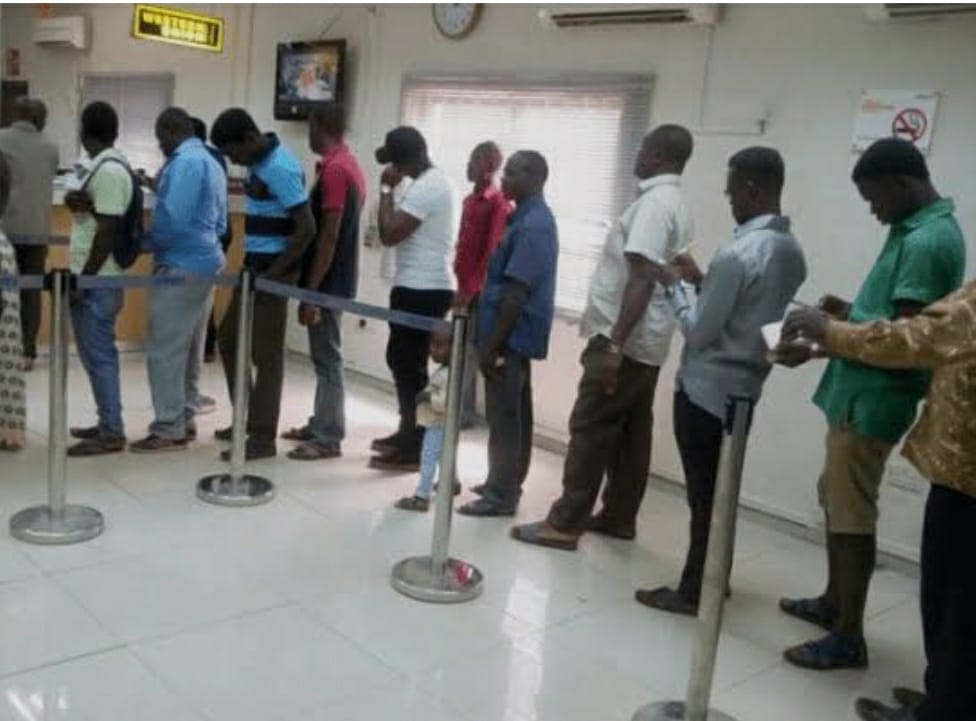




Here are five things Nigerian banks increasingly depend on to keep everyday operations running
Five Things Nigeria’s Banks Depend On For Everyday Operation
By Lukman OMIKUNLE
For millions of Nigerians, banking has become an activity that happens largely outside the walls of a bank branch. Transfers are made from phones, bills are paid online, merchants receive payments through Point-of-Sale (PoS) terminals and customers receive transaction alerts almost instantly.
Behind these everyday activities, however, is a complex infrastructure of banking platforms, payment switches, telecommunications networks, data centres and security systems that must work together.
Here are five things Nigerian banks increasingly depend on to keep everyday operations running.
Telecommunications networks and connectivity
Connectivity is one of the least visible but most important foundations of modern banking.
Banks depend on fixed and mobile networks to connect branches, ATMs, PoS terminals, customers, merchants, payment processors and other financial institutions. Mobile and internet banking, transaction alerts, authentication and many digital financial services require reliable data transmission.
The Central Bank of Nigeria (CBN) has itself recognised the importance of resilient connectivity in payments. Its requirements for PoS operators include connectivity through multiple payment channels, while NIBSS describes its payment infrastructure as dependent on ICT systems for online operations and secure information and data transmission.
The Nigerian Communications Commission (NCC) has also described communications infrastructure as a critical national lifeline underpinning banking and other essential services.
NCC Executive Vice Chairman, Aminu Maida, recently disclosed that more than 5,000 fibre-cut incidents were recorded in the first half of 2026, warning that damage to fibre infrastructure can result in stalled payments and disrupted services.
Telecom operators such as MTN therefore sit at an important layer of the financial ecosystem, providing the networks through which significant portions of Nigeria’s digital economy communicate.
Payment switches and interbank infrastructure
A bank cannot operate in isolation.
Nigeria’s banking system depends on infrastructure that allows money to move between different banks and payment platforms. NIBSS, owned by Nigerian banks and the CBN, provides critical interbank payment and settlement infrastructure.
Its Universal Switch, for instance, aggregates and interconnects PoS terminals deployed by banks and other licensed payment schemes, helping transactions move across the payments ecosystem.
The scale of this activity is significant. NIBSS data showed that PoS transactions reached N18.78 trillion in value during the first quarter of 2026, up 79.03 per cent from N10.49 trillion in the corresponding period of 2025.
… Data centres and digital banking platforms
The modern bank is also a technology company.
Core banking applications, customer accounts, transaction processing, internet banking and mobile applications depend on computing infrastructure capable of processing large volumes of transactions securely and continuously.
As more customers migrate from branches to digital channels, the resilience of these systems becomes increasingly important. The CBN has consequently continued to emphasise reliability, safety and resilience as central objectives of Nigeria’s payments system.
… PoS, ATMs and other access points
For many Nigerians, the PoS terminal is the most visible face of the banking system.
Merchants, supermarkets, filling stations, pharmacies and neighbourhood businesses increasingly rely on terminals to receive payments. ATMs similarly remain important for cash withdrawals and other services.
The CBN’s payment-system framework recognises the importance of reliable terminal infrastructure, while NIBSS says its payment-terminal aggregation system is designed to support interoperability and constant availability of PoS devices.
But a terminal is only as useful as the connection carrying its transaction.
A functioning PoS machine without a dependable communications pathway can leave a customer unable to complete a payment.
…Cybersecurity, authentication and regulatory oversight
Every digital banking transaction requires layers of protection.
Banks and payment providers use authentication, transaction monitoring, fraud controls and other security measures to protect customers and the financial system.
The CBN’s payments framework includes measures covering authentication, transaction monitoring, card and PoS controls and collaboration with agencies including the NCC and EFCC to combat electronic-payment fraud.
This increasingly means that banking resilience is not solely a banking-sector responsibility.
The stability of the wider digital infrastructure matters too. A fibre cut, network outage or disruption to another critical component can have consequences beyond telecommunications, potentially affecting payments and commerce.
That is why the NCC’s designation of telecommunications networks, base stations, fibre-optic cables, data centres and other ICT facilities as Critical National Information Infrastructure has significance for the financial sector as well.
Nigeria’s banking system may appear to operate through apps, cards, branches and PoS terminals, but underneath them is an interconnected national infrastructure.
Protecting that infrastructure, particularly the telecommunications networks that carry financial traffic, is therefore increasingly part of protecting the ability of Nigerians to bank, pay, trade and do business every day.