







By Lukman OMIKUNLE
Explore Otunba Gbenga Daniel’s Ogun State legacy, from industrial investments and infrastructure projects to initiatives completed, revived or expanded by his successors
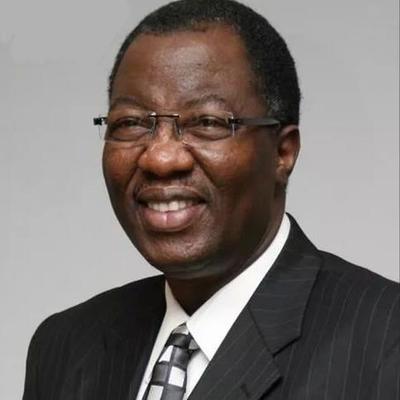
Recalling OGD’s Ogun Transformation… Projects His Successors Completed, Why His Role Must Not Be Forgotten
Ogun State’s transformation from a predominantly civil-service economy into one of Nigeria’s leading industrial destinations did not begin yesterday. Long before some of the infrastructure projects now associated with successive administrations were completed, commissioned or revived, former Governor Otunba Gbenga Daniel had laid out an ambitious development vision that helped reshape the Gateway State’s economic and investment landscape.
Daniel, who governed Ogun State from 2003 to 2011, pursued an extensive programme of infrastructure development, industrial expansion, tourism promotion, education and urban renewal. His administration sought to reposition the state as an attractive destination for manufacturers, investors, tourists and businesses seeking proximity to Lagos and access to regional markets.
More than a decade after he left office, the significance of that vision remains a subject of public discussion, particularly as projects conceived, initiated or advanced during his tenure continue to feature in the development plans and achievements announced by successive governments.
The central question is not whether subsequent administrations deserve recognition for completing projects they inherited or introducing improvements of their own. They do. Rather, it is whether the public record adequately distinguishes between the administration that conceived and initiated a project, the government that continued or modified it, and the administration that eventually completed or commissioned it.
For Daniel and the projects associated with his administration, that distinction matters.
A project does not begin on the day its ribbon is cut. Before commissioning ceremonies come feasibility studies, negotiations, land acquisition, investment agreements, master plans, funding arrangements and, in many cases, years of construction. These stages may span several administrations, but the chronology of a project’s development should not disappear simply because political leadership has changed.
Daniel’s supporters argue that a fair assessment of Ogun State’s development must acknowledge this continuity. In their view, the state’s industrial expansion and infrastructure development cannot be adequately understood without examining the policies, investments and long-term plans pursued between 2003 and 2011.
At the time, Ogun was frequently described as a civil-service state, despite its strategic location beside Lagos and its considerable industrial potential. Daniel’s administration sought to change that perception by promoting industrial corridors, attracting foreign investment, improving road infrastructure and investing in education, sports and tourism.
The ambition was to turn Ogun’s geographical advantage into an economic asset. Its proximity to Nigeria’s commercial capital, major transport routes and regional markets offered opportunities to attract factories, develop logistics facilities and create employment beyond the traditional public sector.
One of the most visible expressions of that industrial strategy was the Ogun-Guangdong Free Trade Zone in Igbesa. The initiative developed during Daniel’s administration through a partnership between the Ogun State Government and Chinese investors, with land documentation and project development dating to the period. The zone was officially commissioned in 2008, and its industrial ecosystem subsequently expanded under successive administrations.
The development of the zone illustrates why the history of major investments deserves careful documentation. Attracting foreign investors requires more than a ceremonial announcement. It involves identifying suitable locations, negotiating with prospective partners, providing an enabling regulatory framework and establishing the conditions necessary for businesses to operate.
Where an administration initiates such an arrangement and a successor expands it, both contributions form part of the project’s history. The administration responsible for the initial agreement should not be written out of the narrative simply because later governments oversee further development.
The same principle applies to Ogun’s broader industrial expansion, including the investment ecosystem that helped attract major manufacturers. The establishment of large-scale industrial facilities involves decisions by private investors as well as public-sector actions on land, infrastructure, incentives and access. Any claim about the origin of a particular investment should therefore be supported by documentary evidence, including investment agreements and official records.
The Gateway Agro-Cargo International Airport at Iperu provides another important example of the need to separate conception from execution.
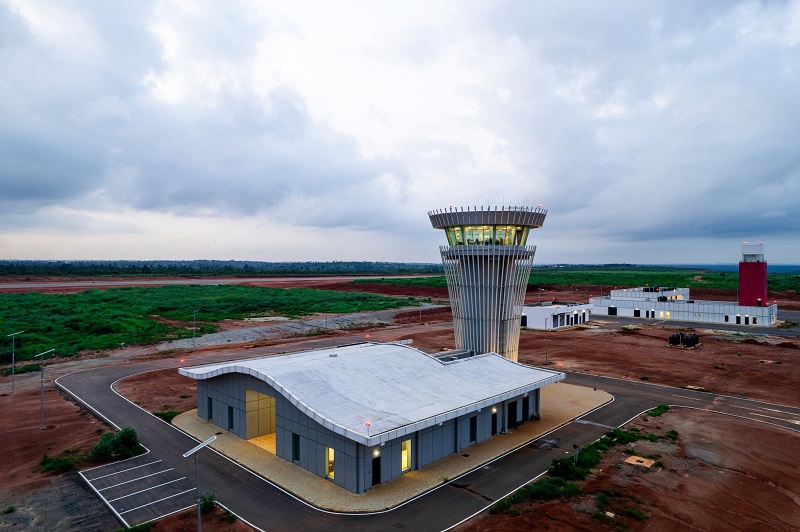
The airport’s history has been contested in public debate, with Daniel’s tenure associated with an earlier vision for the project and the administration of Governor Dapo Abiodun responsible for the construction phase that began in April 2021. The airport received its maiden test flights in February 2023, a milestone widely reported by Nigerian media.
A report by BusinessDay also described the airport as a project conceived during Daniel’s tenure, while noting that construction began under Abiodun.
These details are important because the history of a project should not be reduced to a contest over who stood at the commissioning platform. If documentary records establish that an earlier administration conceived or formally initiated a project, that contribution deserves acknowledgement. Equally, the government that subsequently provided the funding, construction work and operational facilities necessary to bring it into use deserves recognition for those achievements.
The airport’s eventual completion and test flights demonstrated the continuation of an infrastructure ambition across administrations. Its long-term economic value will depend on effective operations, connectivity, cargo handling capacity and the ability to support agriculture, manufacturing and trade.
The fairest account, therefore, is neither to attribute every aspect of the airport to one administration nor to erase the contribution of the other. It is to document each stage accurately and recognise the officials and institutions responsible for it.
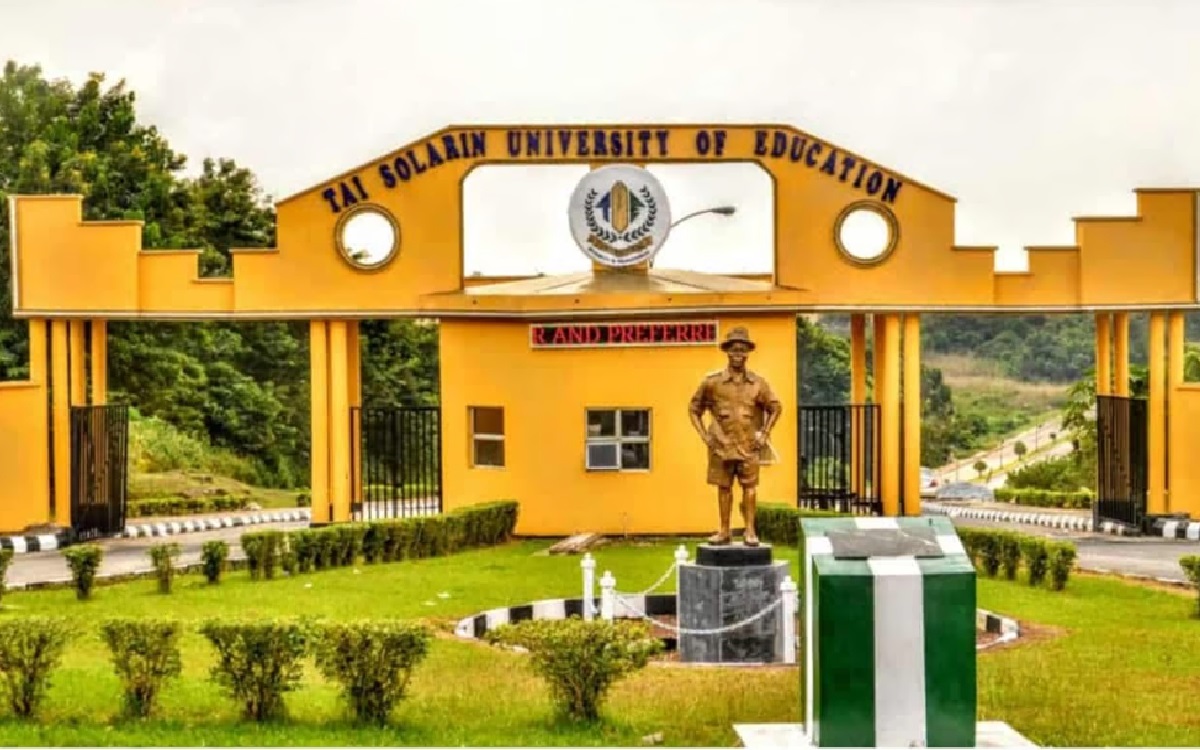
Daniel’s record also includes projects delivered during his own administration. Tai Solarin University of Education, established in 2005, became a significant component of the state’s higher education landscape. The institution reflected an effort to strengthen teacher education and expand access to specialised tertiary education within Ogun.
The New Secretariat Complex at Oke-Mosan, Abeokuta, was another major investment associated with the administration’s public infrastructure programme. Designed to accommodate government ministries and administrative functions, the complex formed part of the effort to provide a more permanent and organised centre for state administration.
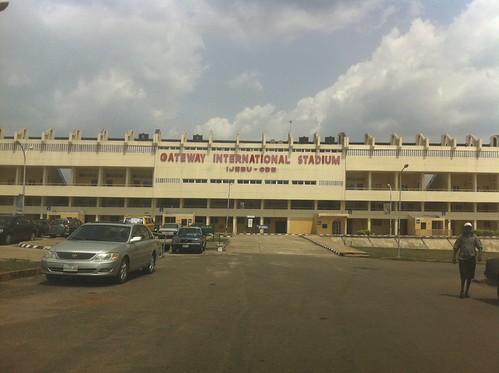
Sports infrastructure also featured prominently in Daniel’s development agenda. Stadium projects in different parts of the state, including Ijebu-Ode, Ilaro and Sagamu, were intended to improve sporting facilities and broaden access to organised sports. The Ijebu-Ode stadium later became known as Otunba Dipo Dina Stadium and hosted matches during the 2009 FIFA Under-17 World Cup.
In tourism, improvements to the Olumo Rock complex in Abeokuta sought to make the historic landmark more accessible and attractive to visitors. Such investments formed part of a wider effort to present Ogun not only as an industrial destination but also as a state with cultural and tourism assets capable of supporting economic activity.
Road infrastructure was another central element of the administration’s development programme. The Abeokuta-Kobape-Siun-Sagamu corridor was among the routes associated with efforts to improve connectivity between the state capital, surrounding communities and the Lagos-Ibadan expressway network.
Together, these projects reflected an approach that linked infrastructure, education, tourism, sports and industrial development. The objective was to improve the conditions under which people lived and worked while making the state more attractive to investors.
Yet, the most consequential test of a development plan often comes after the administration that introduced it has left office. Projects may be delayed by funding constraints, policy changes, political disagreements, contractual disputes or shifts in government priorities. Some are abandoned; others are redesigned, revived or completed years later.
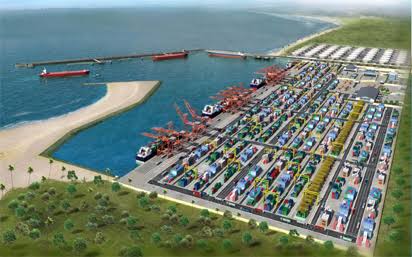
The Olokola Free Trade Zone and Deep Seaport initiative, associated with Ogun and Ondo states, illustrates the challenges that can confront large-scale economic plans. Its progress and investment prospects have been affected by the complexity of developing major maritime and industrial infrastructure. Any assessment of its present status must distinguish the original vision from subsequent decisions and the project’s actual implementation record.
The same caution applies to industrial and logistics projects, including initiatives associated with Kajola, as well as plans for technology-oriented tertiary institutions. Where original proposals have been altered, restructured or incorporated into different programmes, the public deserves a clear explanation of what was initially planned, what was eventually delivered and which administration made each decision.
This is particularly relevant as Ogun continues to market itself as a major manufacturing hub. The state’s industrial profile is the product of accumulated investments by public administrations, private companies, local communities and federal institutions. Understanding that history helps residents assess government claims and judge whether long-term plans are delivering their intended benefits.
The proposed Lee Group industrial park near Makun, close to the Sagamu Interchange, has brought this question of historical credit into renewed focus.
According to reports published in October 2026, the Ogun State Government plans to flag off the proposed 450-hectare development on Thursday, November 12, 2026. The project is expected to accommodate 29 factories and supporting commercial, hospitality, conference and recreational facilities.
The planned development is being presented as another step in Ogun’s industrial expansion. Its proposed scale and location along the Lagos-Ibadan expressway corridor could strengthen the state’s manufacturing base and create opportunities for businesses and workers if the project proceeds as planned.
However, accounts supplied by people familiar with the project’s history trace the Lee Group’s relationship with Ogun to the Daniel administration, around 2008 and 2009. According to these accounts, the group had earlier explored industrial opportunities in Kano before turning its attention to Ogun State following difficulties associated with the wider economic climate.
The same accounts identify the site near the Sagamu Interchange, historically marked as a Chinese Industrial Park, as the location associated with the earlier initiative. They further allege that disagreements involving government institutions and difficulties securing the resources needed to advance the project contributed to years of delay.
These historical claims, including the precise timeline, the nature of the funding difficulties and the role of the state legislature, require corroboration through contemporaneous agreements, land records, company statements and official correspondence. They should not be treated as established facts solely on the basis of accounts attributed to unnamed sources.
Nevertheless, the central question raised by the project’s history is legitimate: if the original investment negotiations, land arrangements or development framework were initiated during Daniel’s tenure, should those contributions be acknowledged when the project is relaunched or developed under a subsequent administration?
The answer lies in transparent documentation rather than partisan argument.
A groundbreaking ceremony in 2026 would mark a new stage in the Lee Group project, not necessarily the beginning of every relationship, negotiation or development decision associated with it. If records establish that the company was introduced to Ogun, that land was secured or that an industrial park was planned during Daniel’s administration, the historical record should say so. If the present administration has negotiated a new phase, resolved outstanding issues or secured commitments necessary to move the development forward, those contributions should equally be recorded.
Reports indicate that the House of Assembly did not allow the administration of that time to access the funds needed to carry the project through. Two arms of government fought, and the investor waited. That is not the story the public is being told today.
This distinction is essential to the larger debate about Daniel’s legacy. The argument is not that every project announced during his tenure was completed, that every investment attracted by Ogun can be attributed to one governor or that subsequent administrations contributed nothing to the state’s development. Such claims would oversimplify a process that involves several institutions and many years of work.
Rather, the case for recognising Daniel’s contribution rests on a straightforward principle: the origin of a project is part of its history, and that history should be preserved regardless of which administration eventually completes it.
When a government conceives a project, secures an investment partner, allocates land or begins the process of development, those actions should be recorded. When another administration provides additional funding, resumes construction, changes the design or commissions the finished facility, those actions should also be recognised.
Political transitions should not become occasions for rewriting the public record.
For Ogun residents, this is more than a debate over political recognition. It concerns accountability, institutional memory and the ability to evaluate development over time. A state that documents its projects accurately can better identify which policies worked, why others stalled and what future governments must do to secure lasting results.
It can also give citizens a clearer understanding of how public resources are deployed, how private investments are attracted and why some projects take years to become operational.
Daniel’s eight-year administration left behind a development agenda whose projects and investment initiatives must be assessed individually, against verifiable records of conception, funding, construction, completion and impact. Some were delivered during his tenure; others developed further under successive governments; and some have faced delays or substantial changes.
That distinction should not diminish the significance of any genuine achievement. Instead, it should make the assessment more credible.
As Ogun State prepares for another phase of industrial expansion, the history of its development deserves to be told in full. The state did not become an industrial destination overnight, and its transformation cannot be explained by the actions of a single administration alone.
But neither should the contribution of an earlier administration be overlooked simply because the benefits of its plans become visible years after it leaves office.
Where the records establish that Otunba Gbenga Daniel conceived, negotiated or initiated a project, he deserves credit for that contribution. Where his administration completed a project, that achievement should be recorded. And where his successors revived, expanded or completed an inherited initiative, their role should be acknowledged as well.
That is the standard of fairness the public should expect.
The real legacy of governance is not confined to the photographs taken at commissioning ceremonies. It also lives in the plans that survive political transitions, the investments that eventually materialise and the infrastructure that continues to serve the public long after its original architects have left office.
For Ogun State, preserving that history is not about denying credit to the present or future. It is about ensuring that the past is not forgotten.
And if the evidence confirms that the foundations of today’s industrial ambitions were laid during Daniel’s tenure, then his contribution deserves its rightful place in the story of Ogun State’s transformation.