
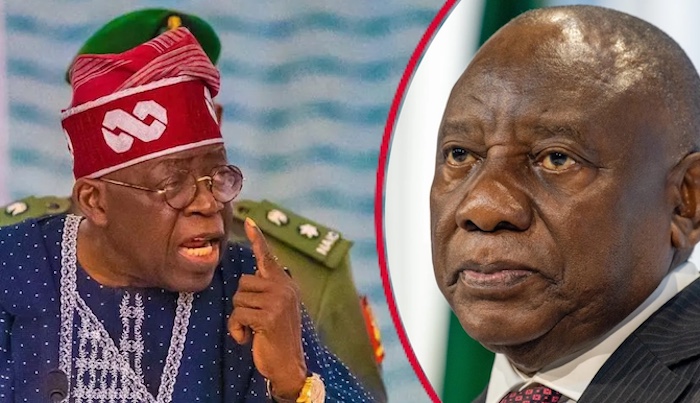




Nigeria has issued a stern warning to South Africa, saying it may activate stronger measures if the killings and attacks against Nigerian citizens continue, following the deaths of two Nigerians in separate incidents that have heightened diplomatic tensions between both countries.
The Federal Government, in a statement released on Sunday by the Ministry of Foreign Affairs, condemned what it described as a disturbing pattern of extra-judicial killings, hate speech and rising Afrophobic violence against Nigerians and other foreign nationals in South Africa.
The ministry’s spokesperson, Kimiebi Ebienfa, said Nigeria remained committed to diplomacy and African solidarity but warned that its patience should not be mistaken for weakness.
“We wish to place the Government of South Africa on notice that if the situation continues to persist, all options remain on the table, some of which will be activated if the uncultured and provocative trend of intolerance and apartheid-style behaviour of South Africa against foreigners is not addressed,” the statement read.
The latest diplomatic protest followed the deaths of two Nigerians on June 28.
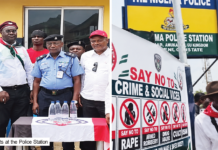
One of the victims, Emeka Iroegbu, was allegedly tortured to death by officers of the Tshwane Metro Police in Sunnyside, Pretoria, during what the ministry described as a gruesome interrogation.
According to the government, the same officers were also responsible for the alleged extra-judicial killing of another Nigerian, Nnaemeka Ekpenyong, on April 20. It said although the identities of the four officers were known to the South African Police Service (SAPS), no arrests had been made.
In a separate incident, Musa Yunana Joe, popularly known as “Big Joe,” was reportedly shot dead by unidentified gunmen outside his shop in Witbank, Mpumalanga.
The Federal Government described the killings as part of a broader pattern of violence targeting foreigners and expressed concern over the safety of Nigerians living in South Africa. It also accused some groups of portraying Nigerian migrants as criminals to justify attacks against them.
Abuja said the repeated killings, particularly those allegedly involving security personnel, raised serious concerns about South Africa’s obligations under international law.
The government also condemned comments reportedly made by a South African government spokesperson urging Nigerians leaving the country due to xenophobic protests to disclose the locations of illegal drugs before departing.
It described the remarks as inflammatory, unprofessional and capable of inciting hatred against Nigerians, warning public officials against making statements that reinforce harmful stereotypes.
Nigeria further criticised anti-immigrant groups, including March on March and Operation Dudula, accusing them of promoting xenophobic campaigns and inciting violence against fellow Africans.
The Federal Government demanded immediate investigations into the latest killings and other unresolved cases involving Nigerian victims, insisting that anyone accused of criminal offences should be prosecuted through the courts rather than subjected to mob justice or extra-judicial executions.
While assuring Nigerians residing in South Africa that diplomatic engagement with Pretoria would continue, the ministry advised them to remain vigilant, avoid violence-prone areas and relocate to safer neighbourhoods where necessary.
It also disclosed that the evacuation of registered Nigerians willing to return home is ongoing.
The government, however, appealed to Nigerians not to retaliate against South African businesses or citizens, maintaining that dialogue remained the preferred path to resolving the crisis.
Relations between Nigeria and South Africa have repeatedly come under strain over xenophobic attacks on African migrants, particularly Nigerians.
Major outbreaks of anti-foreigner violence in 2008, 2015 and 2019 claimed dozens of lives and destroyed businesses belonging to foreign nationals, prompting strong diplomatic protests from Nigeria. The 2019 attacks also led the Federal Government to boycott the World Economic Forum on Africa in Cape Town, while Air Peace evacuated hundreds of stranded Nigerians.
Although both countries later established diplomatic frameworks, including an Early Warning Mechanism and the Nigeria-South Africa Bi-National Commission, reports of harassment, extra-judicial killings and attacks against Nigerians have persisted.
Sunday’s warning signals Nigeria’s strongest diplomatic stance in recent years, raising the possibility of further measures if South African authorities fail to halt the attacks and prosecute those responsible.