
EFCC uncovers two massive fraud schemes worth ₦18.7bn, revealing how foreign criminals, local collaborators, banks and fintechs enabled scams that affected over 900,000 Nigerians
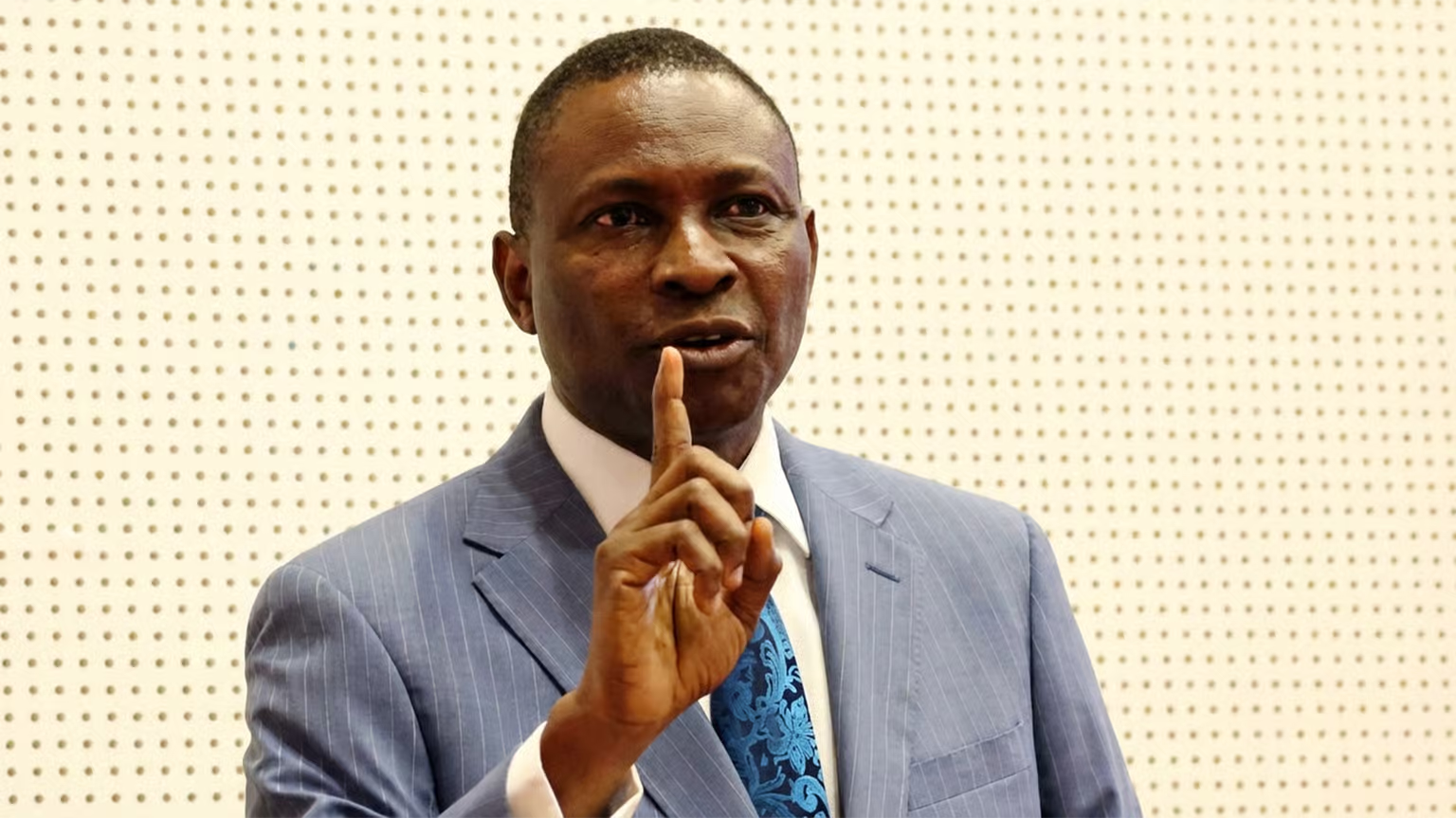
Inside EFCC’s Shocking ₦18.7bn Fraud Discovery That Drained Hundreds of Thousands of Nigerians
The Economic and Financial Crimes Commission (EFCC) has uncovered two massive and highly coordinated fraud schemes that allegedly siphoned more than ₦18.7 billion from over 900,000 Nigerians, exposing deep vulnerabilities in the country’s financial system and the growing sophistication of transnational cybercrime networks.
The revelations were made on Wednesday in Abuja by the EFCC’s Director of Public Affairs, Commander Wilson Uwujaren, during a media briefing detailing the Commission’s major breakthroughs as it consolidates anti-corruption efforts in 2026.
Uwujaren said the Commission began the year by building on critical investigations initiated in 2025, particularly those involving complex financial crimes that left thousands of victims financially devastated.
“We are consolidating on major breakthroughs recorded in 2025, especially in uncovering sophisticated fraud schemes that have caused massive losses to Nigerians,” Uwujaren said.
Fake Airline Ticket Scam Drains Victims’ Accounts
One of the fraud schemes exposed by the EFCC involved a fraudulent airline ticket discount operation that preyed on unsuspecting Nigerians, particularly those travelling abroad.
According to Uwujaren, the criminals advertised airline tickets at unusually discounted rates, using payment platforms designed to appear authentic and convincing victims that payments were being made directly into airline accounts.
“Once victims made payments, their bank accounts were completely wiped out,” he disclosed.
Although only seven victims initially reported the case, EFCC investigations later revealed that over 700 people were affected, with total losses estimated at ₦651,097,755. The Commission has so far recovered ₦33.6 million, which has been returned to some of the victims.
Uwujaren explained that the scheme was masterminded by a foreign national who recruited young Nigerians, provided them with laptops and specialised software, and used them to compromise victims’ bank accounts. Proceeds from the scam were converted into cryptocurrency and routed through digital platforms, including Bybit, to evade detection.
₦18bn Fake Investment Platform Hits 200,000 Nigerians
The EFCC spokesperson also revealed a far larger fraud involving a fake investment platform known as Fred and Farid Investment Limited, also operating as FF Investment.
Investigations showed that the syndicate allegedly defrauded more than 200,000 Nigerians, raking in a staggering ₦18,088,901,272.35 through multiple affiliated companies offering bogus investment packages to the public.
Uwujaren disclosed that the scheme was orchestrated by foreign nationals, while Nigerian collaborators handled local operations.
“Three Nigerian accomplices have been arrested and charged to court, while one of the principal suspects has also been apprehended,” he said, adding that efforts were ongoing to track down other fleeing suspects.
Banks, Fintechs Under Scrutiny
A particularly troubling aspect of the investigations, Uwujaren noted, was the alleged compromise of Nigeria’s financial system by some banks and fintech institutions.
According to him, one new-generation bank, alongside six fintech and microfinance institutions, failed to comply with basic Know Your Customer (KYC) and Customer Due Diligence (CDD) requirements, allowing fraud proceeds to flow freely through the system.
“Our investigations revealed that ₦18.74 billion linked to these fraud schemes passed through the financial system without adequate scrutiny,” Uwujaren said.
He described as “alarming” findings that showed cryptocurrency transactions worth ₦162 billion were processed through a single new-generation bank without proper due diligence. In another case, a single customer was found to be operating 960 bank accounts in one bank, all allegedly linked to fraudulent activities.
Uwujaren stressed that the EFCC would continue to work with regulators and law enforcement partners to strengthen oversight, disrupt criminal networks, and protect Nigerians from financial predators.