






By Newsheadline247
Nigeria approves a ₦45.08bn biosecurity system for five international airports to detect Ebola and other dangerous pathogens through enhanced surveillance
FG Approves ₦45.08bn Airport Biosecurity System in Nigeria
The Federal Government has approved a ₦45.08bn biosecurity and disease surveillance system for five international airports to strengthen Nigeria’s capacity to detect and contain Ebola and other dangerous pathogens entering the country.
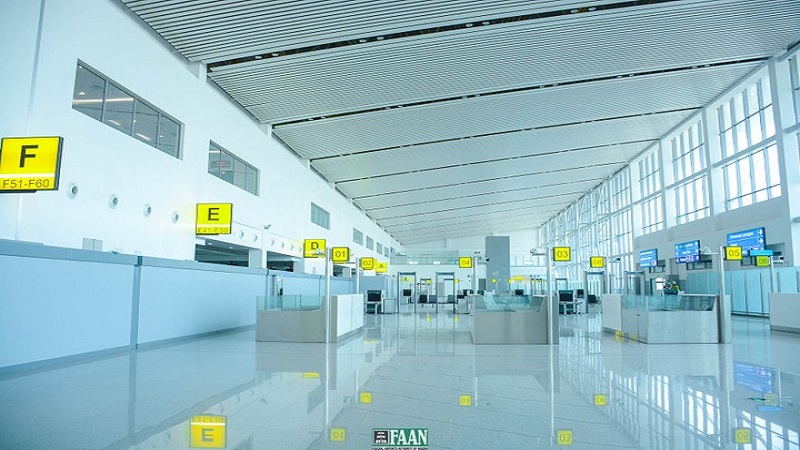
The 20-year public-private partnership project, approved by the Federal Executive Council, will cover the international airports in Lagos, Abuja, Kano, Port Harcourt and Enugu.
Coordinating Minister of Health and Social Welfare, Prof Muhammad Ali Pate, disclosed this while briefing State House correspondents after Wednesday’s FEC meeting, chaired by President Bola Tinubu.
Pate said the approval came amid heightened concerns over cross-border disease threats and efforts to prevent community transmission following the detection of an Ebola case involving a foreign national.
According to the minister, the patient recovered after receiving treatment in Nigeria and had returned to her home country, while identified contacts remained under quarantine and medical monitoring.
He said the airport biosecurity initiative, which had been in development for two years, would strengthen early warning systems, improve pathogen detection and enhance coordination among agencies responsible for protecting the country’s borders against public health threats.
Pate noted that more than 18 million passengers travel through Nigeria’s airports annually, making stronger surveillance at the country’s entry points critical to national health security.
The system will deploy aircraft wastewater surveillance, air and surface sampling equipment, and cargo and baggage bio-surveillance technologies to identify potentially dangerous pathogens that might otherwise enter the country undetected.
“This is not Ebola. It is all pathogens of huge public health threats,” Pate said.
The project will also establish a national surveillance operations centre to serve as a central command facility for real-time monitoring, data integration, incident tracking and coordinated responses to emerging health threats.
Laboratory facilities for field diagnostics will be deployed at the entry points, alongside systems designed to improve information sharing and collaboration among relevant government agencies.
Pate listed the Nigeria Centre for Disease Control, Port Health Services, Nigeria Customs Service, Nigeria Immigration Service and the National Agency for Food and Drug Administration and Control among the agencies expected to participate in the initiative.
He said the five airports were selected based on passenger traffic, exposure to biosecurity risks and geographical distribution.
Under the 20-year concession arrangement, Biohealth Consortium will design, finance, build, deploy, operate and maintain the system throughout the concession period.
The Federal Government, according to the minister, will provide policy, institutional and regulatory support, while overseeing implementation to ensure the project meets national objectives.
At the end of the concession, the system and its assets will revert to federal ownership under the agreement reviewed and endorsed by the Infrastructure Concession Regulatory Commission.
Pate said the initiative would improve decision-making, strengthen inter-agency coordination and support compliance with international health regulations while expanding the technologies available to officials operating at the country’s entry points.
Emphasising the economic implications of disease outbreaks, the minister said effective screening at airports was essential not only to public health but also to economic stability.
“Improving biosecurity at the points of entry, particularly at the airports, is so critical to our health security, not only for public health but also the economic security, because when pathogens come and disrupt, economic activities also suffer,” he said.
The minister also explained the rationale behind financial support for people quarantined after coming into contact with the Ebola patient, saying the measure was intended to encourage compliance and reduce the risk of community transmission.
He noted that people who depend on daily earnings could face financial pressure to leave quarantine to support their families, potentially exposing others if they subsequently developed the infection.
“They have a livelihood, and you ask them to stay in quarantine. They have a family,” he said.
Pate described the assistance as a targeted containment measure, stressing that it would not automatically apply in the event of widespread community transmission.
“Our goal is to contain it. We don’t want to be in a situation whereby we have community transmission,” he said.
According to the minister, contacts were identified and placed under quarantine within hours of confirmation of the case. Some initially remained in home isolation before being transferred to designated facilities for closer monitoring.
He said the contacts would remain under observation for 21 days to determine whether they had contracted the virus.
“We are not taking any chances. We may succeed, or there may be an unfortunate one or two cases that may be affected. But if that is the case, we’ll rapidly get on top of it,” he said.
Pate stated that there was no confirmed Ebola case within Nigeria at the time of the briefing, following the patient’s recovery and departure from the country.
He nevertheless warned that continued vigilance was necessary to prevent additional cases and ensure a rapid response to any infection detected among those under observation.
“We are a large country, and we don’t want to have Ebola circulating or other pathogens that may have threat to our population,” the minister said.