


By Lukman OMIKUNLE
Tinubu’s proposed $21.7bn external borrowing plan allocates $10.6bn to transport and $2.4bn to security, with 64% of the loans on commercial terms
Tinubu’s $21.7bn Loan Plan: Roads, Rail and Security Funding
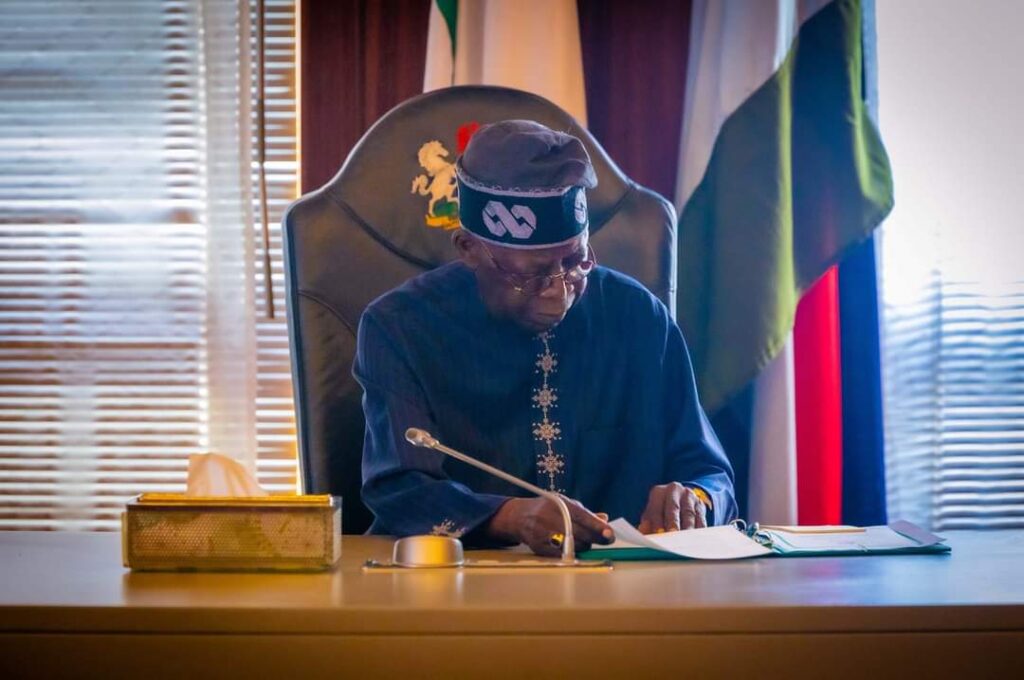
President Bola Tinubu’s proposed $21.7bn external borrowing plan for 2026 and 2027 has earmarked $10.6bn for transport infrastructure and $2.4bn for defence and security, while commercial financing is expected to account for nearly two-thirds of the package.
An analysis by the Federal Ministry of Finance, made available by the Presidency on Wednesday, shows that transport projects will receive about 49 per cent of the proposed borrowing, with funding covering major road projects, metro rail infrastructure and railway rolling stock.
The proposed facilities include the Lagos-Calabar and Sokoto-Badagry highways, as well as the Kano-Kaduna metro rail project.
The defence and security allocation will support air capabilities, a new Defence Headquarters and security systems. According to the document, the entire allocation will be financed through commercial facilities.
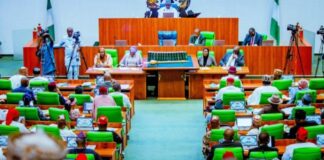
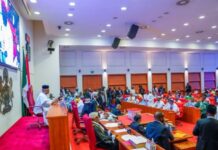
The borrowing request was submitted to the National Assembly on Tuesday for consideration, with lawmakers expected to begin considering the proposal in the coming days.
The financing breakdown shows that commercial facilities will provide about $13.8bn, representing 64 per cent of the package, across 17 projects. The ministry puts the indicative average interest rate for the facilities at 7.8 per cent.
Concessional loans account for approximately $6.2bn, or 28 per cent of the proposed borrowing, covering 27 projects at an average interest rate of 2.1 per cent. A further $1.8bn, representing eight per cent, will come through blended financing combining International Development Association and International Bank for Reconstruction and Development funding, at an average rate of 4.2 per cent.
The document lists 46 projects under the proposed borrowing plan, with 29 expected to receive concessional or blended financing and the remaining 17 relying on commercial facilities.
Agriculture, energy, social protection, climate and education projects, which collectively account for about $4bn, are to be financed entirely through concessional loans.
The ministry argued that the proposed commercial facilities compare favourably with the yields of 9.1 to 9.6 per cent on Nigeria’s November 2025 Eurobond. It also cited credit rating upgrades by Fitch and Moody’s in 2025, alongside Standard & Poor’s upgrade of Nigeria to B in May 2026, in assessing the financing terms.
However, the indicative interest rates vary considerably across the proposed facilities, ranging from 4.3 per cent to 10 per cent, according to the analysis.
Among the largest facilities, Section 5 of the Lagos-Calabar highway carries an indicative interest rate of 9.7 per cent, above the lower end of the Eurobond yields cited by the ministry.
Most of the other road facilities are priced at about 8.5 per cent, while the Kano-Kaduna metro rail and M-346 aircraft facilities carry indicative rates of 6.3 per cent.
The ministry said the rates were calculated using six-month Term SOFR of 4.21 per cent and six-month EURIBOR of 2.99 per cent as of October 27, 2026. The figures exclude fees and should therefore be treated as indicative financing costs rather than complete measures of the total cost of borrowing.
The 10 flagship facilities account for about $12.5bn, or 58 per cent of the proposed package. They include Sections 2, 3, 4 and 5 of the Lagos-Calabar highway, the Kano-Kaduna metro rail, two sections of the Sokoto-Badagry highway in Kebbi State, and a World Bank development policy financing facility.
Other major facilities cover the M-346 aircraft, the Federal Capital Territory’s Northern Parkway and the new Defence Headquarters. The World Bank is identified as the largest single financing partner, with $5bn, followed by the Islamic Development Bank with $1bn and the African Development Bank with $600m.
Eleven lender groups are involved in the proposed financing, including Agence Française de Développement, the Indian EXIM Bank, the Japan International Cooperation Agency and the ECOWAS Bank for Investment and Development.
By borrower, the Federal Government accounts for $16.7bn, representing about 77 per cent of the package. The funds are intended for programmes spanning transport, healthcare, defence and digital infrastructure.
States and the Federal Capital Territory are allocated about $3bn, or 15 per cent of the proposed borrowing, with 75 per cent of their facilities expected to be on concessional terms.
Government agencies and development finance institutions, including the Bank of Industry, Development Bank of Nigeria, Transmission Company of Nigeria, National Universities Commission and electricity distribution companies, account for another $1.45bn. Their facilities are to be financed through concessional or blended arrangements.
The proposed borrowing package places infrastructure and security at the centre of the administration’s financing plans, with major highways and rail projects accounting for the largest share of the transport allocation.
However, the scale of the proposed borrowing and the substantial reliance on commercial financing are likely to keep the cost of credit, repayment obligations and the economic returns expected from the projects in focus as the National Assembly considers the request.
The final terms, approval process and implementation of the facilities will determine how the proposed financing translates into infrastructure delivery and other public benefits.