




Governors, Council Chairmen Urged to Complement First Lady’s Renewed Hope Initiative
The Convener of the Bola Ahmed Tinubu Ideological Group, Comrade Bamidele Atoyebi, has called on state governors and local government chairmen to introduce complementary programmes that will deepen the reach of the Renewed Hope Initiative (RHI) in communities across Nigeria.
In a statement titled “Progressive Governors, LG Chairmen Should Complement First Lady’s Drive,” Atoyebi argued that state and local governments must assume greater responsibility for converting federal interventions into tangible benefits at the ward and community levels.
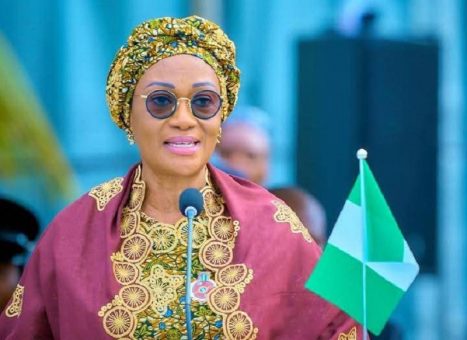
Launched in 2023 by First Lady Senator Oluremi Tinubu, the RHI has delivered programmes in agriculture, economic empowerment, social investment, health and education. These include grants, agricultural inputs, healthcare support and assistance targeted at women, persons with disabilities and elderly citizens.
Atoyebi highlighted the RHI–Tony Elumelu Foundation women empowerment scheme, which reached 18,500 women across the 36 states and the Federal Capital Territory. Each beneficiary received ₦50,000 to recapitalise an existing business. He said the scale of the intervention demonstrated both the value of federal action and the necessity for states and local governments to replicate and expand similar support.
“If women receive ₦50,000 to restart a business, what stops a state or local government from creating an additional business-support scheme?” he asked. He added that governments could further assist farmers with equipment, access roads, storage facilities and extra grants once federal programmes supply agricultural inputs.
He pointed to Imo State as a practical example, noting that the state raised the number of women beneficiaries from the 500 allocated under the federal scheme to 2,500, while providing additional assistance. He also cited the renovation and commissioning of the Alternative High School for Girls in Agboju, Lagos, in August 2026, as evidence of how state-level action can reinforce broader government programmes.
Atoyebi insisted that governors and local government chairmen should design interventions based on the specific needs of their communities rather than await federal programmes. “A governor does not need to wait for Abuja before renovating a primary healthcare centre, equipping a rural school, providing learning materials or supporting children from poor households,” he stated.
He called for stronger local action in healthcare, education, roads, water, electricity and economic empowerment, especially for women traders, farmers, artisans and young entrepreneurs. Governance, he argued, should be measured by improvements felt in rural communities—not only by projects commissioned in state capitals.
The National Community Food Bank was cited as a model of multi-level collaboration. The initiative involved federal institutions, private foundations and the Nigeria Governors’ Forum, with the First Lady contributing ₦500 million and the NGF pledging ₦17 billion as part of its funding structure.
“The Federal Government cannot do everything alone,” Atoyebi said. He stressed that the impact of economic reforms and government programmes would be far greater when interventions cascade from the federal level to states, local governments, wards and communities. Stronger coordination among the three tiers of government, he added, would ensure that Nigerians experience these programmes directly rather than merely hear about them in official announcements.
Atoyebi is also the National Coordinator of Accountability and Policy Monitoring PR and publisher of Unfiltered and Mining Reports.