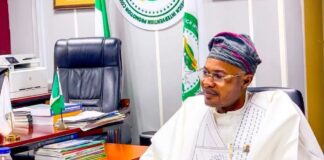








Minister of Art, Culture, Tourism and Creative Economy, Hannatu Musawa, has commended renowned Nigerian metal sculptor and environmental artist, Dotun Popoola, for his remarkable ability to transform discarded materials into internationally celebrated works of art.
Musawa made the remarks on Friday while officially opening “Reclaimed Beauty: A Dialogue Between Continents,”Popoola’s eighth solo exhibition, held at The Village by Tikera in Abuja.
Speaking at the event, the minister praised Popoola’s decade-long commitment to recycling waste into culturally significant artistic creations, describing his work as a powerful representation of Nigerian creativity on the global stage.
“You have elevated materials that were once considered waste into meaningful expressions of culture and heritage,” Musawa said. “I was in Spain just 24 hours ago, and people there were talking about your art.”
The exhibition, produced by Tikera Africa in collaboration with the Scrap Art Museum, showcases large-scale sculptures and installations created from discarded metal and other reclaimed materials. The artworks explore themes of sustainability, transformation and cross-cultural dialogue, encouraging audiences to rethink conventional ideas about waste, value and beauty.
Musawa described the exhibition as a shining example of how creativity can drive sustainability while supporting national efforts to expand Nigeria’s cultural economy and strengthen its global influence under President Bola Tinubu’s Renewed Hope Agenda.
Following a tour of the exhibition grounds, the minister highlighted an existing Memorandum of Understanding between the ministry and Tikera Africa aimed at developing The Village into a creative city within Abuja. She also pledged government support for infrastructure development at the site in the coming months.
Expressing admiration for the scale and ingenuity of the works on display, Musawa said the exhibition would inspire young Nigerians and deepen public appreciation for the country’s growing creative economy.
“My hope is that as many Nigerians as possible will come and experience this extraordinary display of culture, history and creativity,” she said, adding that initiatives such as The Village align with the government’s ambition to position Nigeria as Africa’s cultural hub.
She further encouraged state governments, local communities and private stakeholders to embrace creative reuse and placemaking as tools for promoting tourism, supporting local businesses and improving environmental sustainability.
Founder of Tikera Africa and developer of The Village, Bayo Omoboriowo, described the exhibition as a perfect reflection of the organisation’s vision of building sustainability-driven creative ecosystems.
According to him, the 32-hectare site was transformed from neglected land into a vibrant creative campus built largely from reclaimed airplanes, shipping containers, train components and other salvaged materials.
“Everything you see here is scrap metal,” Omoboriowo said, urging creatives to view limitations as opportunities for innovation. He described Popoola as a leading example of how artistic ideas can evolve into thriving enterprises and industries.
“Dotun exemplifies the energy of turning craft into enterprise. This place is a perfect canvas for people like him, inviting the world to see what we are doing here,” he said.
Omoboriowo also challenged artists and cultural entrepreneurs to leverage local resources and creativity in building sustainable businesses, describing the exhibition as a celebration of what becomes possible when imagination refuses to accept limitations.
In his remarks, Popoola expressed gratitude to the Federal Ministry of Art, Culture, Tourism and Creative Economy, the National Gallery of Art, the National Council for Arts and Culture (NCAC), Tikera Africa, GT Agency, the Scrap Art Museum and the Scrap Art Foundation for supporting the exhibition.
He stressed the need for stronger institutional support, improved funding structures and more efficient export processes to help Nigerian artists build sustainable careers and access international markets.
Earlier, a panel session featuring curators, cultural advocates and international partners, including representatives of the European Union delegation, examined opportunities and challenges within Nigeria’s art ecosystem.
Participants highlighted longstanding obstacles affecting the export and international circulation of Nigerian artworks, including bureaucratic permit processes, customs challenges and weak institutional representation abroad. They called for stronger galleries, foundations and financing structures capable of professionalising the sector, attracting investment and enabling Nigerian artists to compete more effectively on the global stage.