


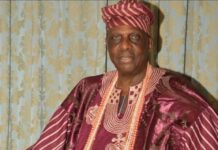
Lagos Commissioner Tokunbo Wahab explains why zero flooding may be impossible, defends demolitions and addresses waste management and water supply challenges
Tokunbo Wahab: Why Lagos Cannot End Flooding, What Government Is Doing About Water Crisis, Waste
Lagos State Commissioner for the Environment and Water Resources, Tokunbo Wahab, has admitted that completely eliminating flooding in Lagos may be impossible, citing the state’s coastal location, rising sea levels, changing climate conditions and geographical challenges.
Wahab, however, said the state government had achieved between 75 and 80 per cent success in flood abatement and was targeting 90 per cent by 2027 through improved drainage infrastructure, pumping stations and year-round maintenance of drainage channels.
In an interview with Theresa Moses and Oluwatosin Simon Faleye, the commissioner explained that Lagos’ unique geographical features made it particularly vulnerable to flooding, especially during periods of intense rainfall.
He noted that Lagos covers approximately 3,530 square kilometres, representing about 0.4 per cent of Nigeria’s landmass, but accommodates roughly 10 per cent of the country’s population. About one-third of the state’s landmass is water, while its southern boundary stretches approximately 186 kilometres along the Atlantic Ocean.
Wahab said the combination of lagoons, creeks, rivers and areas below sea level made it unrealistic to promise a complete end to flooding.
“If we are conversant with global developments, some days ago, the city of Georgia experienced heavy flooding. Around September this year, New York and New Jersey also experienced serious flooding for days,” he said.
“Lagos is exposed to excessive heat, excessive rainfall and rising sea levels. When these factors combine, flash flooding occurs. Sometimes, the water takes an hour or two to recede. That is why we advise residents to remain patient and avoid taking unnecessary risks during heavy rainfall.”
He explained that the government had adopted location-specific solutions, including the installation of pumping stations in areas where conventional drainage infrastructure could not adequately discharge storm water because of their elevation.
Wahab cited the Ilubirin pumping station, which he said was designed to discharge millions of gallons of water every hour, as an example of the state’s intervention in flood-prone areas.
He also disclosed that a pumping station was being planned for Kusenla to address drainage challenges associated with reclamation and other activities that had affected the natural movement of water.
The commissioner identified the Emergency Flood Abatement Gang (EFAG) as another major component of the state’s flood-control strategy, explaining that its operations had been expanded from seasonal work to an all-year-round arrangement about three years ago.
According to him, the workers are responsible for clearing and desilting drainage channels, while their welfare has been improved through health insurance under the Ilera Eko scheme, better wages and hazard allowances.
He maintained that protecting drainage channels, removing structures obstructing waterways and improving storm-water evacuation remained central to the government’s efforts.
On allegations that environmental enforcement in Lagos favours wealthy property owners and powerful estates while small traders bear the brunt of demolitions, Wahab dismissed claims of selective enforcement, insisting that nobody was above the law.
To illustrate his position, he disclosed that the government had demolished structures belonging to a personal friend who developed an estate around Ikota, with 47 of its 52 houses allegedly built along the alignment of the Ikota River.
“Some months ago, I had a friend who built an estate around Ikota. He built 52 houses, and 47 of them were on the alignment of the Ikota River. We had to remove those structures. He is my friend. He comes to my house and eats in my house. I have attended his children’s weddings and graduation ceremonies outside the country. That tells you the kind of relationship we have. But overriding public interest takes precedence over personal relationships,” he said.
Wahab insisted that environmental regulations applied irrespective of an individual’s wealth, political influence, religion or social standing.
“When people say we are selective, I laugh. This ministry does not discriminate based on colour, tribe or religion. I have challenged people who claim they have approvals to bring them forward. If you have approval, bring it out. We will establish who approved it and under what conditions,” he added.
The commissioner said developers must obtain relevant planning approvals, environmental clearances and other necessary documentation before commencing construction, warning that developments on floodplains could endanger lives and worsen flooding.
He also defended the government’s enforcement record, disclosing that 10,634 environmental offenders had been arrested within one year.
Responding to criticism that the ministry was more active on social media than in enforcing environmental regulations, Wahab said the arrest figures demonstrated that the government was taking action.
“If enforcement is selective in real life, how did we manage to arrest about 10,000 people for environmental infractions? It is also about communication. I strongly believe in communication because we are a people who say we want to fix this country, but we do not always want consequences for bad behaviour to be enforced. You have to choose one,” he said.
He disclosed that seven people had recently been sent to prison for environmental offences, adding that the government had enforced regulations against churches, mosques, bars and other establishments over noise pollution.
The commissioner argued that residents could not demand a properly regulated society while refusing to comply with environmental laws, urging Lagosians to respect the rights and comfort of others.
On the state’s waste management challenges, Wahab said Lagos was working to abandon the traditional system of collecting and dumping refuse in favour of a circular waste economy that would turn waste into resources, wealth and energy.
He clarified that the Lagos State Waste Management Authority (LAWMA) was one of eight agencies under his ministry and that his responsibility was primarily to provide policy direction.
According to him, the state government identified systemic problems involving LAWMA and Private Sector Participation (PSP) operators, prompting management changes and interventions to improve waste evacuation.
Wahab said the PSP operators, which provide household and commercial waste collection services, had struggled to meet certain expectations, forcing LAWMA to intervene in some areas.
He maintained that the new leadership of the agency would be expected to deliver on the government’s waste management policy and improve operational efficiency.
Addressing concerns over the capacity of existing dumpsites, particularly Olusosun, and the expansion of Solous III in Igando, the commissioner said the state could no longer sustain the traditional pick-and-dump approach.
He disclosed that the government had introduced several reforms, including restrictions on styrofoam and certain single-use plastics, food-waste-to-energy initiatives and the development of facilities for recycling and waste processing.
“The truth is that we cannot sustain the pick-and-dump system. It is no longer the model we want to maintain. However, you need political will to make that transition, and we have demonstrated that commitment,” he said.
Wahab explained that the state intended to decommission and cap existing dumpsites but could not shut them down until alternative facilities were fully operational.
He also announced plans to bring in 150 additional waste trucks to complement the 102 trucks available to LAWMA, saying the move would strengthen the state’s waste collection and transportation capacity.
On compliance with the restrictions on styrofoam and single-use plastics, the commissioner said Lagos had recorded more than 70 per cent compliance, with some months reaching approximately 80 per cent.
He attributed the progress to a combination of enforcement, public education and engagement with market leaders, adding that manufacturers in neighbouring states were gradually considering biodegradable alternatives.
Wahab said reducing plastic waste was particularly important because plastics frequently obstruct drainage channels and contribute to flooding.
The commissioner also raised concerns about rising temperatures in Lagos, urging residents to preserve green spaces, plant trees and avoid covering every available space with concrete.
He said the Lagos State Parks and Gardens Agency (LASPARK) was encouraging residents to embrace greenery as part of efforts to reduce heat and improve environmental conditions.
He further advised residents, particularly outdoor workers, children and pregnant women, to remain hydrated and take precautions during periods of extreme heat.
Turning to public water supply, Wahab acknowledged that many Lagos residents had been forced to depend on boreholes and private water suppliers because of the unreliable distribution of government-provided water.
He attributed the problem partly to ageing waterworks and deteriorating distribution pipelines, which he said resulted in substantial water losses before treated water reached consumers.
According to him, some of the state’s water infrastructure was built decades ago, while several distribution pipes had become obsolete and required replacement or rehabilitation.
He disclosed that the government was working to restore existing facilities, reopen mini and micro waterworks and reduce pressure on major treatment plants at Iju and Adiyan.
Wahab said the state expected Adiyan II to achieve a production capacity of approximately 70 million gallons of water daily when fully operational.
However, he acknowledged that delays had affected the project, revealing that the contract with the original contractor had been terminated over alleged failure to meet contractual obligations.
He said work was continuing on the project, adding that a major component involving an approximately 8.2-kilometre raw-water pipeline from the Akute intake station along the Ogun River to the Adiyan II treatment plant had been completed.
The commissioner explained that mechanical work was ongoing, after which attention would shift to reticulation and distribution infrastructure.
He also disclosed that the government had encountered funding challenges following the cancellation of a United States-funded programme worth approximately $49m involving WaterAid and the Lagos State Government.
According to him, the state had to make alternative budgetary provisions to prevent affected water projects from stalling.
On concerns about government plans to regulate boreholes and private wells, Wahab said the relevant law had been in the statute books since 2017 but had not been enforced.
He insisted that the government would not punish residents for seeking alternative water sources when public water supply remained inadequate.
“There is a law in the statute book that was passed in 2017. However, nobody has been enforcing it. The logic is simple: if the government is not providing pipeline water to people across the state, why should it stop them from getting water in their homes? That is the position we have always maintained,” he said.
Wahab stressed that the law was designed to protect the environment and ecosystem rather than prevent residents from accessing water.
He added that the Lagos State House of Assembly was reviewing the legislation, which could be removed in view of the prevailing realities.
The commissioner also reflected on his experience in public service, having served as Special Adviser on Education between 2019 and 2023 before his appointment as Commissioner for the Environment and Water Resources.
He said one of his major priorities in the education sector was expanding access to higher education, noting that Lagos established two additional state universities during the period.
These included Lagos State University of Education (LASUED) and Lagos State University of Science and Technology (LASUSTECH).
He also highlighted a public-private partnership arrangement that delivered 10,800 student bed spaces at Lagos State University, Ojo, under a Build-Operate-Transfer model.
Wahab said he hoped to be remembered as a public official who encouraged environmental responsibility and implemented policies capable of protecting future generations.
“My first experience in public service was in 2019 when I became Special Adviser on Education. When I got to the education sector, I saw that there was so much to be done,” he said.
“When I came to the Ministry of the Environment, I had to learn, relearn and understand a different category of responsibility. This is a public-facing ministry, and the issues affect everybody. I want to be remembered as someone who believes that we all have a responsibility to our environment. We must do the right things to protect the future generation, irrespective of who is in government.”
He attributed his approach to public service to personal commitment, faith, institutional support and sacrifices made by his family.
Wahab said Governor Babajide Sanwo-Olu and his deputy had provided the support needed to pursue his goals, while his family had made sacrifices to accommodate the demands of public office.
He maintained that public service should be driven by measurable results rather than the desire to receive praise for efforts alone.