
Lagos State Commissioner for Environment and Water Resources, Tokunbo Wahab, clarifies that the Trade Fair Complex is not exempt from state planning laws, warning that all developments without Lagos approval are illegal
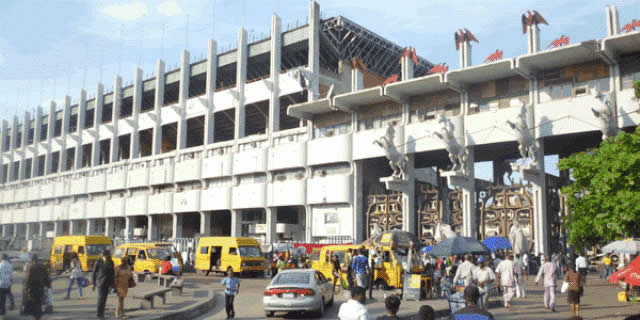
Trade Fair Complex Not a Sovereign Territory – Tokunbo Wahab Reaffirms Lagos Control Over Building Approvals
The Lagos State Government has firmly declared that the Lagos International Trade Fair Complex is not a sovereign territory and remains subject to the state’s physical planning and development control laws.
This clarification came from the Commissioner for Environment and Water Resources, Tokunbo Wahab, who addressed growing controversies surrounding recent enforcement actions taken by the government at the complex.
According to Wahab, the Board managing the Trade Fair Complex, though established by the Federal Government, has no authority to approve or regulate building developments independently of the Lagos State Government.
“Trade Fair is not a sovereign community within Lagos State,” Wahab stated. “The board, which is a creation of the Federal Government to manage the complex, does not have powers to approve or regulate building developments within the complex independent of the Lagos State Government.”
He explained that under the Nigerian Urban and Regional Planning Act of 1992, as domesticated in Lagos State’s Physical Planning and Development Regulations, all physical developments in any part of Lagos — including federal properties — must obtain planning permits or approvals from the state through its Ministry of Physical Planning and Urban Development.
Wahab cited the 2003 Supreme Court judgment in Attorney-General of Lagos State v. Attorney-General of the Federation, which affirmed that land use and physical planning fall under concurrent jurisdiction, giving states the power to regulate developments within their boundaries — including federal lands, except for core federal enclaves such as military formations.
“The Trade Fair Complex Board may manage leases, tenancies, and commercial activities,” the Commissioner added, “but any construction, alteration, or development still requires Lagos State planning permit. Otherwise, such developments would be deemed illegal under state law.”
He emphasized that the state government reserves the right to seal or demolish any illegal structures that do not comply with its planning laws, regardless of ownership or federal affiliation.
The statement is part of the government’s ongoing efforts to maintain urban order, safety, and environmental sustainability across Lagos, ensuring that all developments — public or private — conform to approved planning standards. Read More