

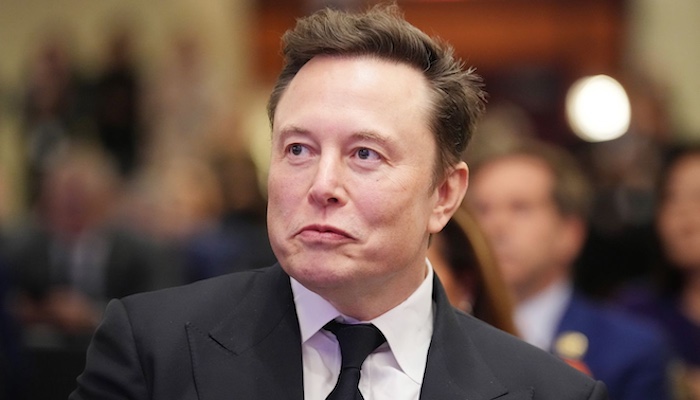


Elon Musk has admitted in court that he did not read the “fine print” of early agreements tied to OpenAI’s transition plans, saying he instead relied on verbal assurances that the organisation would remain a non-profit.
Testifying under cross-examination on Thursday, Musk told the court he was aware of early discussions about structural changes but believed OpenAI would stick to its founding mission.
“My testimony is I didn’t read the fine print, just the headline,” Musk said.
The case revolves around Musk’s lawsuit against OpenAI, its chief executive Sam Altman and president Greg Brockman. Musk claims the company secured his $38 million in donations and backing by pledging to build a non-profit focused on safe artificial intelligence, only to later pivot toward a for-profit model.
During proceedings, OpenAI’s lawyer, William Savitt, pressed Musk on a 2017 term sheet that outlined a restructuring into a for-profit entity governed by a non-profit. Musk maintained he had been reassured at the time by Altman and others.
“I was reassured by Sam Altman and others that OpenAI would continue as a nonprofit,” he testified.
Now in its third day in a California courtroom, the trial could have far-reaching consequences for OpenAI, the company behind ChatGPT, which has attracted billions in investment and is expanding rapidly ahead of a potential public listing.
Musk is seeking sweeping changes to OpenAI’s governance structure along with $150 billion in damages.
OpenAI has strongly denied the allegations, arguing that Musk is attempting to gain control of the company and is dissatisfied with its success after stepping down from its board in 2018. The firm also claims Musk is advancing his competing AI venture, xAI.
At several points during the hearing, Musk appeared frustrated with the questioning.
“Few answers are going to be complete, especially when you cut me off all the time,” he remarked.
Presiding judge Yvonne Gonzalez Rogers later admonished the lawyer for interruptions but rejected Musk’s complaint that the questioning was improperly leading.
Musk was also challenged on why he delayed legal action and whether he should have been aware of OpenAI’s shift in direction earlier. He argued that the company’s for-profit arm now holds the vast majority of its value.
“The for-profit is overwhelmingly where the value is,” Musk said. “The for-profit has taken the super majority of the value of the nonprofit.”
He also revealed that his company xAI has used OpenAI systems to help train its own AI models, calling it “standard practice.”
After more than two hours on the stand, Musk was dismissed. His aide, Jared Birchall, later took the stand as the trial continues.