Home Blog Page 172

2027: Temitayo Agemo-Okuboyejo Condemns Ado-Odo/Ota’s Poor NASS Representation Since 1999, Declares House of Reps Bid

0
Temitayo Agemo-Okuboyejo

2027: Temitayo Agemo-Okuboyejo Condemns Ado-Odo/Ota’s Poor NASS Representation Since 1999, Declares House of Reps Bid

By Lukman Omikunle

Engineer and grassroots politician, Temitayo Agemo-Okuboyejo, has declared her intention to contest for the Ado-Odo/Ota Federal Constituency seat in the House of Representatives come 2027, vowing to end decades of “poor representation” that has stunted development in the area, writes Lukman Omikunle.

Speaking during a media parley with members of the Ado-Odo/Ota Online Chapel of the Nigeria Union of Journalists (NUJ) at her ancestral hometown of Igbesa, Agemo-Okuboyejo expressed deep concerns over what she described as consistent legislative neglect of the constituency since the return of democracy in 1999.

“Since 1999, I don’t think we’ve had the right kind of representation at the National Assembly from Ado-Odo/Ota,” she stated. “That failure has led to both human and infrastructural underdevelopment in our communities. We have been shortchanged repeatedly.”

According to her, her aspiration to serve is deeply rooted in her personal life philosophy, inherited from her father: “Make your presence felt in life in positive ways.”

“As an engineer, I was trained to solve problems. I am bringing that same mindset into politics — to fix the structural and economic decay in our federal constituency,” she affirmed.

Untapped Potential Across the Constituency

Agemo-Okuboyejo decried the irony of Ado-Odo/Ota being one of Nigeria’s most industrialized local governments, yet lacking basic infrastructure and federal attention.

“Industry brings development — it happened in Ikeja and Ilupeju — but it never happened here. Despite hosting massive industrial lines, there’s nothing to point to in Ota or Agbara in terms of matching development,” she lamented.

She traced the systemic neglect of the area back to colonial and post-independence history, referencing how cocoa — a crop introduced to West Africa on Awori soil — helped develop the entire Southwest, yet left the Awori people behind.

“It’s the same story today. Ado-Odo/Ota generates so much, but gets so little in return,” she said.

Highlighting Community-Specific Challenges

Temitayo Agemo-Okuboyejo

She outlined different strategic development priorities for various towns in the constituency:

  • Ado-Odo: “We have enormous agricultural potential. During the Western Region era, Chief Obafemi Awolowo set aside 8 hectares for farm settlements here. But due to poor representation, nothing has happened on that land to date.”
  • Igbesa: “We have a technical college that could be a hub for skilled manpower. Yet companies in the area still hire from outside because we’ve failed to activate what we already have.”
  • Ota: “The roads are in terrible condition — that’s a known fact. But there’s been no meaningful agitation or consistent pressure from our elected officials. Urban needs like those of Ota require a different governance approach — one that understands and connects with the people.”

She emphasized that a one-size-fits-all policy does not work, saying, “You cannot apply the same solution to Ota, Ado-Odo, Igbesa, Ketu, etc Each of these towns has unique problems that require tailored solutions.”

On 2027 and Political Platform

Agemo-Okuboyejo declared her readiness to contest under the Peoples Democratic Party (PDP), which she described as her political home.

“I’ve always been a card-carrying member of the PDP. I never left. I remain committed to the ideals of the party and connected to its grassroots structures,” she said.

She dismissed insinuations about the party’s strength in the constituency following defections, saying, “Yes, some people left after losing elections and court cases — like Sikirulai Ogundele. But that doesn’t affect our resolve. PDP is alive and active in Ado-Odo/Ota.”

Women, Youths, and Culture on Her Agenda

Agemo-Okuboyejo also spoke about her plans for women and youths, particularly market women and young people in need of vocational training. She revealed that her NGO has already been active in providing support and empowerment initiatives across the constituency.

“It’s a challenging terrain, no doubt, but one that requires a blend of political will and policy input,” she noted.

She reaffirmed her commitment to supporting traditional institutions and connecting with key stakeholders across communities. “You can’t lead people you don’t understand or engage with,” she said.

When asked about her preparedness in terms of campaign financing, she replied confidently: “If I wasn’t ready, I wouldn’t be here. I’m on it.”

“This dream will come true. I will not be a bystander,” she concluded with quiet determination. “I’m here to revive Ado-Odo/Ota and make it what it truly deserves to be — a powerhouse in Ogun State and beyond.” Read More
“I’m Not Really Nigerian”: UK Minister Kemi Badenoch Opens Up on Identity, Citizenship and Roots

0

“I’m Not Really Nigerian”: UK Minister Kemi Badenoch Opens Up on Identity, Citizenship and Roots

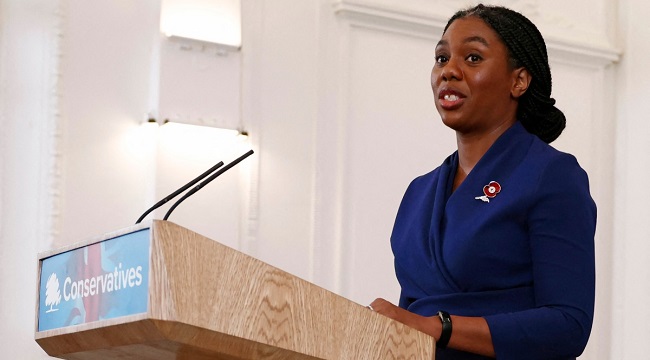
British Conservative Party leader and Secretary of State for Business and Trade, Kemi Badenoch, has sparked debate over national identity following candid remarks in which she distanced herself from her Nigerian roots, stating that she no longer identifies as Nigerian and has not held a Nigerian passport in over two decades.

Speaking on the Rosebud podcast hosted by Gyles Brandreth, Badenoch reflected on her complex relationship with her heritage, explaining that although her parents are Nigerian and she spent part of her upbringing in the country, her sense of identity lies firmly in the United Kingdom.

“I’m Nigerian through ancestry, by birth, despite not being born there because of my parents, but by identity, I’m not really,” she stated.

Born in Wimbledon, London, in 1980, Badenoch is among the last group of people to receive British birthright citizenship before the law changed in 1981 under Prime Minister Margaret Thatcher’s government. She revealed that discovering her automatic British citizenship came as a surprise to many of her peers.

“Finding out that I did have that British citizenship was a marvel to so many of my contemporaries, so many of my peers,” she said.

Though Badenoch acknowledged her familiarity with Nigeria, she underscored a long-standing emotional and cultural disconnect from the country.

“I know the country [Nigeria] very well, I have a lot of family there, and I’m very interested in what happens there,” she said, adding, “Never quite feeling that I belonged there.”

Despite her ancestral and formative ties to Nigeria and the United States, Badenoch said her true sense of home is rooted in the UK, with her current family and political life.

“But home is where my now family is, and my now family is my children, it’s my husband and my brother and his children, in-laws. The Conservative Party is very much part of my family—my extended family, I call it.”

Badenoch also opened up about personal struggles in her early adulthood, noting the challenges she faced after returning to the UK as a teenager.

“The toughest thing I had to do was to fend for myself at 18,” she recalled.

Her remarks have drawn mixed reactions across social and political circles, with some praising her honesty and others questioning the implications of such a public disavowal of Nigerian identity by someone of African descent in a leadership role.

Tinubu Calls on  Governors to Prioritise Rural Development, Poverty Eradication, Agricultural Growth

0

Tinubu Calls on  Governors to Prioritise Rural Development, Poverty Eradication, Agricultural Growth

President Bola Tinubu has called on Nigerian state governors to intensify investments in rural electrification, agricultural mechanisation, poverty eradication, and infrastructure to drive inclusive economic growth across the country.

Speaking on Thursday at the 150th meeting of the National Economic Council (NEC) held at the State House Council Chambers in Abuja, Tinubu urged collaboration among all tiers of government to transform the lives of people in rural communities.

His appeal came after a presentation by the Minister of Budget and Economic Planning, Senator Abubakar Bagudu, on the Renewed Hope Ward Development Programme (RHWDP) — a new federal initiative targeting economic expansion from the grassroots level.

“I want to appeal to you; let us change the story of our people in the rural areas,” the President said, according to a statement released by Stanley Nkwocha, Senior Special Assistant to the President on Media and Communications (Office of the Vice President).

“The economy is working. We are on the path of recovery, but we need to stimulate growth in the rural areas. We know the situation in the rural areas; let us collaborate and do what will benefit the people,” he added.

President Tinubu highlighted the importance of mechanised agriculture, tackling insecurity, and increasing school enrolment through initiatives like school feeding programmes.

To further demonstrate his administration’s commitment, Tinubu directed the NEC to establish a committee to ensure swift implementation of key infrastructure projects — including the Lagos-Calabar and Sokoto-Badagry Super Highways. He also ordered that the Office of the Surveyor-General of the Federation be moved to the presidency to fast-track legacy projects.

Meanwhile, the NEC formally endorsed the RHWDP, which is designed to drive double-digit economic growth by channeling development directly to Nigeria’s 8,809 administrative wards across the 36 states.

According to Bagudu, the programme aligns with President Tinubu’s Renewed Hope Agenda and the target of achieving a $1 trillion economy by 2030, which would require an annual growth rate of 15 per cent — far above the current sub-4 per cent level.

Anchored on provisions in the 1999 Constitution and the Fifth Alteration Act, RHWDP aims to enhance food security, improve local production systems, and create sustainable economic opportunities at the grassroots. It sets a minimum support target of 1,000 economically active individuals in smaller wards and 2,000 in larger ones.

Implementation will be overseen by a National Steering Committee with representatives from all six geopolitical zones, while the Ministry of Budget and Economic Planning will serve as the programme secretariat.

The President’s call reinforces his administration’s focus on bottom-up development and inclusive economic reforms designed to reduce inequality, tackle unemployment, and lift millions out of poverty.

Africa Must Be Heard On Its Own Terms – Elumelu Tells IMF, World Bank Caucus

0

Africa must be heard, not just as a participant in global discussions, but as a proactive contributor offering solutions to shared challenges

Africa Must Be Heard On Its Own Terms – Elumelu Tells IMF, World Bank Caucus

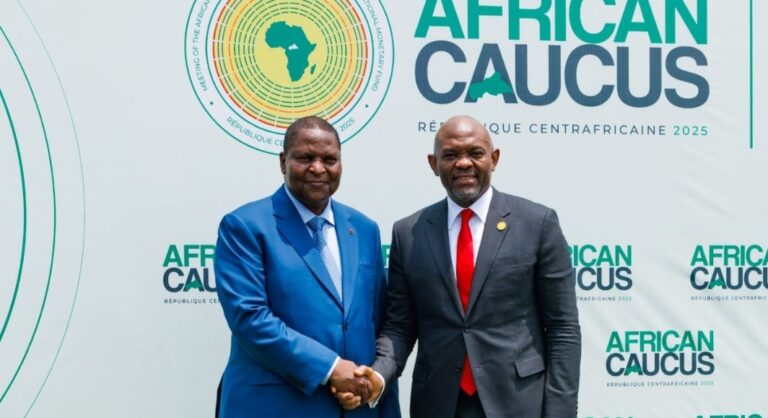
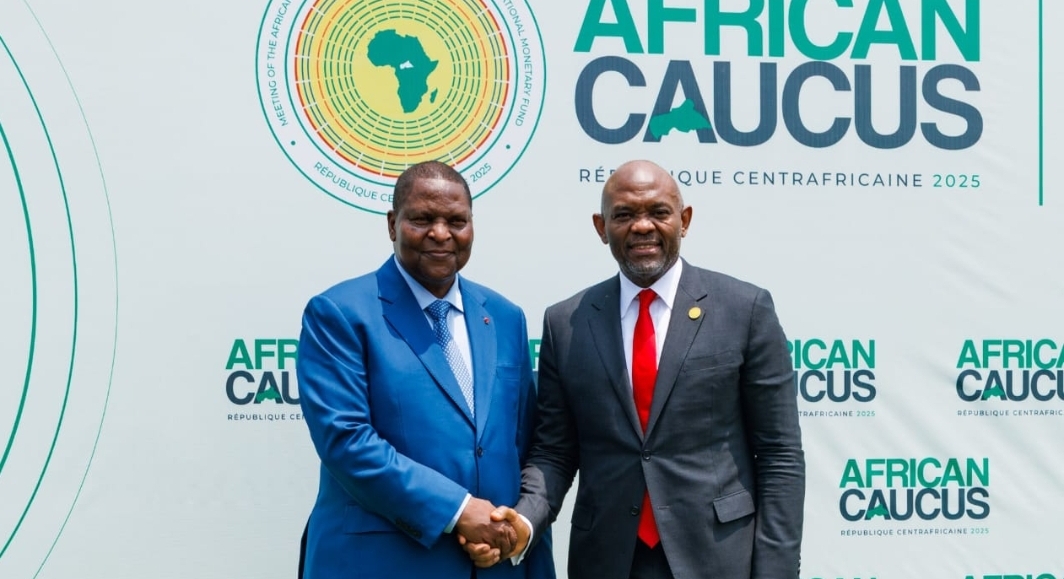
Tony Elumelu, Group Chairman of Heirs Holdings, has emphasised the urgent need for Africa to assert its voice and chart a development path rooted in its own realities, values, and aspirations.

Speaking at the African Caucus Meeting of the World Bank and International Monetary Fund (IMF) held in Bangui, Central African Republic, Elumelu — who also chairs United Bank for Africa (UBA) — said Africa must be heard, not just as a participant in global discussions, but as a proactive contributor offering solutions to shared challenges.

He delivered the keynote address titled “Resilient Infrastructure, Human Capital, and Green Assets.”

“We live in a highly volatile, complex world,” Elumelu began, referring to the shifting global order, “But as an African, I must be frank. The global system has not always served Africa’s interests, ensured that our voice is heard, or delivered real progress for our people.”

Elumelu, who leads one of the continent’s largest financial employers with over 25,000 staff across its group (UBA) , argued that Africa is already central to the planet’s future — with its young population addressing global demographic shifts, its mineral wealth powering technological advancement, and its agricultural capacity poised to feed the world.

However, he noted that these strengths must be matched with bold action, visionary leadership, and partnerships based on mutual respect.

He stressed that African governments must lead by example — making strategic investments, reforming governance, and unlocking the continent’s full potential for future generations.

Highlighting the continent’s massive infrastructure gaps, Elumelu said Africa still struggles with the fundamentals of modern development — roads, ports, electricity, and internet access. “Without these, we cannot unlock the growth and prosperity our people deserve,” he warned.

The Chairman of Transcorp Group — a key player in Nigeria’s economy, recently posting ₦279.7 billion in revenue and declaring a ₦4.064 billion interim dividend — Elumelu called for stronger fiscal capacity, more efficient governance, and above all, innovative financing models that bring the private sector into the centre of Africa’s infrastructure development.

On energy, Elumelu noted that up to 70 percent of Africa’s population lacks access to electricity. Citing Nigeria’s persistent power issues, he said, “My home country generates less than 7,000 megawatts for over 200 million people. Imagine what Nigeria’s economy could become with 100,000 megawatts of reliable, affordable energy.”

He underscored that solving Africa’s power challenge is non-negotiable. Without electricity, the continent cannot participate meaningfully in the global AI revolution, industrialise, or create sustainable jobs. Through his companies, Transcorp and Heirs Energies, he is already helping close this gap — from gas-to-power projects to regional power exports through the West African Power Pool.

“Africapitalism is the belief that the African private sector must lead economic development,” he said. “It’s about making long-term investments that generate both financial returns and measurable social impact.”

A passionate advocate of private-sector-led growth, Elumelu urged governments to create enabling business environments and called on development partners to support Africa’s unique energy transition — particularly by recognising gas as a realistic and necessary pathway to cleaner energy.

He described Africa’s youth as its greatest asset and warned that how they are empowered will define the continent’s future — either as a global growth engine or a potential source of instability.

The philanthropist cited the work of the Tony Elumelu Foundation, which has empowered over 24,000 entrepreneurs in all 54 African countries with seed capital, trained 1.5 million youths, and catalysed over 1.2 million jobs.

In a passionate call to action, Elumelu — a member of the inaugural TIME100 Impact List — said Africa’s destiny lies in African hands. “No one else will do it for us. Africa’s future is in our hands,” he said.

The master entrepreneur urged leaders to invest urgently in energy and young people — who he described as both the present and future of the continent.

“I welcome the growing global attention on Africa,” he added, highlighting his advisory role with the IMF and applauding World Bank President Ajay Banga’s ‘Mission 300’ initiative to connect 300 million Africans to electricity.

Elumelu concluded by saying that Africa is ready to seize this defining moment — and called for strong collaboration between public and private sectors to build a resilient, inclusive, and prosperous continent. Read More

Dino Melaye Dumps PDP, Cites Party’s Decline, Joins ADC

0

“The current trajectory of the PDP has strayed too far from its founding principles, leaving me with no choice but to part ways.”

Dino Melaye Dumps PDP, Cites Party’s Decline, Joins ADC

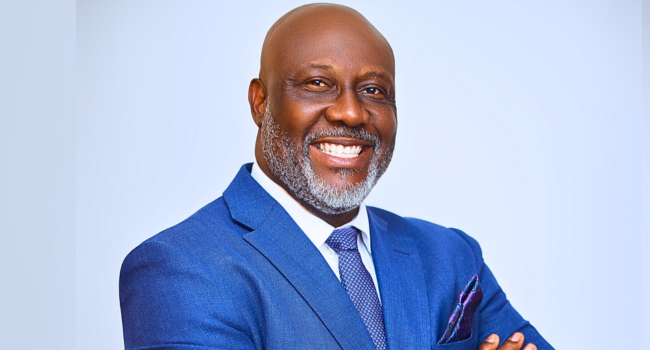
Former Kogi West senator and 2023 PDP governorship candidate in Kogi State, Dino Melaye, has officially resigned from the Peoples Democratic Party (PDP), citing the party’s failure to offer viable leadership capable of rescuing Nigeria from its deepening political woes.

Melaye made the announcement on Thursday via his official X (formerly Twitter) handle, where he shared a signed resignation letter addressed to the PDP chairman of Ward 1, Aiyetoro Gbede, in Ijumu Local Government Area of Kogi State.

“The decision became imperative due to the lack of potency and capacity by the party to deliver the Nigerian people from the prevailing political cankerworms that have eaten deeply into the fabric of our dear nation,” the letter dated July 4, 2025, read.

Shortly after, Melaye posted a video showing himself receiving a membership card of the African Democratic Congress (ADC), effectively confirming his defection.

In his letter, Melaye noted that his exit followed careful reflection on the party’s current state and trajectory.

“After deep reflection, I have come to the realization that I can no longer, in good conscience, continue to participate in or support the activities of the PDP,” he stated.

He thanked the PDP for the opportunity to serve and contribute during his time with the party, but emphasized that his departure is immediate and total.

Melaye’s defection adds to the growing list of high-profile exits from the PDP ahead of the 2027 general elections. Just weeks earlier, former Vice President Atiku Abubakar also announced his resignation from the party, citing irreconcilable differences and a loss of direction.

In a letter dated July 14, 2025, and addressed to the PDP Chairman of Jada 1 Ward in Adamawa State, Atiku wrote:

“The current trajectory of the PDP has strayed too far from its founding principles, leaving me with no choice but to part ways.”

The twin resignations of Atiku and Melaye have intensified debates about the future of the PDP, once Nigeria’s dominant political party, as it continues to grapple with internal divisions, declining public support, and an exodus of key figures ahead of 2027. Read More

FG Opens Talks with Striking Nurses as Action Worsens Healthcare Services Nationwide

FG Opens Talks with Striking Nurses as Action Worsens Healthcare Services Nationwide

The Federal Government has initiated talks with the leadership of the National Association of Nigeria Nurses and Midwives (NANNM) in a bid to end the ongoing warning strike that has disrupted healthcare services across the country.

The crucial meeting, confirmed by the Minister of Health and Social Welfare, Professor Ali Pate, is taking place today as the strike enters its third day, with hospitals in several states experiencing severe staff shortages.

The industrial action began on Wednesday following the expiration of a 15-day ultimatum issued by NANNM. The association is demanding improved pay, payment of outstanding allowances, safer working conditions, and urgent measures to address the chronic shortage of nursing staff nationwide.

Medical personnel in many public hospitals have been overwhelmed, with doctors reportedly struggling to fill the gaps left by the absence of nurses and midwives.

Despite the government’s move to engage, NANNM President Morakinyo Rilwan expressed skepticism about the outcome of the talks.

“Negotiation continues on Friday between the association and the Ministry of Health, but I don’t see any positive outcome. We will do the seven-day warning strike to the end,” Rilwan stated.

The association has insisted that the warning strike will run its full course unless the government takes swift and concrete action to meet its demands.

The situation has heightened public concern, as patients face delays and disruptions in accessing critical medical services, especially in maternity wards, emergency units, and primary healthcare centres.

As negotiations resume, stakeholders and citizens alike are urging both sides to prioritize the health and welfare of Nigerians and avert a prolonged crisis in the sector.

FG Hails Dangote Refinery’s World-Class Engineering, Human Capital Development

FG Hails Dangote Refinery’s World-Class Engineering, Human Capital Development

… our engineers are now expatriates in UAE, other countries – Dangote

The Federal Government has commended the Dangote Petroleum Refinery for its outstanding engineering achievements and its significant investment in developing young Nigerian talent.

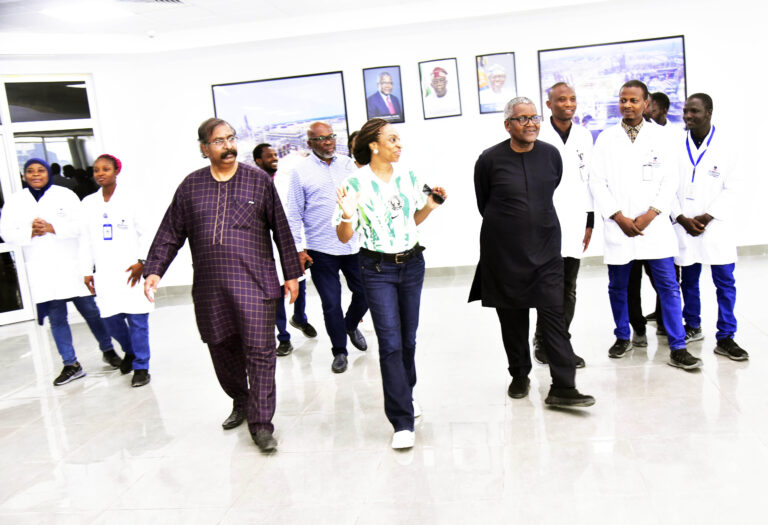
Nigeria’s Minister of Industry, Trade and Investment, Dr Jumoke Oduwole, lauded the Refinery for its dual focus on world-class infrastructure and exceptional investment in human capital during an official visit to the state-of-the-art facility in Lagos.

Speaking during a tour of the refinery, the Minister expressed admiration not only for the vast scale of the physical infrastructure, describing it as “bricks, mortar, and pipelines of extraordinary ambition” but also for the calibre of talent operating it.

“We are not just appreciating the scale of the infrastructure: the bricks, mortar, and pipelines,” the Minister said. “We are equally impressed by the investment in human capital. It is deeply inspiring to see young Nigerians, many of whom have never left the country, operating world-class equipment with remarkable skill and professionalism.”

The Minister, a senior university lecturer, highlighted the significance of such a development in the context of national capacity-building. “As a lecturer myself, I take great pride in witnessing their excellence in engineering. It is nothing short of exceptional,” he added.

She also praised Aliko Dangote, Africa’s richest man and the visionary behind the project, for his continued commitment to industrial transformation in Nigeria. “Listening to Alhaji Dangote speak about this project is always a source of inspiration. This is not just a refinery—it is a bold statement of what is possible. This is Lagos, Nigeria, and there is truly nowhere else in the world with a facility of this kind at this scale.”

Vice President, Oil & Gas at Dangote Industries Limited, Mr Edwin Devakumar, highlighted the world-class capabilities of the 650,000 barrels per day (bpd) Dangote Petroleum Refinery, during a presentation to the Minister.

According to Devakumar, the refinery produces Euro-V quality petrol, diesel, jet fuel, and polypropylene, meeting 100% of Nigeria’s domestic demand for refined petroleum products, with surplus available for export. He emphasised that the refinery incorporates the latest technologies to ensure environmental compliance while delivering clean, globally competitive fuels.

He noted that the refinery includes a fully self-sufficient marine terminal for crude oil offtake and product loading, as well as an integrated steam and power generation system with a 435MW capacity—enough to supply the entire electricity demand of the Ibadan Electricity Distribution Company, which covers  Oyo, Ogun, Osun, Kwara, and Ekiti.

“We are one of the very few companies in the world to have executed both a petroleum refinery and a petrochemical complex directly as an EPC contractor,” he said. “We sent engineers for overseas training and employed around 60,000 skilled Nigerians during construction, offering them valuable experience in various aspects of construction, testing, and commissioning.”

Devakumar added that many of the Nigerian engineers, technicians, and others trained by the company are now working as expatriates not just across Africa, but as far afield as the United Arab Emirates, contributing to Nigeria’s foreign remittance inflow.

The Dangote Petroleum Refinery and Dangote Fertiliser Limited have been widely commended for their commitment to hiring and nurturing Nigerian engineers. Most recently, the Nigerian Content Development and Monitoring Board (NCDMB), led by its Executive Secretary, Engr. Felix Omatsola Ogbe, praised the company for its efforts in developing young engineering talent. Similarly, the League of Engineering Bodies in Nigeria, including the Nigerian Society of Engineers (NSE), the Nigerian Academy of Engineering (NAE), the Association of Consulting Engineering in Nigeria (ACEN), and the Council for the Regulation of Engineering in Nigeria (COREN), expressed admiration during a visit to the facilities. The delegation lauded the active engagement of Nigerian engineers in the construction, commissioning, and operation of the plants.

The Dangote Petroleum Refinery, the largest single-train refineries globally, has been hailed as a game-changing project set to enhance Nigeria’s self-sufficiency in refined petroleum products, reduce import dependence, and stimulate economic growth.

IGP Pledges Crackdown on Oil Theft, Strengthens Human Rights Reforms in Police Operations

0

IGP Pledges Crackdown on Oil Theft, Strengthens Human Rights Reforms in Police Operations

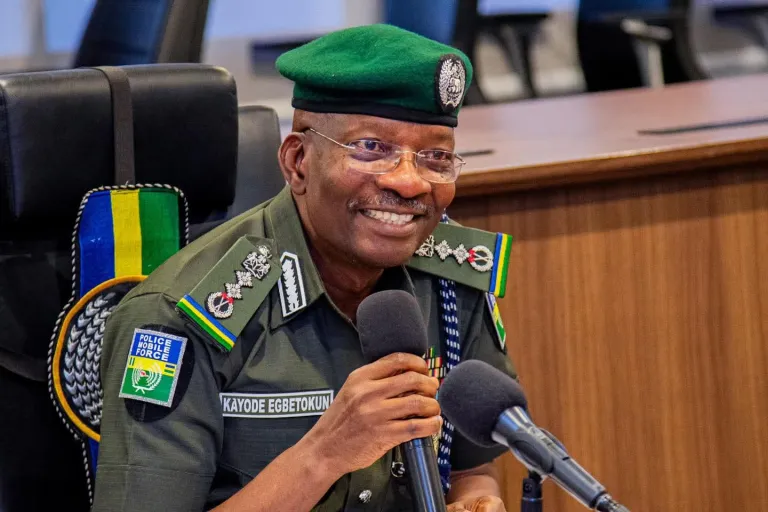
The Inspector-General of Police, Kayode Adeolu Egbetokun, has reaffirmed the Nigeria Police Force’s resolve to combat crude oil theft and strengthen human rights practices across its operations.

During a high-level meeting on Thursday with the Senate Committee on Crude Oil Theft at the Force Headquarters, Abuja, IGP Egbetokun pledged full collaboration with lawmakers to end oil theft—a menace he described as a serious threat to the country’s economic stability.

The Senate delegation, led by its Chairman, Senator Ned Nwoko, emphasized that eliminating crude oil theft is key to boosting Nigeria’s production targets and national revenue.

“The issue of crude oil theft is a matter of national emergency. Our committee cannot succeed without the active involvement of the Nigeria Police Force,” Senator Nwoko said during the engagement at the IGP Smart Conference Hall.

In response, IGP Egbetokun applauded the committee’s proactive steps and assured the lawmakers of the Police’s unwavering support in safeguarding Nigeria’s vital oil infrastructure.

To that end, he directed the Deputy Inspectors-General of Police overseeing Operations and Intelligence to immediately liaise with the Senate Committee to formulate robust onshore and offshore strategies to confront oil theft networks.

In a separate development the same day, the IGP also hosted officials of the National Human Rights Commission (NHRC), led by Dr. Salamatu Husaini Sulaiman, Chairperson of the NHRC Governing Council, and Dr. Tony Ojukwu (OFR, SAN), Executive Secretary.

The visit was aimed at enhancing cooperation between the Police Force and the NHRC in promoting human rights, fostering police accountability, and ensuring compliance with the Human Rights Act.

Dr. Ojukwu commended the Police under Egbetokun’s leadership for addressing public complaints transparently and recognizing professionalism within the ranks—citing SP Sentome Obi, who was recently honored as Police Officer of the Year 2024.

In his remarks, IGP Egbetokun reiterated the Force’s zero-tolerance policy for human rights abuses, including arbitrary arrests, unlawful detention, and excessive use of force.

“Policing is fundamentally about protecting and respecting human rights. Under my leadership, the Nigeria Police Force will continue to embrace feedback and constructive criticism to improve our operations,” he stated.

He further revealed that human rights education has now been fully integrated into all police training programs across the country.

The back-to-back meetings with key national institutions highlight the Nigeria Police Force’s commitment to tackling critical security and social challenges through partnerships, reforms, and an unwavering focus on professionalism and public trust. Read More

Ibadan Awaits History as Olubadan-in-Council Set to Nominate Ladoja on Monday

Ibadan is set to welcome High Chief Rashidi Ladoja as its 44th Olubadan

Ibadan Awaits History as Olubadan-in-Council Set to Nominate Ladoja on Monday

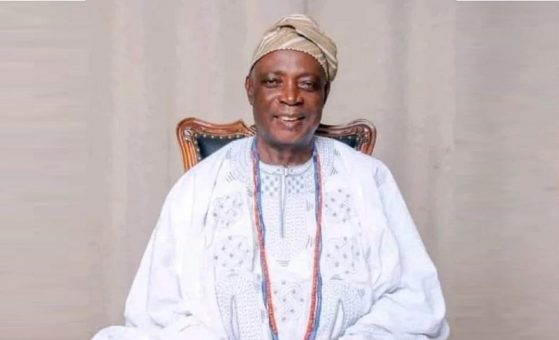
Barring any last-minute changes, the Olubadan-in-Council will on Monday convene a crucial meeting to deliberate on the nomination of a new Olubadan of Ibadanland — with strong indications pointing to the former Oyo State governor, High Chief Rashidi Ladoja, as the next in line.

Sources within the Council revealed that the meeting, scheduled to hold at the Olubadan Palace in Oke Aremo, will focus solely on nominating a successor to the late Oba Olakulehin, the 43rd Olubadan, who passed away on July 7 after one year on the throne.

Following the traditional line of succession, High Chief Ladoja, Otun Olubadan and next in line, is expected to be nominated and announced as the 44th Olubadan of Ibadanland. His nomination, once confirmed at the meeting, will be forwarded to the state government through the Ministry of Local Government and Chieftaincy Matters for final approval by Governor Seyi Makinde.

Oba Abiodun Ajibola, a member of the Olubadan-in-Council, confirmed the agenda of the meeting, according to a report by The Nation newspaper.

“The meeting is that of the members of Olubadan-in-Council. It will take place at Olubadan Palace at Oke Aremo.
We called the meeting to nominate a new Olubadan to occupy the vacant stool,” he said.

He added that while Oba Ladoja is expected to attend as a member of the Council, his absence would not invalidate the Council’s deliberations.

“It does not matter if the next-in-line is not present, it won’t stop us from nominating the new Olubadan.
It is for us to nominate a new Olubadan and that will be the main focus of the meeting. We are meeting to deliberate and take a decision on the vacant stool,” he emphasized.

Notably, this will be the first such meeting to take place at the newly completed Olubadan Palace at Oke Aremo, a shift from previous venues like the historic Mapo Hall or Oja’ba Palace.

The gathering comes barely a week after the conclusion of the 21-day mourning period for the late Oba Olakulehin. His final burial is scheduled for August 8 at the Cathedral of Saint Peters, Aremo, Ibadan.

Should the Council proceed with the expected nomination, Ibadan would be set to welcome High Chief Rashidi Ladoja as its 44th Olubadan — further reinforcing the city’s unique and time-honoured succession system. Read More

No More ‘Briefcase Farmers’ as Tinubu Launches New Digital Registry, Rolls Out Tractors, Livestock Hubs to Revive Agriculture

No More ‘Briefcase Farmers’ as Tinubu Launches New Digital Registry, Rolls Out Tractors, Livestock Hubs to Revive Agriculture


In a bold effort to overhaul Nigeria’s agricultural sector and combat food insecurity, President Bola Ahmed Tinubu has launched a nationwide audit and digital registry of farmers aimed at identifying and removing so-called “briefcase farmers” — individuals who fraudulently benefit from government interventions without engaging in real food production.

The initiative is a cornerstone of Tinubu’s broader agricultural reform agenda under the Renewed Hope administration. The new digital registry will use verification technology to ensure that only genuine, practicing farmers receive government support, resources, and subsidies.

“The registry will help plug longstanding leakages in intervention programs and ensure that critical inputs and subsidies are directed to those actively engaged in cultivation and production,” a presidential aide explained.

In tandem with the registry, the federal government has unveiled a series of complementary agricultural projects, including a livestock development scheme to reduce herder-farmer clashes. Under the supervision of the newly established Federal Ministry of Livestock Development, cattle breeding centers will be set up in all six geopolitical zones of the country.

“These centers will not only help ease tensions between herders and farmers but also build a robust value chain around meat, dairy, and leather production,” a senior government source noted.

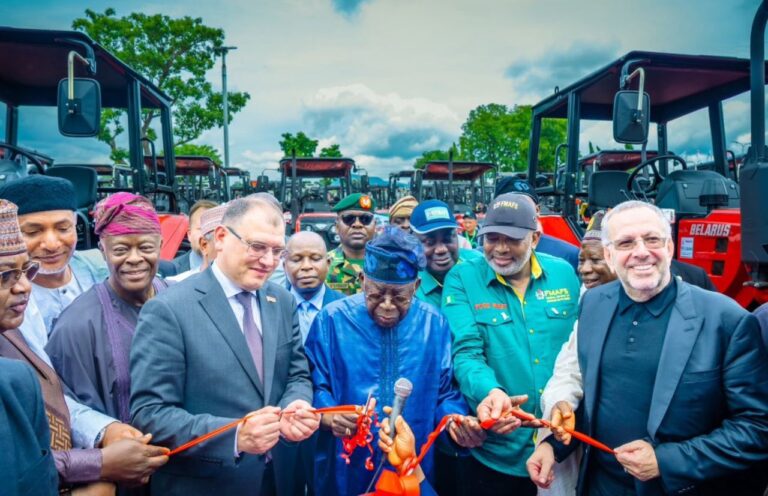
Additional major initiatives highlighted by the presidency include: National Mechanization Programme: Aimed at delivering 10,000 tractors nationwide within five years, with 2,000 tractors and essential equipment already distributed to promote large-scale mechanized farming.

  • Special Agro-Processing Zones (SAPZ): Developed in partnership with the African Development Bank to create agro-industrial hubs that add value to produce and drive rural job creation.
  • Agropocket Initiative: This scheme has already facilitated the cultivation of over 133,000 hectares of wheat in Northern Nigeria, helping to strengthen domestic food production and reduce dependence on grain imports.

The administration reiterated that these reforms are designed to modernize the sector, boost food production, and empower genuine farmers across Nigeria.

“President Tinubu’s Renewed Hope Agenda places food security at the core of our national priorities,” the official said. “By cleaning up the system, investing in infrastructure, and supporting genuine producers, we’re laying the foundation for a prosperous, agriculturally self-reliant Nigeria.”

These efforts mark one of the administration’s most comprehensive attempts yet to reposition Nigeria as a regional agricultural powerhouse and reduce its reliance on food imports. Read More