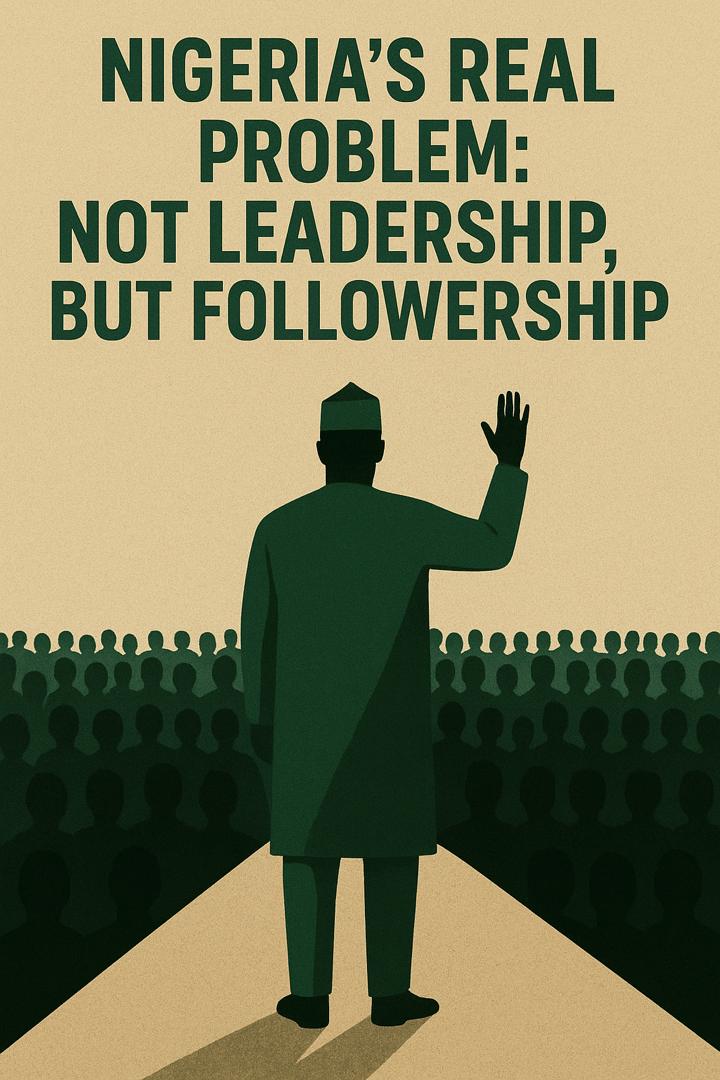




Nigeria’s Real Problem: Not Leadership, But Followership | By Owolabi Aleshinloye
Until citizens rise to demand accountability and embrace active participation, the cry of “leadership crisis” will remain a misplaced excuse.
Each time Nigeria’s challenges are discussed, the phrase “leadership crisis” is often thrown around as a blanket explanation. While it is easy to blame those in office, the truth is more complex. Nigeria is not suffering from a shortage of leaders; rather, it is struggling with the responsibility of followership.
Leaders do not fall from the sky; they emerge from within society. If we argue that Nigeria has failed leaders, then by extension, we must also admit that the country has failed followers. A system that produces leadership reflects the values, demands, and expectations of its people.
Unfortunately, many Nigerian citizens have adopted a passive attitude toward governance. Beyond elections, there is little sustained engagement. Politicians are rarely held to account, and the culture of silence or resignation allows mediocrity to thrive. A disengaged public gives room for poor leadership to fester.
The truth is that accountability is a two-way street. Good governance flourishes only where citizens are active, informed, and uncompromising in demanding integrity. When followers celebrate ill-gotten wealth, overlook corruption, or reward populism over substance, they set the stage for bad leadership. On the other hand, when citizens uphold values of honesty, hard work, and transparency, the leaders that emerge from among them will reflect those virtues.
A striking example of this followers’ crisis is found in the failed loan initiative once championed by a leading Nigerian bank. The bank introduced a scheme to grant loans without collateral, aimed at supporting vibrant and hardworking Nigerians. Sadly, many beneficiaries refused to repay. The greed and irresponsibility of a few destroyed what could have been a revolutionary initiative. If the scheme had succeeded, other banks would likely have replicated it, creating wider access to credit for genuine entrepreneurs. Instead, the dishonesty of some citizens undermined a program that could have strengthened the economy.
Nigeria’s real challenge, therefore, is not a leadership crisis, but a followership crisis. Until citizens rise to the task of active nation-building, by questioning policies, monitoring projects, supporting reforms, and insisting on accountability at all levels of government, from local councils to the presidency, the cycle of disappointment will continue.
The future of the country depends not only on who leads, but also on how the people choose to follow. Leaders are a mirror of their society; if Nigeria wants better leadership, Nigerians must first become better followers. Read More