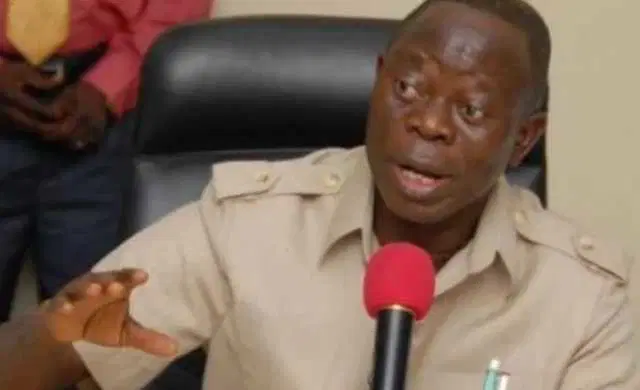
Former Edo State Governor, Adams Oshiomhole, has publicly commended the Minister of the Federal Capital Territory (FCT), Nyesom Wike, for standing by him during what he described as a period of political abandonment following his removal as National Chairman of the All Progressives Congress (APC).
Oshiomhole made the disclosure in Benin City while handing over 54 construction equipment to the 18 local government areas of Edo State, reflecting on the events that trailed his exit from the party’s top leadership position.
The senator representing Edo North recounted how many party loyalists distanced themselves from him after his dismissal.
“After I was dismissed as APC National Chairman, I became lonely, abandoned by my own party. People were afraid to visit me then because it could be termed anti-party,” he said.
According to Oshiomhole, Wike defied the political climate and reached out to him when others kept their distance. He revealed that the FCT Minister invited him to Port Harcourt to commission a flyover project and subsequently conferred on him the highest honour of Rivers State.
But I got a call from a rare Nigerian who identifies with those who are lonely,” Oshiomhole stated, adding that although Wike once joked about having “celebrated” his political misfortune, the minister ultimately restored his hope during the trying period.
So, if I dey do yanga, it’s because I have a minister that can identify with me when I was removed from my job,” he quipped.
Oshiomhole also applauded Wike’s leadership style and political performance, particularly during the recent FCT local government elections, where he said the minister demonstrated strategic strength despite political competition.
Describing Wike as a trailblazer from the South-South geopolitical zone, Oshiomhole said he has “refined and redefined the concept of development” in Abuja.
He further praised the cordial relationship between Wike and Edo State leaders, commending the state governor for sustaining the alliance.
Political observers say the public show of solidarity underscores shifting alliances and enduring personal loyalties within Nigeria’s dynamic political landscape.