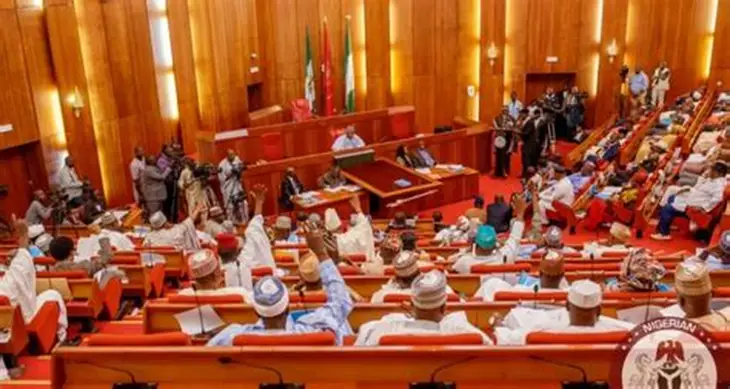
The Senate has pledged to complete the amendment of the 1999 Constitution to pave the way for the establishment of state police before the end of 2026, signaling a major shift in Nigeria’s security architecture.
The commitment follows a formal request by President Bola Tinubu urging the National Assembly to initiate constitutional changes that would decentralise policing as part of broader efforts to combat insecurity nationwide.
Senate to Resume Constitutional Review
Speaking with Sunday PUNCH, Senate spokesperson Yemi Adaramodu disclosed that the upper chamber would immediately resume work on the constitutional review process once plenary reconvenes next week.
According to him, groundwork on the proposal had already been laid before legislative attention shifted to electoral reforms and the 2026 Appropriation Bill.
“We are going to commence the process of reviewing the constitution for the establishment of state police immediately we resume next week,” Adaramodu said, assuring Nigerians that the amendment would be concluded before electioneering begins ahead of the next general elections.
He added that extensive consultations had already been conducted across geopolitical zones, with reports and stakeholder submissions compiled by the constitutional review committee.
President Tinubu first pressed the issue during an interfaith breaking of fast at the Presidential Villa, Abuja, urging lawmakers to “start thinking how best to amend the constitution to incorporate the state police for us to secure our country.”
Addressing members of the House of Representatives days later, the President warned that the creation of state police must not be “a straight free fall for everybody,” stressing the need for checks and balances to prevent abuse by state governors.
Security stakeholders have largely welcomed the proposal but warned of potential pitfalls.
APC chieftain Ayodele Arise, speaking on Arise TV, suggested that the amendment process could begin with a review of Section 214 of the Constitution to move policing from the Exclusive List to the Concurrent List. This would allow both federal and state governments to operate separate police formations.
“As far as the security situation in the country is concerned, there is definitely a shortage of security personnel,” Ngelzarma noted, arguing that decentralised policing could improve response to local crimes.
However, he cautioned that recruitment into state police formations must reflect ethnic and religious diversity to prevent domination by any group.
Similarly, National Publicity Secretary of Afenifere, Jare Ajayi, described the reform as necessary but urged lawmakers to insert clear legal safeguards limiting governors’ powers over state police.
“The National Assembly must make provisions in the bill to limit the powers of governors to curb abuse of state police,” Ajayi said, recommending that citizens be granted the right to challenge misuse in court.
With the electoral amendment bill already signed into law and budget deliberations underway, Adaramodu insisted that the Senate would fast-track the constitutional amendment process.
“Before electioneering starts, we would have done and dusted it, then pass it on to Mr President for his assent,” he assured.
If successful, the amendment would mark one of the most consequential security reforms since the return to democracy, potentially reshaping Nigeria’s policing system and redefining federal-state power dynamics in the fight against crime.