


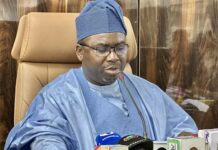



Finance Minister Taiwo Oyedele says developing economies pay an estimated $500bn extra in borrowing costs, urging the IMF and World Bank to expand affordable financing
Oyedele: Developing Countries Pay $500bn Extra in Borrowing Costs, Urges IMF, World Bank Action
By Lukman OMIKUNLE
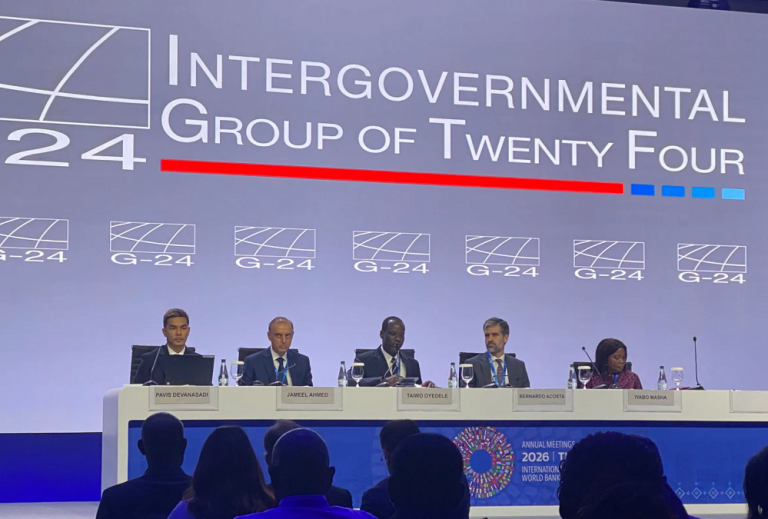
Nigeria’s Minister of Finance and Coordinating Minister of the Economy, Taiwo Oyedele, has called on the International Monetary Fund and the World Bank Group to make concessional loans more affordable for developing economies, saying poorer countries pay an estimated $500 billion more in borrowing costs than developed nations.
Oyedele, who chairs the Intergovernmental Group of Twenty-Four (G-24), made the appeal at the ongoing World Bank and IMF Annual Meetings in Bangkok, Thailand, where he urged international financial institutions to help ease debt pressures without forcing vulnerable households and productive businesses to bear additional tax burdens.
He said developing economies needed to strengthen domestic revenue mobilisation, eliminate wasteful spending and attract private investment while ensuring that borrowed funds translated into jobs, inclusive growth and improved living standards.
“We call on both the IMF and the World Bank to find means of making particularly short-term, more affordable concessional borrowing available to particularly the vulnerable countries,” Oyedele said.
The minister argued that although borrowing remained necessary for economic development, its cost and terms could constrain governments’ ability to finance infrastructure, healthcare, education and other essential services.
He urged the IMF and World Bank to develop frameworks for mobilising private capital, allowing scarce public funds to be directed towards critical social and economic priorities.
Oyedele also called for predictable and coordinated sovereign debt treatment, greater transparency and improved credit-rating assessments to help developing countries manage debt vulnerabilities.
He cautioned against responding to fiscal pressures by increasing taxes on struggling households and productive sectors, arguing that governments should first identify savings, eliminate inefficiencies and improve revenue collection.
The minister said macroeconomic stability was essential for sustainable growth but warned that it should not be pursued at the expense of employment creation and economic transformation.
G-24 Secretariat head Iyabo Masha said macroeconomic stability provided the foundation for structural reforms, infrastructure development and job creation. Oyedele agreed that stability and employment-rich growth should complement each other.
He also warned that emerging technologies, particularly artificial intelligence, could generate economic expansion without creating enough jobs if governments failed to manage their adoption effectively.
The minister identified geopolitical conflicts, changing trade policies, monetary policy uncertainty, volatile commodity prices and climate shocks as additional threats to global economic growth.
He called for reforms to the international financial system, including adjustments to IMF quotas to reflect changing global economic realities and improve the representation of emerging and vulnerable economies.
Oyedele further urged the World Bank Group, regional development banks and other stakeholders to work towards delivering at least $300 billion in annual climate finance by 2035, in line with the target referenced in the discussions following COP29.
Defending Nigeria’s economic reform programme, the minister said the government deliberately sequenced petrol subsidy removal and foreign exchange liberalisation to improve the chances of success and manage the combined impact of the policies.
Speaking during an Africa’s Golden Future session, Oyedele explained that the foreign exchange component accounted for a substantial portion of the fuel subsidy burden.
“Many people had not paid attention to the fact that the biggest component of that subsidy wasn’t the fuel product itself; it was the delay in FX flotation. So, if we had done FX flotation before fuel subsidy removal, it would have been impossible,” he said.
According to the minister, petrol prices initially rose by about 100 per cent following subsidy removal before increasing further after the foreign exchange reform was introduced roughly two weeks later.
He said the government subsequently retained some subsidy for several months through a price cap as part of the transition.
Oyedele said the experience demonstrated the importance of carefully planning major policy changes, particularly when several reforms could simultaneously affect prices and household purchasing power.
“If you start your reforms and you do it halfway, you deliver the pain, and the gains are not guaranteed,” he said.
The minister cited fuel subsidy removal, foreign exchange liberalisation and tax reform as examples of policies whose outcomes depended partly on their design, sequencing and implementation.
He maintained that Nigeria’s tax reforms were intended to improve the tax system and provide relief rather than impose additional hardship on citizens.
Acknowledging public concerns and controversy surrounding the proposals, Oyedele said the government needed to continue explaining its decisions while demonstrating the benefits of its policies.
“Trust is not something you can legislate. You have to earn it, and policy is not just what you say; it’s also what you do,” he said.
He stressed that vulnerable citizens needed support to withstand the immediate difficulties associated with economic reforms before they could benefit from improvements in the wider economy.
The minister cited the government’s cash transfer programme, which he said had reached more than 10 million households, and education support benefiting more than 1.5 million students as measures designed to cushion the effects of economic changes.
He added that reforms should be embedded in laws and institutions to ensure continuity beyond changes in government, noting that investors needed predictable policies before committing capital to long-term projects.
“Capital follows trust before it follows returns,” Oyedele said.
Turning to regional integration, the minister urged African governments to align their trade, fiscal and monetary policies to maximise the benefits of the African Continental Free Trade Area (AfCFTA).
He said the agreement offered an opportunity to transform 54 African countries into a single market, enabling businesses to expand production, reach more customers and benefit from economies of scale.
“We have a lot of small countries, and what AfCFTA is trying to do is to turn 54 countries into one market, so that way it’s easy for us to scale,” he said.
However, Oyedele warned that inconsistent regulations, cumbersome administrative procedures and restrictions on the movement of goods, services, capital and people could prevent the agreement from achieving its full potential.
He disclosed that Nigeria was developing a National Single Window to simplify border procedures and improve trade documentation through technology.
The minister also called for greater investment in electricity, transport, logistics, agricultural processing and storage facilities to strengthen the competitiveness of African businesses.
He said governments should use tariffs to protect strategic industries only where necessary, with clearly defined objectives and plans for withdrawing protection when it was no longer justified.
At the meetings, IMF Deputy Managing Director Bo Li warned that Africa needed faster economic growth to improve living standards, noting that the region’s current growth trajectory could leave income per person taking about 50 years to double.
Li identified high debt, expensive borrowing and declining foreign aid as major constraints, urging governments to improve governance, regulations and market access to attract private investment.
He said closing half the gap between Sub-Saharan Africa and emerging markets in these areas could increase the region’s economic output by as much as 20 per cent over five to 10 years.
Nedbank’s Daniel Mminele said macroeconomic stability alone was insufficient to attract long-term investment, stressing the importance of predictable policies, reliable infrastructure and effective contract enforcement.
African Development Bank President Sidi Ould Tah also urged governments to move beyond announcing reforms and focus on delivering measurable results.
He cited Mission 300, an initiative involving the African Development Bank, the World Bank and other partners, which aims to provide electricity access to 300 million Africans by 2030.
The discussions highlighted the financing challenges confronting developing economies and the need for international financial institutions to expand access to affordable capital while governments pursue credible reforms, attract private investment and protect vulnerable citizens.
#TaiwoOyedele #IMF #WorldBank #NigerianEconomy #Newsheadline247