


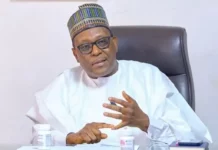


President Bola Ahmed Tinubu has called for the establishment of a transparent, efficient and robust tax system in Nigeria, warning that sustainable national prosperity cannot be built on weak revenue structures.
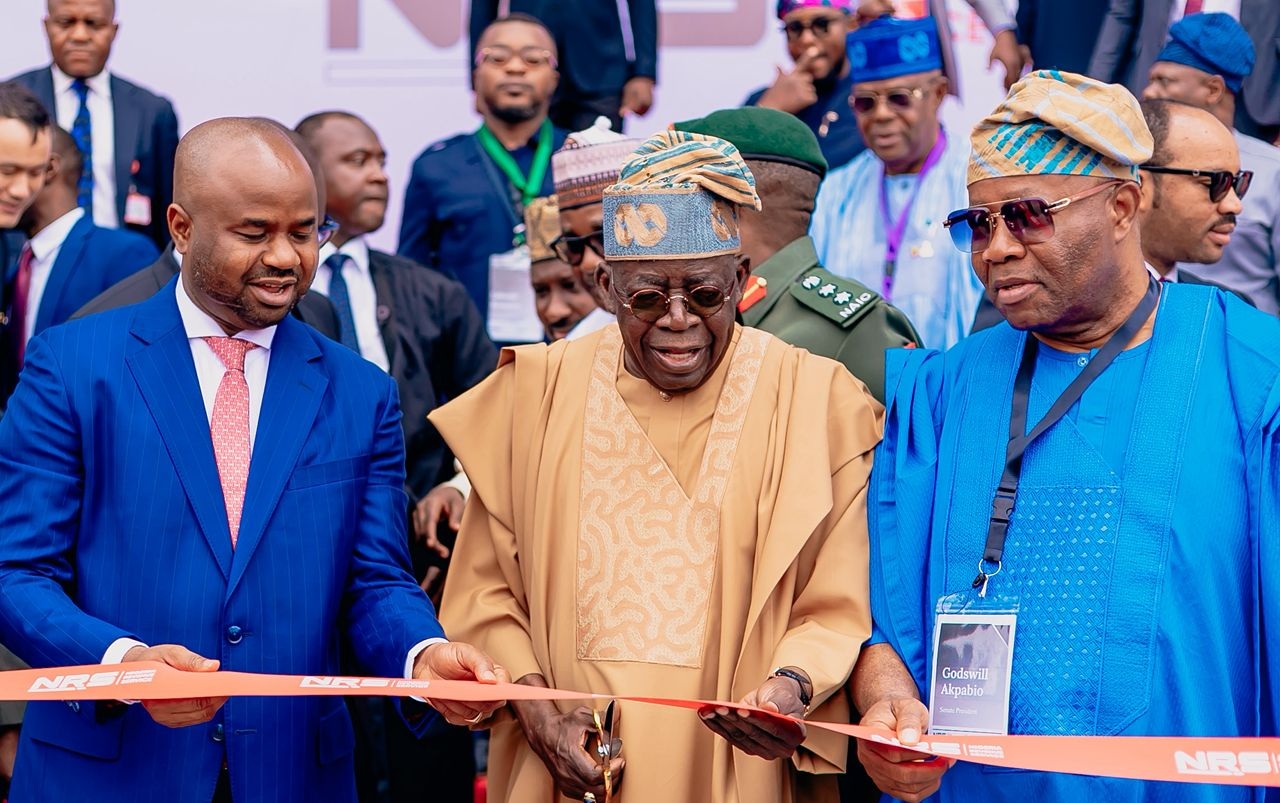
Speaking on Tuesday during the commissioning of the Nigeria Revenue Service (NRS) headquarters in Abuja, Tinubu stressed that trust in government is impossible when taxation systems are opaque, inefficient or unfair.
He noted that his administration has undertaken sweeping fiscal reforms aimed at simplifying tax processes, eliminating distortions and creating an investment-friendly environment.
“Our direction is clear—a revenue system that rewards enterprise, supports growth and ensures citizens see value for their taxes,” the President said, adding that early outcomes from the reforms are already encouraging.
Tinubu recalled his inauguration pledge to address structural weaknesses in the economy, reaffirming his commitment to building a disciplined and equitable system. He described the commissioning of the NRS headquarters as more than a ceremonial event, calling it a milestone in strengthening Nigeria’s fiscal foundation and rebuilding public confidence in institutions.
According to the President, recent improvements in fiscal stability, foreign reserves, trade systems and investor confidence are the result of deliberate policies and sustained reforms.
He further described the new facility as a symbol of professionalism, transparency and efficiency, urging the NRS to not only focus on revenue collection but also prioritize trust, fairness and accountability in its operations.
“Government institutions must earn the confidence of the people and command respect globally,” he said.
Earlier, Executive Chairman of the NRS, Zacch Adedeji, revealed that the administration has implemented one of the most significant tax reforms in Nigeria’s history by consolidating over 60 fragmented tax laws into a unified framework.
He said the reforms have improved compliance, predictability and efficiency without increasing tax burdens, leading to a sharp rise in revenue collections—from ₦6.41 trillion in 2021 to ₦28.79 trillion in 2025.
Adedeji also disclosed that the tax net has expanded significantly, with more than 19 million taxpayers now registered, alongside the addition of about 814,000 corporate taxpayers.
He attributed the gains to improved governance, enhanced transparency, better remittance systems and key policy measures such as exchange rate unification and fuel subsidy removal.
The NRS boss added that initiatives like the National Single Window have modernised trade processes, reduced inefficiencies and strengthened revenue assurance, while energy sector reforms—including the sale of crude oil in naira—have further repositioned the economy.
Also speaking, Minister of State for Finance, Taiwo Oyedele, said the new headquarters represents a strategic investment in Nigeria’s fiscal future.
He explained that the transition from the former Federal Inland Revenue Service to the Nigeria Revenue Service reflects broader efforts to enhance governance, accountability and performance.
Oyedele acknowledged past challenges such as fragmented tax laws and weak coordination but noted that ongoing reforms are already improving revenue generation and laying the groundwork for long-term economic sustainability.
The newly commissioned NRS complex—comprising three towers with sixteen floors and capacity for over 3,000 staff—is expected to boost operational efficiency and service delivery.
Tinubu concluded by urging Nigerians to remain resilient and called on future leaders to sustain reform efforts, emphasizing that national progress depends on consistency, discipline and collective commitment.