


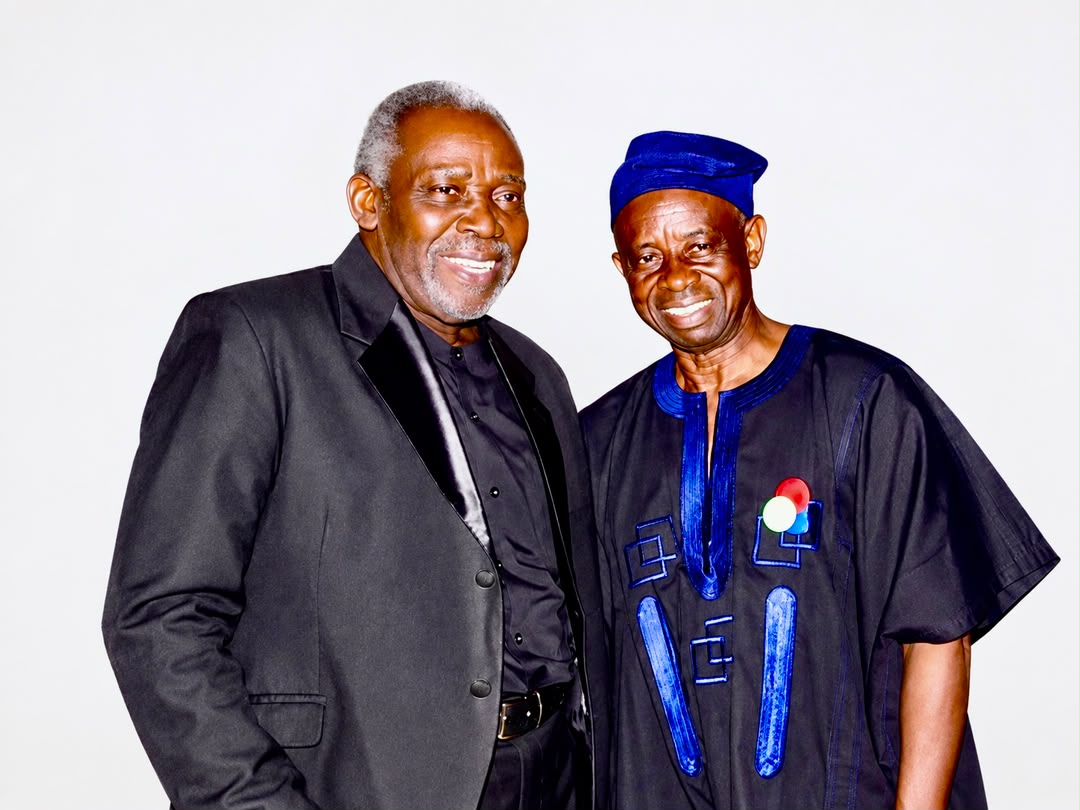





Tunde Kelani, popularly known as TK, has paid tribute to Olu Jacobs, recalling their 1978 meeting and the late actor’s contribution to Nigerian cinema
Filmmaker Tunde Kelani Mourns Olu Jacobs, Recalls Actor’s Sacrifice for Nigerian Cinema
By Lukman OMIKUNLE
Renowned Nigerian filmmaker and cinematographer Tunde Kelani, popularly known as TK, has paid an emotional tribute to veteran actor Olu Jacobs, recalling their nearly five-decade relationship and the late actor’s contribution to the growth of Nigerian cinema.
Jacobs, who died in 2026 at the age of 84, was described by Kelani as a consummate, classically trained actor whose talent, humility and commitment to the craft left an enduring mark on generations of filmmakers and actors.
In his personal tribute titled “A Personal Tribute: Olu Jacobs (1942–2026),” Kelani recalled meeting the actor in London in 1978 while he was a student at the London Film School.
According to Kelani, he and a group of Nigerian classmates, including Adefolu, George and Femi Aloba, had come together for their final graduation project and decided to adapt Amadu Maddy’s novel, No Past, No Present, No Future, into a diploma film titled Trying Times.
Kelani said Jacobs was then a vibrant presence at the Africa Centre in Covent Garden, London, and agreed to lead the student production without demanding a professional fee.
“I first crossed paths with Oludotun Baiyewu Jacobs—fondly known to many of us as Uncle Olu Jacobs—in 1978,” Kelani said.
He recalled that the actor’s only condition for participating in the three-day production was that he be provided with meals.
Kelani said Jacobs’ performance helped give Trying Times the recognition it deserved, with the film eventually earning a place at the Governors’ Screening.
“From that very first encounter, he left an indelible mark on me: a consummate, classically trained actor with a commanding presence, yet generous enough to lead our student production without asking for a fee,” he said.
Kelani also reflected on another significant encounter with Jacobs years later during M-Net’s New Directions initiative, which was designed to encourage African storytelling and filmmaking.
The filmmaker said he served as director of photography on Twins of the Rainforest, where he captured Jacobs alongside his wife, veteran actress Joke Silva.
Kelani described the chemistry between the two actors as electrifying, saying the experience remained one of the treasured milestones of his career.
“I was privileged to serve as director of photography on Twins of the Rainforest, framing Uncle Olu alongside his equally gifted wife, Joke Silva. Their on-screen chemistry as husband and wife was electrifying,” he said.
He added that the images captured on 16mm film during the production remained permanently etched in his memory.
Kelani also remembered Jacobs for his warmth, distinctive voice and ability to encourage those around him.
“I will forever remember his warm, reassuring smile, that booming baritone voice, and his unwavering instinct to uplift everyone around him, cast and crew alike,” he said.
Beyond their personal relationship, Kelani highlighted Jacobs’ decision to return to Nigeria after building an established career in Britain.
According to him, Jacobs had already earned a reputation in British theatre, television and international cinema, including a role in Roman Polanski’s Pirates, but chose to return home and contribute to the emerging Nigerian film industry.
Kelani said Jacobs’ decision required courage and vision, particularly at a time when the use of analogue video for filmmaking was still viewed with scepticism by many conventional filmmakers.
“It took extraordinary courage and vision for Uncle Olu to walk away from a flourishing career abroad,” Kelani said.
He added that Jacobs embraced the emerging Nollywood movement and worked through the industry’s early infrastructural limitations, bringing his experience, discipline and acting craft to a developing film culture.
Kelani described Jacobs as one of the figures whose work helped lay the foundation for the Nigerian screen industry’s eventual international prominence.
“They simply do not make them like him anymore,” he said.
The filmmaker also recalled Jacobs’ roots in Egbaland, Abeokuta, Ogun State, and noted that the actor was honoured with the national award of Member of the Order of the Federal Republic, MFR, alongside several lifetime achievement recognitions.
For Kelani, however, Jacobs’ legacy extends beyond the honours he received.
He described the late actor as “a founding patriarch of modern Nigerian screen performance,” stressing that his influence could not be measured solely by awards.
In his closing tribute, Kelani thanked Jacobs for the opportunity to have captured his performances through the camera and for the example he set in service of the acting profession.
“Thank you, Uncle Olu, for gracing my lens in Trying Times and Twins of the Rainforest, and for showing us what it truly means to serve the craft,” Kelani said.
“Sun re o. Goodnight, Uncle.”
Kelani signed off the tribute as Tunde Kelani (TK), marking the passing of an actor whose career connected British theatre and international screen work with the formative years of Nigeria’s modern film industry.