





President Bola Tinubu has signed the Electoral Act 2026 into law after stormy National Assembly sessions
President Tinubu Assents to Electoral Act Re-Enactment Bill 2026 – Keeps Manual Result Transmission Option Amid Fierce Senate, House Battles
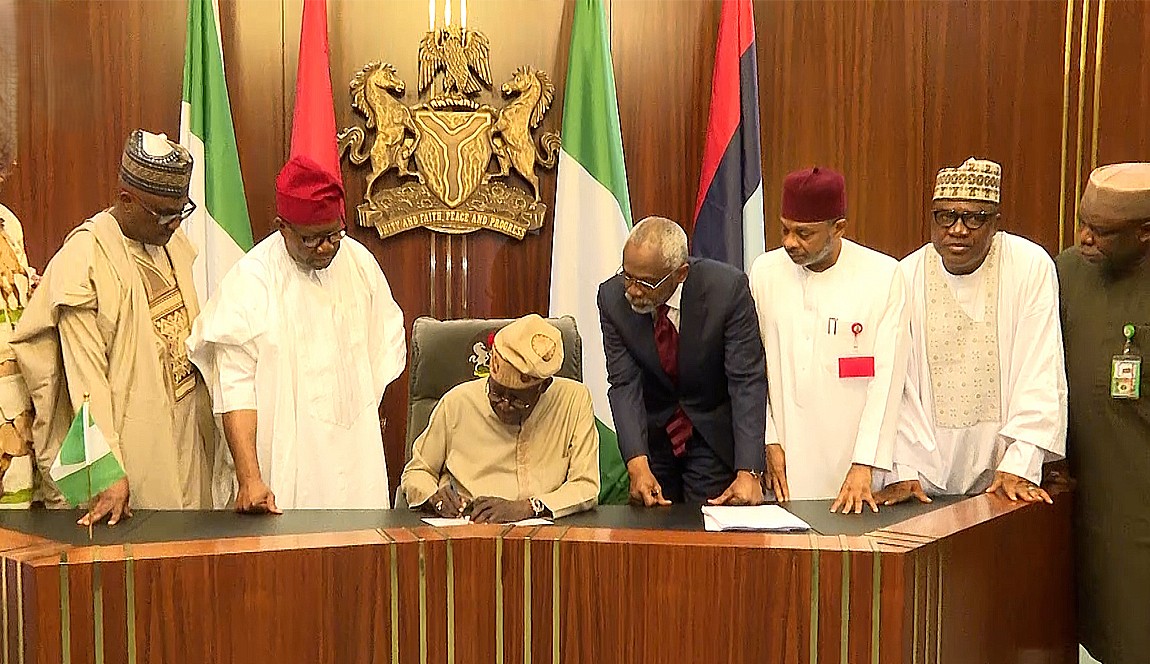
President Bola Tinubu on Wednesday signed the Electoral Act, 2022 (Repeal and Re-Enactment) Bill 2026 into law at the State House, Abuja, capping months of intense legislative wrangling and public controversy over electronic transmission of election results.
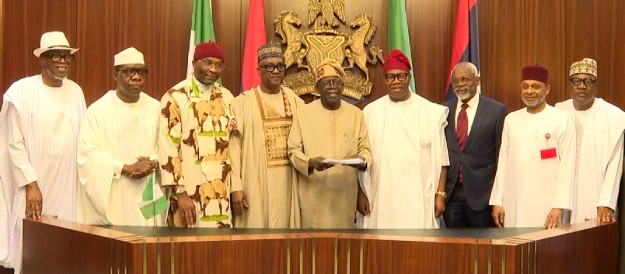
The ceremony, witnessed by Senate President Godswill Akpabio, Speaker Tajudeen Abbas, Chief of Staff Femi Gbajabiamila, and other top officials, came just one day after the National Assembly passed the bill following dramatic sessions in both chambers.
Tinubu emphasized the importance of a credible, inclusive electoral process for Nigeria’s democratic stability.
“It’s not as important as the history aspects of this. What is crucial is the fact that you manage the process to the extent there will be no confusion, no disenfranchisement of Nigerians, and that we are all going to see democracy flourish.
“No matter how good the system is, it’s managed by the people, promoted by the people, and the result is finalised by the people,” the President said.
Addressing the core controversy—electronic vs. manual transmission—he pointed to practical realities.
“In fact, for final results, you are not going to be talking to the computer; you are going to be talking to human beings who will announce the final results.
“And when you look at the crux of various arguments, maybe Nigerians should question our broadband capability. How technically are we today? How technically will we be tomorrow to answer the call of either real-time or not?
“And as long as you appear personally, as a manual voter in any polling booth, a ballot paper is given to you manually, you decide in a corner and thumbprint the passing of your choice, you cast your votes, without hindrance and any interference, ballots are subsequently counted manually, sorted, and counted manually.
“It’s just the arithmetic accuracy that is to enter into Form EC8A. It’s the manual, essentially. The transmission of that manual result is what we’re looking at.
“And we need to avoid glitches — I’m glad you did — interference, unnecessary hacking in this age of computer inquisitiveness.
“Nigeria will be there. We will flourish. We will continue to nurture this democracy for the fulfillment of our dream for the prosperity and stability of our country,” he added.
The bill’s journey was turbulent. In the Senate on Tuesday, opposition senators led by Enyinnaya Abaribe (ADC/Abia South) demanded a division on Clause 60(3)—the proviso allowing manual transmission fallback when electronic systems fail. After a rowdy session, a closed-door meeting, and heated exchanges, 55 senators supported retaining the proviso, while 15 opposed it.
The House of Representatives faced similar drama. A motion to rescind its earlier adoption of compulsory real-time transmission to IReV (passed in December 2025) triggered loud protests when Speaker Tajudeen Abbas ruled in favor of the ayes despite louder “nays.” An executive session followed before alignment with the Senate position.
With the President’s assent, the re-enacted Electoral Act now provides a hybrid framework: prioritizing electronic transmission where possible, but permitting manual collation and transmission of Form EC8A results in cases of network failure or technical glitches—aiming to balance technological advancement with safeguards against disenfranchisement ahead of the 2027 general elections. Read More