



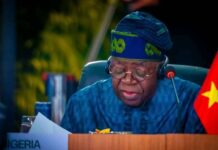



Ambassador-designate to Mexico, Reno Omokri, has dismissed as “inappropriate” comparisons between President Bola Ahmed Tinubu and former military ruler Sani Abacha.
Omokri’s remarks came in response to criticisms by social commentator Farooq Kperogi and politician Dele Momodu, who have accused Tinubu of undermining opposition parties and likened his leadership style to that of the late military dictator.
Abacha ruled Nigeria from 1993 until his death in 1998, a period widely associated with authoritarian governance.
Rejecting the comparison, Omokri described the claims as “mischievous” and lacking historical and factual basis, insisting that equating a democratic administration with a military regime was misleading.
“Having fought against that despicable regime, I will not sit idly by while unjust comparisons are made,” he said.
He also criticised allegations that the judiciary under Tinubu had become politicised, arguing that such claims were made without evidence and could erode public confidence in democratic institutions.
On accusations that the ruling party was weakening opposition groups, Omokri maintained that political competition, including attracting members from rival parties, is a legitimate feature of democracy.
“That is how democracy works,” he said, noting that similar practices occur globally, including in the United States and the United Kingdom, where legal battles and party defections are common.
Omokri further argued that the Tinubu administration relies on persuasion rather than coercion, contrasting it with Abacha’s military regime, which he said controlled political structures through force.
He pointed to what he described as achievements of the current administration, including increased federal allocations to states and growing international recognition.
According to him, President Tinubu’s engagement with global leaders, including a recent visit to the United Kingdom, reflects confidence in Nigeria’s reform efforts.
Omokri concluded that critics conflating routine political manoeuvring with authoritarianism misunderstand the workings of democracy, insisting that Nigeria’s political space remains open and competitive.