


President Bola Tinubu has declared a national emergency on poverty and insecurity, sparking strong reactions from labour unions and opposition leaders who are demanding immediate and far-reaching reforms to address Nigeria’s worsening socio-economic conditions.
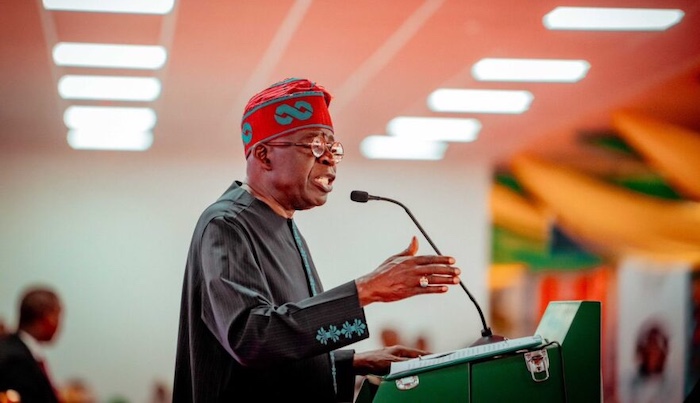
The declaration was made in Abuja during the 2026 May Day celebrations, where the President—represented by Secretary to the Government of the Federation, George Akume—acknowledged that rising poverty and insecurity remain major threats to national stability and workers’ welfare.
Aligning with the global decent work agenda of the International Labour Organisation, Tinubu stressed that meaningful employment cannot exist where workers live in fear or earn wages insufficient to support their families. He described the twin challenges as “significant obstacles” already being tackled through targeted government interventions.
Among the measures highlighted was the Community Protection Guards Initiative, which has recruited over 45,000 youths to bolster local security. Tinubu also pointed to social and economic programmes under his Renewed Hope Agenda, including cash transfers to 15 million vulnerable households and claims that 7.5 million Nigerians have been lifted out of poverty.
The President further cited infrastructure projects such as the Lagos-Calabar Coastal Highway and the Ajaokuta-Kaduna-Kano Gas Pipeline, which he said have generated over 600,000 jobs. Additional initiatives include a N200 billion MSME support fund and a micro-pension scheme covering more than 800,000 informal workers.
Despite these assurances, organised labour and opposition figures expressed deep concern over the country’s economic direction and security situation.
The Nigeria Labour Congress and Trade Union Congress warned that their support in the 2027 elections would depend on political parties committing to workers’ demands, including improved security, free education, and accessible healthcare.
In a joint address, labour leaders Joe Ajaero and Festus Osifo criticized current economic policies, arguing that they prioritize technical targets over workers’ welfare and long-term national development. They called for a shift to a production-driven economy that supports local industries, agriculture, and small businesses.
Opposition leaders also weighed in. Peter Obi urged Nigerians to prioritize competence in leadership selection, while David Mark promised a living wage under his party. Former Vice President Atiku Abubakar accused the current administration of worsening living conditions through poor governance.
Tinubu, however, maintained that his administration remains committed to improving workers’ welfare, citing the implementation of a new national minimum wage, payment of pension arrears, and the reintroduction of gratuities from January 2026.
He urged labour unions to prioritize dialogue over industrial action, emphasizing that strikes should remain a last resort. The President also praised security forces for their sacrifices, linking improved safety to economic growth and job creation.
As Nigeria approaches the 2027 elections, the May Day exchanges underscore growing pressure on the government to translate policy promises into tangible improvements in living standards and national security.