


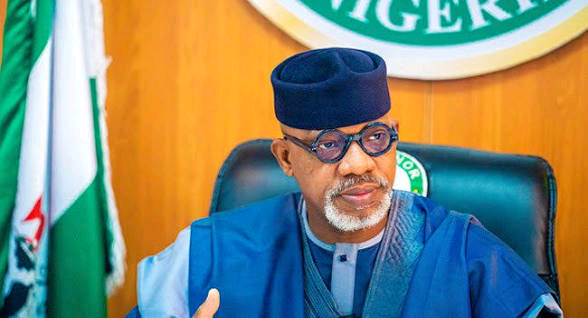
For years, the political journey of Dapo Abiodun has been shadowed by controversy, shifting alliances, and recurring accusations of political betrayal from influential figures across Nigeria’s power circles.
What many previously viewed as ordinary political maneuvering is now being increasingly described by insiders within the ruling APC as a consistent pattern that has followed the Ogun State governor from the military era to the current internal battles within the party.
Political stakeholders in the South-West APC say the tension surrounding Abiodun did not emerge suddenly. Several party figures claim the governor has developed a reputation for allegedly distancing himself from political allies after benefiting from their support and structures.
Critics trace parts of Abiodun’s political rise to the era of former military ruler Sani Abacha, where he was allegedly associated with networks linked to the military establishment. While many politicians from that period later reinvented themselves under democratic rule, insiders argue that Abiodun perfected the art of political survival by aligning with camps that offered strategic advantage at different times.
One of the longstanding allegations resurfacing around the governor concerns claims that he allegedly handled political funds connected to businessman Emeka Offor during the political structure-building years of former President Olusegun Obasanjo.
Although the allegations were never legally established, political veterans within Ogun PDP circles insist the controversy contributed to a breakdown of trust between Abiodun and Obasanjo’s camp. Some insiders claim the former president remained skeptical of the governor’s loyalty afterward, accusing him of political double-dealing.
Abiodun’s relationship with former Ogun governor Ibikunle Amosun has also evolved into one of the state’s most notable political rivalries.
Amosun was widely believed to have opposed Abiodun’s governorship ambition in 2019, backing another candidate instead. However, APC insiders argue that before the fallout, Abiodun significantly benefited from the political machinery and influence Amosun built within the Ogun APC.
The rivalry has since deepened divisions within the party, splitting the Ogun APC into competing factions, with loyalists on both sides trading accusations of sabotage and betrayal.
There are also growing concerns among some loyalists of President Bola Ahmed Tinubu over Abiodun’s political approach.
Party strategists allege that despite publicly identifying with Tinubu’s camp, the Ogun governor has allegedly pursued behind-the-scenes alliances that conflict with the interests of key South-West power blocs.
Although no official statement has emerged from the Presidency, insiders claim concerns are growing over alleged efforts to build alternative influence structures capable of challenging Tinubu’s dominance within the APC ahead of future political contests.
Supporters of former Ogun governor Gbenga Daniel, popularly known as OGD, have also accused Abiodun of political betrayal after allegedly benefiting from alliances linked to Daniel’s political network at various times.
While both politicians have publicly maintained cordial relations on several occasions, loyalists within Ogun politics insist distrust has always existed beneath the surface.
The controversy now appears to be extending beyond the South-West political landscape.
Sources within APC circles allege that Abiodun’s recent political maneuvers have strained his relationship with Hope Uzodinma, one of the influential figures within the party’s national structure.
Some insiders accuse the Ogun governor of attempting to weaken alliances connected to Uzodinma while positioning himself for greater national relevance within the APC ahead of the 2027 political permutations.
The claims have fueled speculation that powerful blocs within the ruling party are becoming increasingly cautious of Abiodun’s political ambitions and methods.
As political alignments ahead of 2027 quietly begin to take shape across Nigeria, critics argue that Abiodun’s biggest challenge may no longer come from opposition parties, but from trust issues within his own political camp.
From controversies linked to the Obasanjo era to his fallout with Amosun, tensions involving Tinubu loyalists, grievances from OGD supporters, and emerging friction with Uzodinma, political observers say the pattern of accusations surrounding the Ogun governor is becoming more difficult to dismiss.
Whether the allegations reflect elite political rivalry or point to a deeper culture of opportunism within Nigeria’s ruling political establishment remains a subject of intense debate.