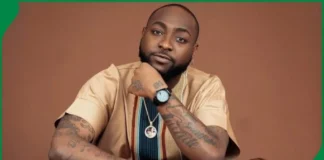

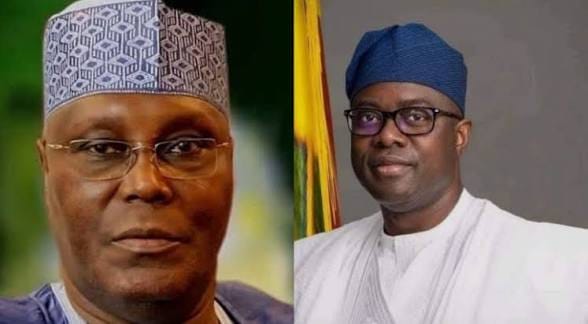


Nigeria’s opposition unity campaign, framed publicly as a response to APC dominance, is reportedly concealing a more specific calculation: swapping Rotimi Amaechi out of the vice-presidential slot in favour of Oyo State Governor Seyi Makinde, alongside Atiku Abubakar.
The scheme is one of several being weighed as opposition leaders search for a viable 2027 platform. While one bloc works through the ADC, another is exploring the NDC as a parallel option, underscoring how far from consensus the opposition remains despite months of consultation over the divisions that cost it previous elections.
Competing presidential ambitions among senior figures remain the central obstacle to unity, prompting intervention from elder statesmen. Former President Olusegun Obasanjo is facilitating talks involving Peter Obi and Kwankwaso on a coalition’s shape and leadership. Momentum has been reinforced by G100, a coalition including Anthony Kila and Salihu Tanko Yakasai, whose open letter, “The Doctrine of a Necessity for Democratic Opposition,” warned that continued fragmentation would hand the APC an uncontested advantage. The letter was addressed to figures including David Mark, Atiku, Obi, Makinde, Bala Mohammed, Seriake Dickson, Amaechi, Kwankwaso and Rauf Aregbesola.
Makinde’s renewed relevance stems from practical concerns, sources say. As a serving governor with campaign infrastructure and financial capacity, he is seen as a stronger asset for a resource-intensive national race than a symbolic pick. He had been considered for the role earlier, before Amaechi’s emergence followed disagreements, including legal threats, over the presidential nomination outcome.
Amaechi is not expected to cede ground easily, making his removal the most politically delicate step in any reshuffling. The episode illustrates the opposition’s broader problem: building the widest coalition against the APC means someone with real political capital has to lose, and no one has yet volunteered.