


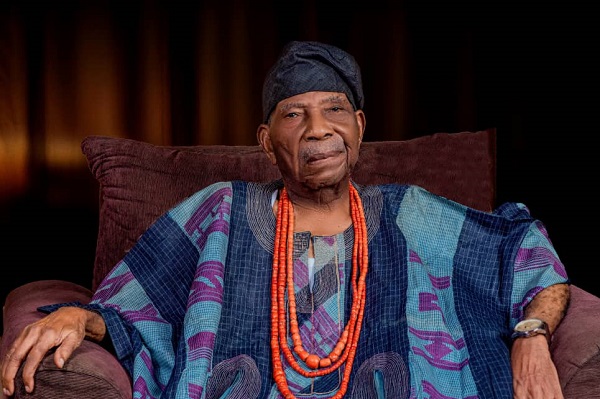




At 100 years old, Reuben Famuyide Fasoranti remains one of the most influential figures in Yoruba socio-political history — a man whose life has been defined by service, integrity, education and unwavering commitment to progressive ideals.
The elder statesman, born on May 11, 1926, in Uso, Ondo State, rose from the classroom to become a respected political leader and custodian of Yoruba interests. His journey through education, politics and activism mirrors the evolution of the Yoruba progressive movement over several decades.
His political mentor, the late Adekunle Ajasin, once described him as a man of exceptional integrity and dependability. In his autobiography, Ajasin: Memoirs and Memories, Ajasin revealed that he initially considered Fasoranti as his preferred running mate during the 1979 governorship election before ethnic considerations influenced a different choice.
Ajasin later entrusted Fasoranti with the position of Commissioner for Finance in Ondo State during the Second Republic, praising his capability, loyalty and efficiency in public service.
Fasoranti’s political consciousness began early while studying at the University College, Ibadan, where he joined the Action Group Youth Association alongside prominent progressive figures. He witnessed firsthand the internal crises that rocked the Action Group in the 1960s and remained committed to the ideals of Chief Obafemi Awolowo throughout his political life.
Beyond politics, Fasoranti built a distinguished career in education. After studying at Ondo Boys’ High School, Yaba Higher College and the University College, Ibadan, he furthered his education in Australia. He later taught at several schools, including his alma mater, before becoming principal of notable institutions such as Oyemekun Grammar School, Iju-Itaogbolu Grammar School and Christ School, Ado-Ekiti.
His passion for education continued even after retirement as he established Omolere Nursery and Primary School and Akure High School, both in Akure.
As a committed Awoist, Fasoranti aligned himself with the Unity Party of Nigeria (UPN) and became a prominent figure in Yoruba politics. However, following the military coup of 1983, he faced detention and trial over allegations widely considered politically motivated.
During the June 12 democratic struggle, he stood firmly beside Ajasin and other pro-democracy leaders. Yet, despite his loyalty and consistency, Fasoranti largely remained behind the scenes until he eventually emerged as leader of Afenifere during one of the organisation’s most turbulent periods.
His leadership coincided with deep divisions within Afenifere and the Alliance for Democracy (AD), especially after disputes over party leadership and presidential candidacy selection fractured the Yoruba political family. Rival factions emerged, exposing ideological tensions, personality clashes and struggles for political dominance among leading Yoruba politicians.
Despite the internal conflicts, Fasoranti continued to advocate for restructuring, federalism and Yoruba unity. He repeatedly warned that disunity among Yoruba leaders had weakened the region’s political influence nationally.
At different times, however, critics accused Afenifere under his leadership of inconsistency, particularly over its shifting political alliances and endorsements during presidential elections.
Observers say Fasoranti inherited an already divided organisation and struggled to reconcile competing interests within the group. Yet, many still credit him for preserving the moral authority and historical relevance of Afenifere at a time when the pan-Yoruba organisation faced declining influence.
Known for his simplicity and rejection of materialism, Fasoranti eventually stepped down from active leadership, citing old age, disloyalty among members and the erosion of the founding ideals of the organisation.
Today, as he marks a century of life, many regard Fasoranti as a symbol of resilience, principled leadership and commitment to public service. From the classroom to the political arena, his legacy remains deeply woven into the history of Yoruba nationalism and Nigeria’s democratic evolution.