

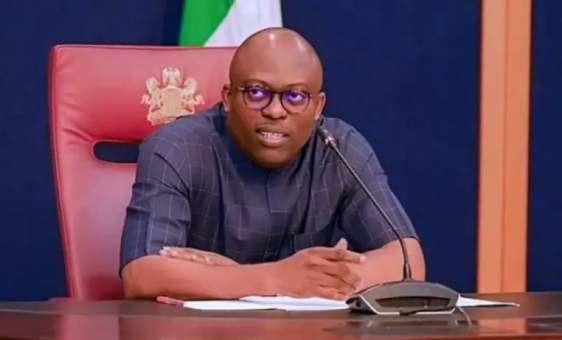





Rivers State Governor, Siminalayi Fubara, has called for bold and innovative approaches to tackle Nigeria’s persistent housing deficit, positioning the real estate sector as a critical driver of economic growth and social development.
Speaking at the BusinessDay South-South Real Estate Exhibition and Investment Summit 2026 in Port Harcourt, the governor said the housing sector holds vast potential not only for investment but also for job creation and improved living standards.
Represented by the Secretary to the State Government, Dr. Dagogo Wokoma, Fubara reaffirmed his administration’s commitment to working closely with stakeholders and innovators to close the housing gap and transform urban development across Rivers State.
The summit, themed “Addressing Nigeria’s Housing Deficit with Innovative Solutions,” brought together industry leaders, policymakers, and investors to explore practical pathways for sustainable housing delivery.
Fubara stressed that real estate remains a powerful engine for urban transformation and wealth creation globally, noting that Rivers State is positioning itself to harness these opportunities through strategic reforms.
“Our administration is committed to creating an enabling environment for investors and stakeholders in the real estate ecosystem through policy reforms, infrastructure development, and stronger public-private partnerships,” he said.
He urged participants to leverage the platform to exchange ideas, forge partnerships, and contribute innovative solutions capable of reshaping the future of housing development in the state and across Nigeria.
In her remarks, the Minister of Housing and Urban Development, represented by Federal Head of Lands, Queen Tekai, said the federal government is actively implementing measures to create a more supportive environment for housing development nationwide.
Delivering the keynote address, Group Managing Director of TAF Africa Global and Managing Director of Greater TAF Nigeria Ltd, Mustapha Njie, emphasised the need for a forward-thinking housing sector driven by accessibility and efficiency.
Njie outlined key strategies to bridge the housing gap, including improving access to financing, strengthening public-private partnerships, reducing bureaucratic hurdles, and lowering the high costs associated with land titling.
He also advocated for the development of new cities such as Greater TAF City in Nigeria and TAF City in The Gambia, alongside increased investment in local building materials production.
Highlighting future trends, Njie called for strategic urbanisation, better infrastructure in emerging areas, and the adoption of eco-friendly, smart city concepts to ensure sustainable growth in the housing sector.