



By Dr. Oyede SAHEED
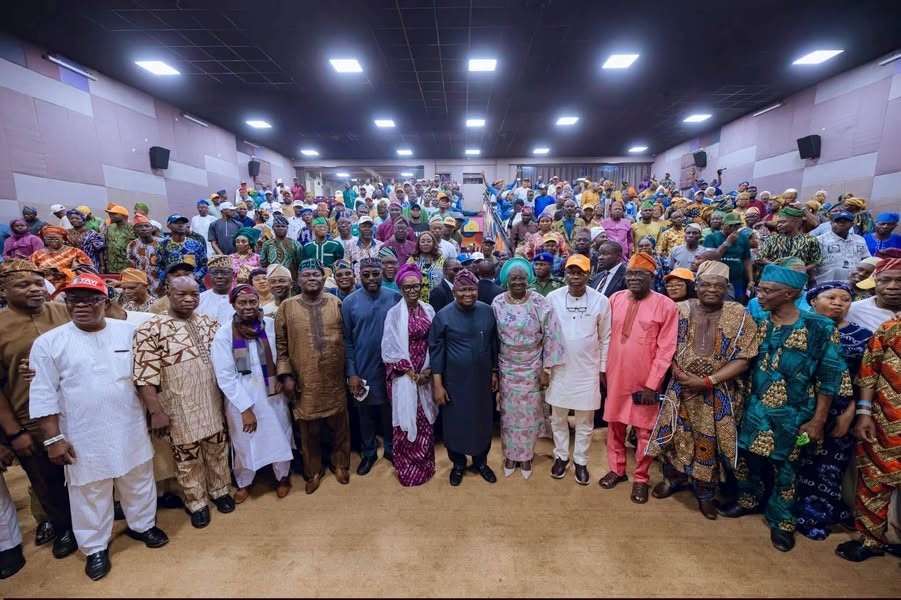
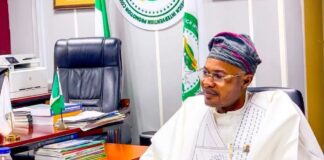
Reflections in this piece were inspired by the consultative engagement between Senator Solomon Olamilekan Adeola (Yayi) and party leaders and stakeholders from Ado-Odo/Ota Federal Constituency
OGUN 2027: Is Senator Yayi the Political Messiah?
Abeokuta, Ogun State
My reflections in this piece were inspired by the consultative engagement between Senator Solomon Olamilekan Adeola (Yayi) and party leaders and stakeholders from Ado-Odo/Ota Federal Constituency in Ilaro on July 1, 2026. Like every political gathering, opinions differed, expectations varied, and ambitions were evident. Yet one impression stayed with me long after the meeting ended; Senator Yayi is not merely nursing a governorship ambition; he is executing one of the most coordinated political projects Ogun State has witnessed in recent years.
Politics is not won by wishful thinking. It is won through preparation, strategic planning, coalition building, reconciliation, and the ability to convince party members that victory is both possible and achievable. Elections may be decided on election day, but they are painstakingly built months, and sometimes years, before the first ballot is cast. Judging from what I have observed, Senator Yayi understands this political reality better than most of those eyeing the Oke Mosan Government House.
While addressing party leaders and stakeholders in Ilaro, his message was remarkably consistent. He challenged members of the All Progressives Congress (APC) in Ogun State to see the 2027 governorship election as a collective project rather than the ambition of one individual. His argument was simple but politically profound; when party members take ownership of an election, victory becomes easier to defend and sweeter to celebrate.
Senator Yayi also spoke about his political journey, one that has taken him from the Lagos State House of Assembly to the National Assembly. More than two decades in legislative politics have exposed him to governance, public administration, political negotiations, and the delicate management of competing interests. Experience is not everything in politics, but it often separates politicians who react from those who anticipate.
Another aspect of his engagement that caught my attention was his emphasis on rewarding party faithful. Every election is won by thousands of unnamed party members who mobilise voters, defend polling units, and keep the political machinery running long after campaign rallies have ended. Unfortunately, they are often forgotten once victory is secured. Senator Yayi’s repeated assurance that rewards should trickle down to the grassroots connects with many, as it speaks directly to one of the biggest complaints within party politics.
Perhaps what is becoming even more difficult to ignore is the sheer scale of the Yayi political movement across Ogun State. He has traversed the three senatorial districts, attended reconciliation meetings, reached out to different political tendencies, and continued to build bridges where others still see divisions.
Then there is visibility. Today, it is almost impossible to drive through major communities in Ogun State without encountering the image of Senator Yayi. His political presence dominates highways, town centres, and strategic locations across the state. My brother, Prince Oke Oyede, has consistently maintained that Senator Yayi will win the election before 12pm on election day, I usually respond that I may have to volunteer my services to draft concession speeches for some of the defeated candidates. Beneath my humour lies a growing confidence shared by many of us who have watched the movement gather momentum across the state.
Away from public rallies and political consultations, serious policy conversations are already taking place. I am aware of several committees quietly working on governance blueprints covering different sectors of the economy and public administration. I say this not as an observer but as someone privileged to serve on at least two of those committees. To me, that demonstrates that the conversation is gradually shifting from how to win an election to how to govern after winning it.
Senator Yayi knows not only his onions but also his numbers. He understands the electoral arithmetic of Ogun State, appreciates the strategic importance of every federal constituency, and appears determined to leave little to chance. If political strategy were a doctoral programme, I have no doubt that he would defend a thesis on the mathematics of winning governorship elections in Ogun State with distinction.
Politics is ultimately about recognising emerging realities before they become obvious to everyone else. As things stand today, Senator Yayi has successfully positioned himself as one of the defining figures in the Ogun 2027 conversation. Whether one supports him or not, it is becoming increasingly difficult to discuss the coming governorship election without discussing him.
The ballot box remains the only legitimate umpire in every democracy, and the people of Ogun State will have the final say. Yet politics is also about reading the signs of the times. If preparation, political experience, grassroots mobilisation, reconciliation, organisational strength, and strategic planning remain the ingredients of electoral success, then Senator Yayi has undoubtedly emerged as the aspirant others must now measure themselves against.
One thing is already beyond debate, politically in Ogun State, Senator Yayi is setting the pace.
*Dr. Oyede Saheed (Humanbeing) PhD, an educationist and a public commentator, writes from Abeokuta, Ogun State
*The views and opinions in this article are solely those of the author and do not necessarily represent the position or editorial stance of Newsheadline247. The platform publishes this piece to encourage diverse perspectives and is not responsible for the content, accuracy, or implications of the opinions expressed. Full responsibility rests with the author.







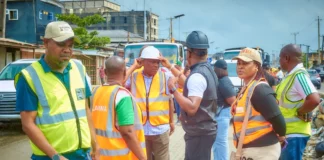
 and party leaders and stakeholders from Ado-Odo/Ota Federal Constituency)