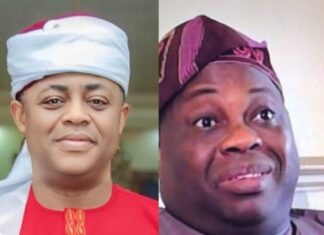


Former presidential aspirant and Peoples Democratic Party (PDP) chieftain, Gbenga Hashim-Olawepo, has described Nigeria’s economic performance under the All Progressives Congress (APC)-led Federal Government as a “disaster.”
Hashim-Olawepo made the assertion on Wednesday during an appearance on Politics Today, a programme aired on Channels Television.
According to him, Nigeria’s Gross Domestic Product (GDP) has declined significantly over the past decade, falling below levels recorded nearly two decades ago.
He said Nigeria’s GDP stood at between $220 billion and $230 billion, citing figures from the International Monetary Fund (IMF) and World Bank outlooks.
Hashim-Olawepo noted that when former President Olusegun Obasanjo left office in 2007, Nigeria’s GDP was about $268 billion, a figure he said was higher than the current valuation.
He further recalled that by the time former President Goodluck Jonathan handed over power to Muhammadu Buhari in 2015, Nigeria had emerged as Africa’s largest economy, with a GDP of about $574 billion.
“Twenty years ago, under former President Olusegun Obasanjo, Nigeria’s GDP when he was finishing in 2007 was $268 billion — bigger than what we have today,” he said.
“This disaster happened under the APC. When Goodluck Jonathan handed over, Nigeria’s GDP had risen to $574 billion and we were the largest economy in Africa. Today, we are struggling between fourth and fifth positions.”
Describing the economic trajectory over the last ten years as both tragic and disastrous, Hashim-Olawepo argued that the APC government had failed to sustain growth and economic leadership on the continent.
“What has happened to Nigeria’s economy in ten years of APC government is a disaster and tragic,” he added.
Stakeholders of the All Progressives Congress (APC) in Kogi State have endorsed President Bola Ahmed Tinubu for a second term, pledging to double the state’s votes for his re-election in the 2027 general elections.
The endorsement was made on Wednesday under the umbrella of the Kogi Progressive Stakeholders Forum (KPSF) following a high-level meeting of party leaders, lawmakers, elders and key stakeholders held at the Reverton Hotel, Lokoja.
The forum said the endorsement reflects its resolve to align fully with the ruling party at the centre while promoting unity, cohesion and internal reconciliation within the APC in the state.
Chairman of the forum and former Governor of Kogi State, Captain Idris Wada, said KPSF was established to unite and mobilise grassroots supporters of the APC in support of President Tinubu’s re-election bid.
He urged party members across the state to embrace peace, inclusiveness and internal cohesion, stressing that only a united party could effectively support the president’s reform agenda and secure victory in 2027.
According to Wada, inclusiveness remains a core principle of the forum, adding that all party members, regardless of political leaning or status, must be carried along in efforts to strengthen the party and deepen democratic participation.
Vice Chairman of the forum and member of the governing board of the North Central Development Commission, Alhaji Suleiman Baba Ali, expressed confidence that President Tinubu would enjoy overwhelming support from Kogi voters in 2027.
He said the president’s leadership had continued to inspire confidence nationwide, noting that ongoing reforms would reposition Nigeria for sustainable growth and development.
Ali called on APC members across the state’s 21 local government areas to remain united and focused on consolidating the party’s gains, describing grassroots mobilisation as critical to electoral success.
Also speaking, Senator Sunday Steve Karimi, who represents Kogi West, described the endorsement as a positive development, saying President Tinubu deserved a second term to consolidate ongoing economic and security reforms.
Karimi cited improvements in foreign exchange stability, security, infrastructure development, access to student loans through NELFUND, and bold economic reforms avoided by previous administrations.
Acknowledging existing grievances among some party members, the senator assured that their concerns would be addressed.
“We know there are many people in this state who are not happy, and if we leave them like that, we will not win the 2027 elections. We want Mr President to win, and win well,” he said.
Also contributing, former Director-General of the National Productivity Centre, Dr Kashim Akor, said the forum has created a platform for aggrieved party members to channel their concerns, urging leaders to prioritise reconciliation and sacrifice.
A former local government chairman and lawmaker, Hon Ganiyu Salawudeen (Erukutu), called on the reconciliation committee recently set up by President Tinubu to visit Kogi State, alleging that party leadership and political appointments in the state were lopsided.
At the end of the meeting, stakeholders issued a communiqué unanimously declaring their total and unwavering support for President Tinubu as the APC’s sole presidential candidate for the 2027 elections.
The communiqué rejected divisive politics, called for unity of purpose among political leaders, and urged Kogi indigenes within and outside the state to embrace the APC as the most viable platform for advancing the state’s political and economic interests.
The stakeholders further pledged to mobilise human, material and political resources to deliver bloc votes for President Tinubu across the state’s 21 local government areas.
The motion endorsing the president for a second term was formally moved by Senator Karimi and seconded by Dr Akor, who described the decision as courageous and strategic.
Other prominent figures at the meeting included a retired Assistant Inspector General of Police, AIG Abutu Yaro, and former House of Representatives member representing Lokoja/Kogi, Hon Haruna Isah, alongside several party elders and stakeholders.
The meeting concluded with a call for sustained unity, equity, fairness and strategic voter mobilisation ahead of the 2027 general elections, as the forum declared that Kogi State had “spoken with one voice” in support of President Tinubu and the APC.
China has said it will not participate in nuclear disarmament talks “at this stage,” following the expiry of the New START treaty between the United States and Russia — a development that has reignited fears of a renewed global arms race.
The New START agreement officially expired on Thursday, ending decades of restrictions on the number of nuclear warheads the world’s two largest nuclear powers are allowed to deploy.
Disarmament campaigners have warned that the collapse of the treaty could encourage countries such as China to rapidly expand their nuclear arsenals.
However, Beijing dismissed calls to join fresh negotiations, despite repeated insistence from Washington that any future arms control agreement must include China.
“China has always maintained that the advancement of arms control and disarmament must adhere to the principles of maintaining global strategic stability,” Chinese Foreign Ministry spokesman Lin Jian said at a press conference.
He stressed that China’s nuclear capabilities are not comparable to those of the United States and Russia.
“China’s nuclear arsenal is of a totally different scale from those of the United States and Russia, and China will not participate in nuclear disarmament negotiations at this stage,” Lin said.
The New START treaty lapsed on February 5, after US President Donald Trump declined to follow up on a proposal by Russian President Vladimir Putin to extend the agreement’s warhead limits by one year.
Russia and the United States together possess more than 80 per cent of the world’s nuclear warheads, but existing arms control frameworks have steadily eroded in recent years.
While China’s nuclear arsenal is expanding, analysts estimate it currently has about 550 strategic nuclear launchers — significantly fewer than the 800 launchers each that the United States and Russia were capped at under New START.
First signed in 2010, the treaty limited each side to 1,550 deployed strategic nuclear warheads, representing a reduction of nearly 30 per cent from limits set in a previous 2002 agreement.
The pact also allowed for on-site inspections of nuclear arsenals, a key confidence-building measure. However, these inspections were suspended during the COVID-19 pandemic and have not resumed.
With New START now expired and no replacement in sight, experts warn that the absence of legally binding limits could usher in a new era of nuclear competition with global security implications.
As the contest for his re-election approaches, Osun State Governor, Senator Ademola Adeleke, has declared that no opposition party or pressure group can derail his administration’s transformational agenda, despite what he described as ongoing “pull-him-down” campaigns.
The governor made the assertion during the foundation-laying ceremony of the Osun Development Association (ODA) House and the launch of the Teachers Transformation and Empowerment Programme in Osogbo.
Adeleke, who was represented by the Commissioner for Commerce and Industry, Dr Bunmi Jenyo, said his administration remains undeterred and committed to delivering more projects and reforms across the state.
“My administration will not rest or grow weary of initiating impactful projects while seeking partnerships with individuals and organisations to further strengthen the foundation for Osun’s future growth,” the governor said.
He stressed that the government is focused on expanding opportunities for young people, empowering communities and attracting investments that would create jobs and improve the standard of living of residents.
Commending the Osun Development Association for its contributions to the state’s development, Adeleke assured the group of his administration’s readiness to deepen collaboration to enhance Osun’s economic viability.
According to him, the state has recorded notable progress in road rehabilitation, school renewal, healthcare facility upgrades and social protection programmes.
“Our commitment to the prompt payment of salaries and pensions has restored confidence and dignity in public service,” he said, adding that more projects and reforms are currently underway.
Speaking at the event, ODA Chairman, Dr Segun Aina, said the teachers’ empowerment initiative would improve classroom delivery and enhance students’ performance in both internal and external examinations.
He noted that the association has previously implemented programmes aimed at stimulating economic growth and supporting the education and health sectors in the state.
Dr Aina also appealed to the state government to allocate land for the development of industrial parks, which he said would attract investors, boost commerce and strengthen Osun’s economy.
Also speaking, a foundation member of ODA and former Registrar of the National Business and Technical Examinations Board (NABTEB), Prof. Olu Aina, pledged support towards the successful execution of the association’s projects. Read More
Senate Passes Electoral Act Amendment, Rejects Mandatory E-Transmission of Results Ahead of 2027 Polls
The Senate has passed the Electoral Act 2022 (Repeal and Re-enactment) Amendment Bill 2026 but rejected a key proposal seeking to make electronic transmission of election results mandatory ahead of the 2027 general elections.
The bill was passed on Wednesday after its third reading, following sustained pressure from the media and other stakeholders to amend Nigeria’s electoral framework. However, lawmakers voted against an amendment to Clause 60, Subsection 3, which would have compelled the Independent National Electoral Commission (INEC) to electronically transmit results from polling units in real time.
The rejected provision proposed that presiding officers upload results to INEC’s Result Viewing Portal (IReV) immediately after Form EC8A had been completed, signed and counter-signed by party agents.
In a swift clarification, Senate President Godswill Akpabio said the Senate did not remove electronic transmission entirely but retained the provision as contained in the 2022 Electoral Act.
According to him, the extant law allows INEC the discretion to determine the mode of transmitting results.
Under the retained provision, “the presiding officer shall transfer the results, including the total number of accredited voters and the results of the ballot, in a manner as prescribed by the Commission.”
The Senate’s decision has continued to draw mixed reactions, with critics arguing that mandatory electronic transmission is crucial for transparency and credibility, while supporters insist that giving INEC flexibility is consistent with existing law.
The amendment bill will now proceed to the next legislative stage in line with constitutional requirements. Read More
Emir Sanusi: Traditional Rulers Don’t Need Constitution to Advise Leaders, Condemns Violence Against Women
The Emir of Kano, Muhammadu Sanusi II, has reaffirmed the relevance of traditional institutions in Nigeria’s governance system, describing traditional rulers as indispensable pillars of nation-building and effective leadership.
Speaking on Channels Television’s Morning Brief on Wednesday, Sanusi stressed that traditional rulers do not require constitutional backing to offer counsel to the President or state governors on matters affecting the country.
According to the former Central Bank governor, the authority of traditional leaders to advise constituted authorities is derived from the people they represent, not from written laws.
“Do I need the Constitution to tell me to advise the President if I believe something is wrong?” Sanusi asked. “I don’t need the Constitution to tell a governor what I think should be done. I get that authority from being a leader of the people.”
He noted that while elected officials possess executive authority, traditional institutions continue to play a vital advisory role in promoting good governance and social stability.
Sanusi also used the platform to advocate inclusive political participation, calling for increased representation of women in elective and leadership positions. He said women have critical roles to play in nation-building and inclusive governance.
The Emir further condemned domestic violence against women, describing it as unacceptable and unjustifiable under the guise of culture. He warned against the misuse of power by men to oppress women, stressing that women are entitled to dignity and protection.
“Violence is not about African culture; it is about power relations,” he said. “When men have power and women are not protected, abuse happens. Women, children, the poor and the disabled often become victims.”
He concluded by urging society to protect the weak and vulnerable, emphasising that nation-building must be rooted in justice, inclusion and respect for human dignity. Read More
Nigeria, Pakistan Navies Deepen Ties on Shipbuilding, Training as Senior Officers Tour Lagos
The Nigerian Navy has intensified defence cooperation with the Pakistan Navy, with a renewed focus on indigenous shipbuilding, training exchange and intelligence sharing.
The Flag Officer Commanding (FOC), Western Naval Command, Rear Admiral Abubakar Mustapha, disclosed this while hosting participants of the 55th Pakistan Navy Senior Staff College Course on a study tour in Lagos.
Mustapha said the visiting delegation would tour the Naval Dockyard Limited (NDL) to explore partnerships aimed at advancing Nigeria’s shipbuilding capabilities, leveraging the long-standing military relationship between both countries.
According to him, Nigeria has benefitted significantly from defence collaboration with Pakistan, particularly in equipment procurement and training. He noted that the Nigerian Air Force operates Pakistan-supplied platforms such as the JF-17 multi-role fighter aircraft and the Super Mushshak trainer aircraft, which he described as critical to operational effectiveness.
“The Nigerian Army has also gained from the acquisition of communication equipment and anti-drone jammers sourced from Pakistan,” Mustapha said.
He added that both nations have sustained training and capacity-building programmes through staff and war colleges, joint exercises and doctrine development in maritime operations, though some exchanges have not been fully maintained.
On shipbuilding, Mustapha revealed that Nigeria is currently constructing Seaward Defence Boats (SDB) 5 and 6 locally and is seeking deeper collaboration with Pakistan to further strengthen indigenous capacity.
“Nigeria already has shipbuilding capability. With Pakistan’s technical expertise, we hope to identify areas of cooperation that will enhance our capacity,” he said.
The FOC explained that defence cooperation between Nigeria and Pakistan rests on three pillars: equipment procurement, training and capacity building, and intelligence sharing.
He praised the quality of Pakistan’s military training institutions, noting that Nigerian officers trained there have consistently distinguished themselves in professionalism and competence.
Leading the Pakistani delegation, Commodore Muhammad Zalid Zaheer, Commodore Training Ashore at the Headquarters Command in Karachi, commended Nigerian Navy officers trained in Pakistan, describing them as disciplined and intelligent.
Zaheer disclosed that the course comprised 102 officers, including 28 from foreign countries and one Nigerian officer, adding that the delegation was open to expanding areas of collaboration.
“We came to Nigeria with an open heart and are willing to explore more opportunities for cooperation,” he said.
The event was attended by the Chief Staff Officer, Western Naval Command, Rear Admiral Nnamdi Ekwum; Pakistan’s Defence Attaché, Colonel Kanran Mushtag; and other senior officers from both navies.
The Independent National Electoral Commission (INEC) has cautioned that delays in amending the Electoral Act could impact aspects of the timetable for the 2027 general elections, even as it reaffirmed its readiness to conduct the polls.
INEC Chairman, Prof. Joash Amupitan (SAN), raised the concern on Wednesday in Abuja during the commission’s first quarterly consultative meeting with civil society organisations (CSOs).
Amupitan disclosed that the commission had already concluded its election timetable and schedule of activities based on the existing legal framework, noting that any changes introduced by an amended Electoral Act could necessitate adjustments.
“While we have made our submissions to the National Assembly, the passage of the amendment may have implications for certain items in our timetable,” he said. “However, for now, the commission has no choice but to operate within the framework of the subsisting Electoral Act.”
The INEC chairman appealed to the National Assembly to expedite work on the amendment process to provide certainty ahead of the 2027 polls.
“We seek your support in urging the National Assembly to speed up work on the amendment of the Electoral Act,” he added.
Despite the legislative uncertainty, Amupitan assured Nigerians that INEC remained fully prepared for the elections and announced plans to conduct a nationwide voter revalidation exercise ahead of 2027.
“A credible register of voters remains the bedrock of free, fair and transparent elections. Accordingly, the commission will embark on a nationwide voter revalidation exercise ahead of the 2027 general election,” he said.
On ongoing electoral activities, Amupitan urged CSOs to intensify voter mobilisation in the Federal Capital Territory (FCT) to ensure residents collect their Permanent Voter Cards (PVCs) ahead of the Area Council elections scheduled for Saturday, February 21, 2026.
He noted that PVC distribution in the FCT would end on February 10, 2026, stressing that INEC did not want any eligible voter to be disenfranchised.
The INEC chairman also called on CSOs to monitor the conduct of political parties and promote peaceful participation, warning against hate speech, vote buying, misinformation, disinformation and election-related violence.
Providing updates on preparations for the FCT polls, Amupitan said 1,680,315 registered voters would vote across 2,822 polling units in the six Area Councils of Abaji, AMAC, Bwari, Gwagwalada, Kuje and Kwali.
He added that 570 candidates would contest chairmanship, vice-chairmanship and councillorship positions, while INEC had concluded the recruitment and training of ad hoc staff and was configuring BVAS devices for voter accreditation and result upload to the IReV portal.
Amupitan further confirmed that bye-elections would hold the same day in Ahoada East II and Khana II State Constituencies in Rivers State, as well as Kano Municipal and Ungogo State Constituencies in Kano State.
Meanwhile, the House of Representatives has dismissed claims that the National Assembly was deliberately stalling the passage of the Electoral Act Amendment Bill, insisting that the delay was procedural.
Chairman of the House Committee on Electoral Matters, Mr Adebayo Balogun, said the bill was currently being considered in both chambers and is expected to be harmonised soon.
Speaking exclusively, Balogun expressed optimism that the process would be completed next week.
“The Senate is in session, considering the bill. Hopefully, the harmonisation will be completed by next week,” he said.
Suswam Quits PDP for APC as Internal Crisis Deepens, Two Taraba Senators Defect
Former Benue State Governor, Gabriel Suswam, has resigned from the Peoples Democratic Party (PDP), blaming persistent and unresolved internal conflicts within the party. He is expected to formally join the ruling All Progressives Congress (APC) today.
Suswam’s defection comes amid a wave of high-profile exits from the opposition party. On Tuesday, two senators from Taraba State — Haruna Manu and Issa Shuaibu Lau — defected from the PDP to the APC during plenary of the Senate.
The defection letters of the senators were read by Senate President Godswill Akpabio, who announced their formal acceptance into the ruling party and directed Senate Leader Opeyemi Bamidele to receive them. The move further alters the political configuration of the 10th Senate.
In their separate letters, the Taraba lawmakers cited extensive consultations, lingering internal crises within the PDP, and the desire to better serve their constituents as reasons for their decision.
Their defection follows closely on the heels of Taraba State Governor, Agbu Kefas, who formally dumped the PDP for the APC last Saturday. Political observers see the senators’ move as an effort to align with their governor, now the APC leader in the state.
Meanwhile, Suswam, in a letter dated February 4 and addressed to the PDP Chairman in Benue State, said his decision to leave the party was taken after deep reflection.
The former governor acknowledged the opportunities the PDP gave him to serve as a member of the House of Representatives, Governor of Benue State, and Senator of the Federal Republic of Nigeria, expressing gratitude for the trust reposed in him over the years.
However, he lamented that the party had become engulfed in persistent disputes over leadership, structure, discipline, and ideology, with no clear roadmap for resolution.
Despite several interventions and public assurances, Suswam said the PDP has remained in a state of dysfunction, operating in perpetual crisis without a consensus-driven solution.
“As a committed democrat,” he noted, “it has become difficult to reconcile my continued membership with my personal convictions and my desire to contribute meaningfully to nation-building within a stable political framework.”
He added that political parties should be platforms for ideas and constructive engagement, not arenas for internal warfare.
Suswam said he had therefore chosen to step aside, wishing the PDP well in its efforts to resolve its internal contradictions. He urged the ward chairman to accept his resignation and convey his appreciation to party members for their shared political journey.
Later on Tuesday, Suswam registered with the APC at his Mbagber Ward in Anyiin, Logo Local Government Area of Benue State, marking his formal return to the ruling party. Read More
The World Bank has praised President Bola Tinubu’s economic reforms, describing Nigeria as a global example of steady and credible leadership as investors regain confidence
President Bola Tinubu
Nigeria Emerges Global Reform Reference Point as World Bank Praises Tinubu’s Economic Direction
Nigeria’s ongoing economic reforms under President Bola Ahmed Tinubu have earned global recognition, with the World Bank describing the country as a reference point for credible and consistent reform leadership.
The commendation came from Anna Bjerde, the World Bank’s Managing Director of Operations, during a high-level meeting with President Tinubu and Vice President Kashim Shettima at the State House, Abuja, on Tuesday.
The development was disclosed in a statement issued on February 3, 2026, by the Special Adviser to the President on Information and Strategy, Bayo Onanuga.
According to the statement, Bjerde said Nigeria is now frequently cited globally as an example of a government that has demonstrated resolve, consistency, and courage in implementing difficult but necessary reforms.
She praised the Tinubu administration for staying the course over the past two years despite economic headwinds, noting that the government’s discipline has begun to yield tangible results.
“This consistency and the clear evidence of progress are building strong confidence among investors, policymakers, and the private sector,” Bjerde reportedly told the President.
The World Bank chief highlighted the forthcoming Country Partnership Framework (CPF), noting that it is firmly anchored in Nigeria’s development priorities, including the ambitious goal of achieving a $1 trillion economy and sustaining 7 percent GDP growth.
President Tinubu, in his response, reaffirmed his administration’s commitment to the reform agenda, insisting that there would be no reversal, despite the initial challenges.
“There will be no turning back,” the President said, acknowledging that subsidy removal and foreign exchange unification initially triggered inflationary pressures.
He added, however, that inflation has since moderated, the naira has stabilised, and investor confidence has improved, enhancing the ease of doing business.
According to Tinubu, the reforms are firmly rooted in transparency, accountability, and policy stability, which he described as essential for long-term economic growth.
The President identified agricultural transformation as a cornerstone of his economic strategy, revealing that significant investments have been made to modernise the sector.
“Nigeria is the heart of the continent, and we must do what’s necessary to strengthen the economy, particularly looking at the young population of this country and our vast arable lands,” Tinubu said.
He explained that the government has established zonal mechanisation centres, improved seed development, expanded fertiliser availability, and leveraged the petrochemical industry to boost agricultural productivity.
“How do we employ mechanisation and make agriculture easier? I have embarked upon that. We have created zonal mechanisation centres to help the farmers,” he added.
President Tinubu urged the World Bank to deepen its partnership with Nigeria by accelerating financing, reducing bureaucratic bottlenecks, sharing development models, managing risks, and building local capacity to fast-track inclusive growth.
Bjerde, in response, stressed the importance of expanding access to finance for small, medium, and large enterprises, particularly mid-sized firms, which she described as critical engines of employment.
She also commended Nigeria’s focus on early childhood development, describing it as essential to long-term productivity and human capital development.
“Many countries around the world, including middle-income economies, are experiencing rising levels of stunting. Early childhood development is a strong entry point, and we are pleased Nigeria has prioritised this,” she said.
Bjerde assured the Nigerian government of the World Bank Group’s continued support through its institutions — the International Development Association (IDA), International Bank for Reconstruction and Development (IBRD), and the International Finance Corporation (IFC).
She said the Bank remains committed to aligning its programmes with Nigeria’s reform priorities, combining public and private sector support to drive sustainable growth.
Also present at the meeting were the Minister of Finance and Coordinating Minister of the Economy, Wale Edun, and the Deputy Chief of Staff to the President, Ibrahim Hassan Hadejia.