

Home Blog Page 60

Details – How Indimi Sisters Ameena and Zara Won $43.51m in Family Oil Dispute

Twin sisters Ameena and Zara Indimi have secured $43.51m in a Federal High Court ruling against Oriental Energy Resources, marking a major victory in a family oil business dispute

Twin Triumph: Ameena and Zara Indimi Win $43.51m in Landmark Family Dispute

Born into the wealthy Muhammadu Indimi family of Borno State, Nigeria, identical twin sisters Ameena and Zara have always lived in the spotlight of privilege. But their latest victory is not about luxury—it’s about justice.

On February 25, 2026, a Federal High Court ordered Oriental Energy Resources to pay the sisters $43.51 million in unpaid dividends. The ruling followed years of dispute over shareholding and dividend entitlements in one of Nigeria’s most prominent private oil companies.

The case hinged on dividends linked to a reported $435.1 million declared in 2016. Ameena and Zara argued that their rightful 10% stake—split equally at 5% each—was unfairly diluted to just 0.6% apiece without their consent.

“We never agreed to surrender our shares. What happened was not transparent, and we had to fight for what was rightfully ours,” Ameena said in court filings.

Oriental Energy countered that the sisters had voluntarily transferred shares and received payments in return, describing the transactions as part of a broader family settlement.

But the judge sided with the twins, ruling that they were entitled to a much larger payout than they received.

While the detailed reasoning has not been fully disclosed, the judgment underscores the importance of corporate governance and transparency in family-owned businesses.

“This is not just about money—it’s about fairness and accountability,” Zara reportedly told associates after the ruling.

Founded by their father, Muhammadu Indimi, Oriental Energy remains a major player in Nigeria’s oil sector, with offshore assets in the Niger Delta.

Yet the case highlights how internal disputes can spill into the courts when succession, ownership, and governance collide.

Whether Oriental Energy complies immediately or pursues further legal action remains uncertain.

For now, Ameena and Zara’s victory is a powerful reminder that even in dynastic wealth, justice can prevail. Read More

Remi Tinubu Tasks Governors’ Wives on Youth Empowerment, Malnutrition Fight

0

Nigeria’s First Lady, Oluremi Tinubu, has called on wives of state governors to strengthen grassroots interventions aimed at empowering youths, supporting women and addressing child malnutrition across the country.

Speaking on Thursday during the first quarterly meeting of governors’ wives under the Renewed Hope Initiative (RHI) at the State House, Tinubu stressed the need for state First Ladies to take ownership of social programmes and deliver measurable results in their respective states.

The meeting brought together the First Ladies to review activities, programmes and targets set for the year under the RHI platform.

Addressing journalists after the opening session, Tinubu said the gathering marked the first time this year that the governors’ wives would collectively assess their roles in advancing social development nationwide.

According to her, while significant groundwork had been laid since the launch of the initiative, the programmes must now mature and begin to yield visible outcomes.

“It’s like giving birth to a baby — the teething stage and learning how to walk. After a while, the baby is supposed to walk unaided, and that is what I want to see,” she said.

Tinubu explained that the purpose of the meeting was to allow the governors’ wives share the initiatives they were implementing in their states and how such programmes complement government efforts through humanitarian and social interventions.

She noted that both she and the wife of the Vice President, Nana Shettima, had previously served as state First Ladies and understood the responsibilities associated with the role.

According to the First Lady, the title “First Lady” comes with expectations of leadership and social impact, urging the governors’ wives to justify the designation through independent and meaningful initiatives.

They wanted the title ‘First Lady of the state.’ Before, people would say the wife of the governor. But if you want that title, then we want to see you actually reach out and be independent in what you are doing,” she said.

Drawing from her experience as former First Lady of Lagos State, Tinubu encouraged them to design programmes that mentor young people and promote self-reliance.

She recalled introducing initiatives such as spelling competitions and leadership programmes for girls to keep pupils interested in public education during periods of infrastructure challenges.

The First Lady also urged the governors’ wives to address emerging social issues, including mentorship programmes targeted at young boys to reshape attitudes and encourage responsible behaviour.

Tinubu cited initiatives already underway in some states, including programmes focusing on the boy-child led by the current Lagos First Lady, Ibijoke Sanwo-Olu.

Child nutrition, she added, would remain a key priority for the Renewed Hope Initiative this year.

“It is sad that a nation as rich as ours is still talking about child malnutrition at this level. We are going to go at it aggressively and do the best we can to tackle it,” she said.

The First Lady also urged governors’ wives to promote women’s economic empowerment through agriculture, skills acquisition and small-scale enterprises tailored to local economic strengths.

She cited examples such as the development of an Adire production hub in Ekiti State and opportunities in cassava processing and fish production in other states.

Tinubu explained that such community-driven initiatives could help women generate income while boosting local economies.

She added that the quarterly meetings would provide a platform for sharing success stories and best practices that could be replicated across states.

We want to hear their stories — what they are doing in their states — so that we can tell people and encourage others to do more,” she said.

The Renewed Hope Initiative, launched by the First Lady, focuses on social investment programmes targeting women, youths and vulnerable groups, particularly in areas such as economic empowerment, education, health and food security.

Viral Video Lands Enugu “Easy-Money” in EFCC Net Over Naira Abuse

0

EFCC operatives in Enugu have arrested 24-year-old palm kernel dealer Iziga Jude Ikechukwu, aka “Easy-Money,” after a viral video showed him abusing Naira notes

EFCC Arrests Enugu Palm Kernel Dealer “Easy-Money” for Naira Abuse During Birthday Bash

Operatives of the Enugu Zonal Directorate of the Economic and Financial Crimes Commission (EFCC) have arrested 24-year-old Iziga Jude Ikechukwu, popularly known as Easy-Money, for allegedly abusing Naira notes during his birthday celebration.

Ikechukwu, a palm kernel dealer, was picked up after a viral video surfaced online showing him recording himself while spraying and mutilating Naira notes inside a hotel room during his party.

According to the EFCC, the act contravenes Section 21 of the Central Bank of Nigeria (CBN) Act of 2007.

Following actionable intelligence, investigators traced Ikechukwu to his residence near Timber Market in Enugu-Ezike, Enugu State, where he was arrested on Saturday, February 28, 2026. Upon arrest, officials recovered ₦81,700, suspected to be part of the mutilated currency.

The EFCC confirmed that Ikechukwu will be charged to court once investigations are concluded. Read More

APC Poised to Reclaim Oyo in 2027 as Peaceful Congress Produces Moses Adeyemo Chairman

0

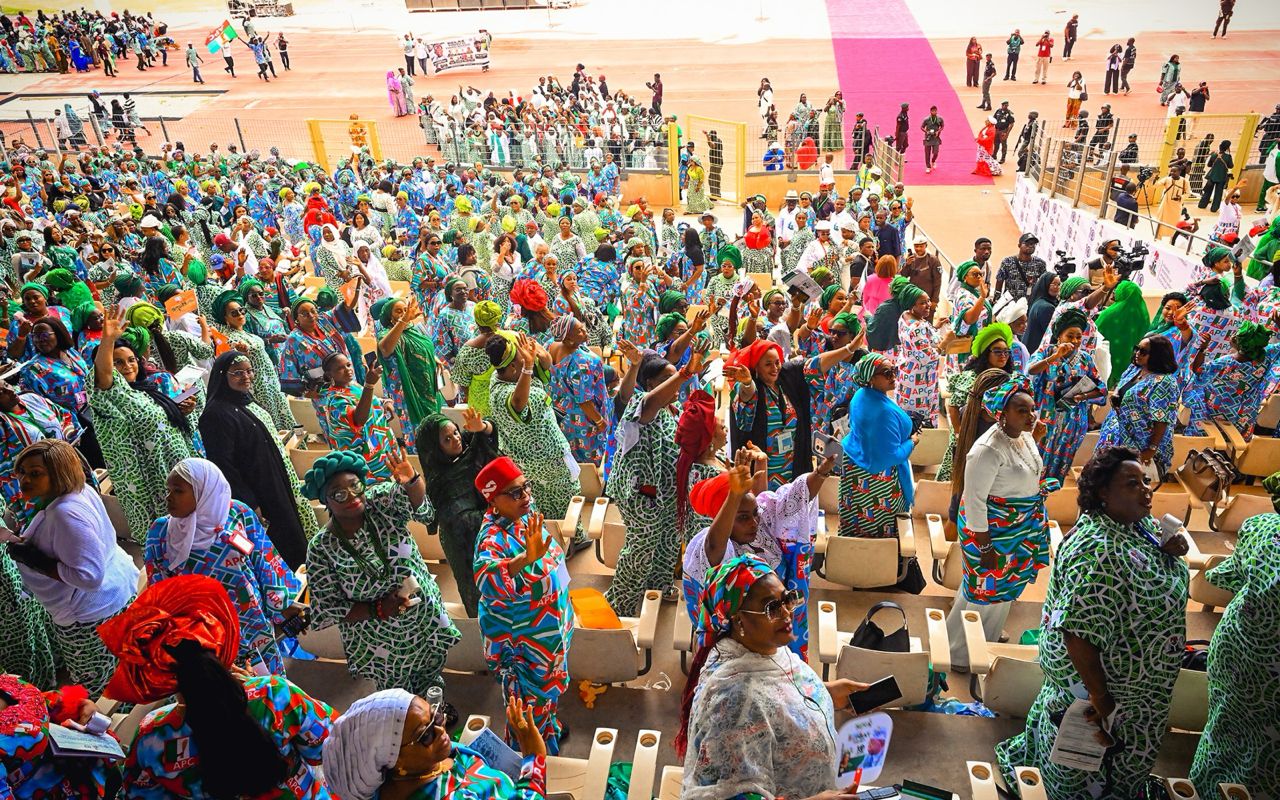
A former member of the House of Representatives, Dapo Lam-Adesina, has declared that the peaceful conduct of the All Progressives Congress (APC) congress in Oyo State signals the party’s preparedness to reclaim power in 2027.

Lam-Adesina made the remark while congratulating newly elected party executives following the state congress held on Tuesday, which produced Moses Adeyemo as chairman.

Adeyemo, a former deputy governor under the late Abiola Ajimobi from 2011 to 2019, emerged through a consensus process — a development Lam-Adesina described as proof of unity within the party.

In a statement issued by his media office, Lam-Adesina said the smooth conduct of congresses across wards, local government areas, and the state level demonstrates internal cohesion and readiness for the 2027 general elections.

“Congratulations to our dear father and the new chairman of the APC in Oyo State. His emergence is, without doubt, the dawn of a new era for the party,” he said.

According to him, Adeyemo’s wealth of political and administrative experience will strengthen the party’s structure and position it for victory.

“This is the time for us to take the state back from the opposition, and we are ready to do that with the new chairman and his executives in front of us,” Lam-Adesina added.

Meanwhile, the APC has outlined its adjusted 2026 schedule for nationwide congresses and related activities. The timetable, signed by the party’s National Organising Secretary, Sulaiman Argungu, indicates that appeals arising from the congresses will be heard on March 4.

Purchase and submission of forms for zonal congresses and the national convention are scheduled between March 13 and March 16, while the inauguration of various screening and appeal committees is fixed for March 23.

Party stakeholders believe the structured timeline, combined with the peaceful congress in Oyo, reflects a broader strategy aimed at consolidating internal unity ahead of the 2027 elections.

Abba Kyari Acquitted as Court Discharges Suspended DCP, Brothers in NDLEA Non-Disclosure Case

Federal High Court in Abuja discharges and acquits suspended DCP Abba Kyari and brothers Mohammed & Ali of 23-count NDLEA charge for non-disclosure of assets, ruling prosecution failed to prove case beyond reasonable doubt.

Abba Kyari & Brothers Acquitted: Court Throws Out NDLEA’s Asset Non-Disclosure Case

In a significant legal victory, the Federal High Court in Abuja has discharged and acquitted suspended Deputy Commissioner of Police (DCP) Abba Kyari and his two brothers, Mohammed Kyari and Ali Kyari, from all charges related to alleged non-disclosure of assets.

Delivering judgment on Thursday, Justice James Omotosho ruled that the National Drug Law Enforcement Agency (NDLEA)—the prosecuting body—failed to prove its case beyond reasonable doubt, as required by law.

Justice Omotosho held that the NDLEA did not discharge the burden of proving the criminal allegations with sufficient evidence, describing the prosecution’s case as gravely doubtful and lacking substance.

“The case presented is gravely doubtful and lacks substance. Consequently, the defendants are discharged and acquitted on all counts,” the judge ruled.

The NDLEA had arraigned the trio last year on a 23-count charge (marked FHC/ABJ/CR/408/2022), accusing them of failing to fully disclose their assets in violation of relevant laws.

Abba Kyari was specifically alleged to have concealed ownership of properties in various locations across the Federal Capital Territory (Abuja) and Maiduguri, Borno State. The agency also claimed over N207 million and €17,598 were discovered in his accounts at Guaranty Trust Bank, United Bank for Africa, and Sterling Bank.

The charges further included accusations of “disguising of ownership of properties and conversion of monies.”

The acquittal comes after a protracted trial that saw the NDLEA close its case, a no-case submission initially dismissed (leading to the defence opening), and final arguments presented late last year.

This ruling marks a major relief for the embattled former head of the Police Intelligence Response Team (IRT), who has faced multiple high-profile legal battles, including separate drug-related charges still ongoing.

The decision underscores the high evidentiary threshold in criminal prosecutions and may fuel debates on the handling of asset declaration cases in Nigeria. Read More

HOLDING COURT AGAIN: LÁBÚLÉ, Àdúgbò, and the Return of Live Music

HOLDING COURT AGAIN: LÁBÚLÉ, Àdúgbò, and the Return of Live Music

There was a time in Lagos when musicians did not just perform — they held court. Icons like King Sunny Adé, Oliver De Coque, Dr. Victor Olaiya, Bobby Benson, Lagbaja, and Fela Kuti built their own venues — cultural fortresses where sound, society and identity converged. They were not merely artists; they were architects of nightlife.

Then the model shifted. Corporate clubs replaced musician-owned spaces. DJs eclipsed bands. Streaming reduced live performance to optional spectacle. In a city louder than ever, live instrumentation became rarer.

Now, in Aguda, Surulere, LÁBÚLÉ is reviving that tradition. Born Oluwasegun Adekunle, he chose a name that means “village” — root, origin, source. His music, driven by the talking drum and a fusion he calls Highfro, is grounded in culture. But what truly distinguishes him is not just the sound. It is the structure.

With Àdúgbò — meaning neighbourhood — Lábúlé has created a home for his music. Not another generic lounge, but a curated, community-driven live space where the artist is the anchor and the audience participates.

The official opening and maiden live performance of LÁBÚLÉ at Àdúgbò located at The Duro Event Centre 8/12 Basiyi street off Aiyetoro Street, Aguda, Surulere, Lagos is scheduled for March 27, 2026 — a symbolic date that may mark more than a debut night, but the rebirth of a model.

This is more than a venue launch. It is a reclamation of ownership — a return to the era when musicians built stages and invited the city in.

If Ariya and Shrine were the original courts of Lagos music royalty, Àdúgbò may be a contemporary throne room — intimate, rooted and symbolically powerful.

In building Àdúgbò, LÁBÚLÉ is not just releasing songs. He is holding court again — and inviting Lagos to listen. Read More

Omileeyan Channels Barrister, Fela, and Orlando Owoh in Afro-Root Revival Movement

Omileeyan Channels Barrister, Fela, and Orlando Owoh in Afro-Root Revival Movement

Dynamic Afrobeat musician and creative visionary, Anthony Babajide Omileyan Ojomo, popularly known as Omileeyan, has traced the roots of his sound to three iconic Nigerian music legends — Fela Anikulapo Kuti, Orlando Owoh, and Sikiru Ayinde Barrister.

Speaking in a recent interview, the Ondo-born, Lagos-raised artist described the trio as towering figures who used music as a tool for activism, discipline, and cultural consciousness.

“Fela taught fearlessness, ideology, and political consciousness; Orlando Owoh showed discipline, authenticity, and cultural elegance, while Ayinde Barrister demonstrated innovation, creativity, and social responsibility. From all three, I learned lifestyle discipline, belief systems, African cultural mindset, and strong spiritual identity,” he said.

Inspired by their legacy, Omileeyan has incorporated traditional Yoruba instruments such as omele, gangan, and bata into his Afrobeat compositions — a deliberate move to carve out a distinct identity within the genre.

He explained that his artistic direction goes beyond mainstream appeal, embracing Afrobeat, folklore, and bush-centric jazz to craft a soundscape that celebrates African spirituality, unity, and cultural pride on a global stage.

“My Yoruba ancestry profoundly shapes my music and storytelling through rhythmic complexity, tonal language, and oral traditions. It serves as a living archive that bridges the past and the present,” he noted.

Omileeyan described his music as an Afro-root revival movement — a conscious effort to awaken what he calls the “lost beats and voices” of African heritage. Unlike many contemporary Afrobeat acts focused on short commercial hits, he prioritises long-form, spiritually driven compositions layered with political and cultural depth.

“My music entertains, but it also preserves culture and serves as a tool for African pride,” he said.

Though born and raised in Lagos, the singer revealed that living among the Awori people significantly shaped his creative outlook, exposing him to diverse rhythms, street consciousness, and cultural fusion.

The artist recently dropped two new tracks, All We Wait For and Sisi Pelebe, reaffirming his commitment to blending traditional elements with contemporary sounds without diluting authenticity.

Omileeyan has previously collaborated with Yinka Davies and is looking forward to working with notable acts including Asa, Burna Boy, Terry Apala, Lagbaja, TeeMac, Alikiba, Harmonize, Rayvanny, and Tracy Chapman.

With a philosophy rooted in heritage and a vision aimed at global resonance, Omileeyan says he remains committed to redefining Afrobeat — not just as music, but as a cultural moveme

“I Dey Kampe at 89”: Obasanjo Dismisses Death Rumours, Blasts Leadership Failure in Africa

0

Former Nigerian President, Olusegun Obasanjo, has dismissed rumours about his death, declaring that at 89 he remains strong and healthy.

Speaking on Wednesday in Abeokuta during a colloquium organised to mark his 89th birthday, Obasanjo condemned the circulation of a fake letter allegedly written by him announcing his death, describing it as the handiwork of mischief-makers.

“I dey kampe,” the former president said, insisting that those spreading the false message were only wasting their time.

The event, themed “Burden and Blessing of Leadership: Reflections from Global Africa to the World,” was part of activities marking Obasanjo’s birthday. Born on March 6, 1937, the elder statesman said he believed God kept him alive and healthy for a purpose.

“For my final note in this address, I want to point your attention to the work of some never-do-well,” he said.

They publish and circulate a fake paper credited to me that I am writing, giving notice of my death. That is their wish and surely not God’s wish for me.”

According to him, God still has tasks for him to accomplish on earth.
“God has assured me that He has more for me to do on earth, and He has given me the wherewithal to do it… I dey kampe as usual,” he added.

Obasanjo Laments Africa’s Leadership Crisis
Beyond dismissing the death rumour, the former president also delivered a strong critique of leadership across Africa, blaming the continent’s struggles on failures of governance.

“Africa is not a problem to be managed but a promise to be fulfilled through honest, courageous, selfless, incorruptible and transformational leadership,” he said.

Obasanjo argued that Africa’s underdevelopment is not the result of geography or history but rather the failure of leaders entrusted with power.

“The primary cause is the failure of those entrusted with power to lead for the people and serve them rather than against them,” he said.

He warned that many leaders enter office with reform promises but soon begin to undermine democratic institutions, silence the press and manipulate the judiciary for personal or family interests.

Reflections on War and Leadership Decisions
Reflecting on his career, Obasanjo recounted the heavy moral burden leaders often face when making decisions that affect millions of lives.

He recalled commanding the Third Marine Commando Division during the closing days of the Nigerian Civil War, describing the dilemma he faced when thousands of civilians were trapped and starving.

No textbook told me what to do. No senior officer was going to make that call. It was mine alone, he said.

According to him, his decision not to shell Owerri helped save civilian lives.

Obasanjo also reflected on the personal cost of leadership, including his imprisonment under the regime of late military ruler Sani Abacha.

He was detained for three and a half years and tried by what he described as a “kangaroo tribunal,” a period during which he said he narrowly escaped execution.

“True leadership requires the willingness to hold a position when it is unpopular,” he said.
Achievements and Lessons
Despite the burdens of leadership, Obasanjo said it also carries significant rewards, pointing to achievements during his presidency between 1999 and 2007.

He highlighted the Paris Club debt relief deal secured for Nigeria and the establishment of the Economic and Financial Crimes Commission as major steps toward economic stability and anti-corruption reforms.

The elder statesman urged young Africans to take democracy seriously and work toward accountable and transparent governance.

“A continent that fails its youth does not merely waste a generation; it plants the seeds of instability that will haunt the next several generations,” he warned.

Reaffirming his health and longevity, Obasanjo insisted that rumours of his death were unfounded.

“God has assured me He has more for me to do on earth,” he said. “I dey kampe.”

State Police ‘Has Come to Stay,’ Says New IGP Disu as Panel Gets Four Weeks to Draft Framework

0

The newly appointed Inspector-General of Police, Olatunji Disu, has declared that the establishment of state police in Nigeria is inevitable, marking a significant shift in the leadership stance of the Nigeria Police Force on the long-debated security reform.

Disu made the statement on Wednesday shortly after taking the oath of office and allegiance before President Bola Ahmed Tinubu at the State House in Abuja.

His position represents a departure from that of previous police chiefs, including the immediate past Inspector-General, Kayode Egbetokun, who had opposed the idea despite growing support from the President and state governors.

Following his inauguration as the 23rd Inspector-General of Police, Disu constituted an eight-member committee to prepare a comprehensive framework on how state policing would operate in Nigeria.

The panel has been given four weeks to submit a position paper.

The committee is chaired by the Director-General of the National Institute for Police Studies, Prof. Olu Ogunsakin, with CP Bode Ojajuni serving as secretary.

Other members include DCP Okebechi Agora, DCP Suleyman Gulma, ACP Ikechukwu Okafor, CSP Tolulope Ipinmisho, and retired CP Emmanuel Ojukwu, Provost of the Police Public Relations School.

Speaking during his first strategic meeting with senior police officers after assuming office, Disu said properly structured state policing would strengthen security at the grassroots.

“If properly designed and implemented, state policing will bring law enforcement closer to the people, enhance local knowledge of security dynamics and enable quicker responses to emerging threats,” he said.

According to him, decentralising certain responsibilities will allow state and local authorities to tackle community-level security challenges, while the federal police focus on more complex crimes such as terrorism, organised crime, cybercrime and trafficking networks.

He emphasised that the reform would be based on collaboration rather than competition between federal and state security structures.

The vision we seek is one of synergy, not competition; partnership, not duplication,the police chief added.

Beyond the debate over state policing, Disu also outlined a sweeping reform agenda centred on intelligence-led and technology-driven policing.

He issued a strong warning against misconduct within the force, stating that offences such as corruption, extortion, unlawful arrests, abuse of power and human rights violations would attract severe punishment.

“Misconduct, abuse of power, corruption, extortion or unlawful detention dishonours the uniform and betrays public trust. Such conduct will not be tolerated,” he said.

Disu stressed that disciplinary mechanisms within the police, including the Force Provost, Complaints Response Unit and X-Squad, would be strengthened to investigate and punish erring officers.

He declared that under his leadership “no officer is above the law,” adding that rank or seniority would not shield any officer from sanctions.

The police chief also directed commissioners of police nationwide to intensify community policing initiatives, urging them to strengthen engagement with traditional rulers, youth groups, civil society organisations and community leaders.

Looking ahead to the 2027 general elections, Disu assured Nigerians that the police would remain neutral and professional in managing election security.

“The credibility of the electoral process and the stability of our democracy will depend largely on the conduct of the Nigeria Police Force,” he said.

Acknowledging the risks associated with policing, Disu highlighted the need to improve the welfare of officers, recalling that 140 policemen were lost within a single year during his tenure as Commissioner of Police in the Federal Capital Territory (FCT).

He pledged reforms aimed at improving housing, healthcare, remuneration and general well-being of personnel.

Security analysts say Disu’s early declarations signal a potentially transformational shift in Nigeria’s policing structure, particularly if the push for state police gains legislative backing and is effectively implemented.

Tinubu Moves to Fix National Grid, Sets Up Panel as Osogbo Residents Protest Erratic Power Supply

0

President Bola Ahmed Tinubu has taken a major step toward addressing Nigeria’s persistent electricity challenges by presenting a proposal to overhaul the country’s struggling power transmission system.

The proposal was presented personally by the president during the Federal Executive Council (FEC) meeting held on Wednesday at the Council Chambers of Aso Villa, where ministers deliberated on solutions to the country’s fragile national grid.

Nigeria’s national grid—widely considered the weakest link in the power sector—has repeatedly collapsed in recent years, resulting in unstable electricity supply across the country.

Following the presentation, the council approved the formation of an eight-member inter-ministerial committee tasked with developing the operational framework for the initiative.
Members of the committee include:
Minister of Power, Adebayo Adelabu
Minister of Finance and Coordinating Minister of the Economy, Wale Edun
Minister of State for Petroleum Resources (Gas), Ekperikpe Ekpo
Minister of Works, Dave Umahi
Minister of Science and Technology, Kingsley Udeh
Minister of Justice and Attorney-General of the Federation, Lateef Fagbemi
Chairman of the Nigerian Revenue Service, Zacch Adedeji

The Minister of Information and National Orientation, Mohammed Idris, disclosed this while briefing journalists after the FEC meeting.

According to Idris, the initiative focuses on strengthening the transmission segment of the electricity value chain, which the government believes is the biggest obstacle to achieving reliable power supply.

He noted that since the deregulation of the power sector, the industry has been divided into generation, transmission and distribution, with transmission remaining the most problematic.

Central to the president’s proposal is the establishment of a Grid Asset Management Company (GAMCO) that will oversee and strengthen the national electricity grid.

Idris explained that the committee would examine all regulatory, legal and investment considerations surrounding the proposed company, including the interests of existing investors and operators in the sector.

He added that the committee’s recommendations would eventually be submitted to the National Assembly for legislative backing.

The minister emphasised that the reform aligns with the administration’s broader economic agenda, noting that stable electricity is critical for industrialisation, economic growth and productivity.

“The President believes that for Nigeria to truly industrialise, the power sector must be fixed,” Idris said.

Meanwhile, residents of 11 communities in Osogbo, Osun State, staged a protest against persistent electricity outages, giving the Ibadan Electricity Distribution Company (IBEDC) a seven-day ultimatum to improve supply.

The affected communities include Akede, Owo Eba, Oke-Baale, Army Depot, Uniosun, Air Force Base, Odu, Coker, Ilesa-Garage, Boredun, Tara, Omu and OSBC.

The protesters gathered at the Oke-Baale area of Osogbo before marching to the IBEDC headquarters on Station Road, carrying placards and chanting slogans against the distribution company.

Some of the placards read: “Return us to Band A,” “Our business is dying,” and “IBEDC you are wicked.”

Speaking on behalf of the protesters, Badmus Akeem said the electricity crisis worsened after the communities were moved from Band A to Band C, which significantly reduced their daily electricity supply.

According to him, residents now receive less than four hours of electricity per day, causing severe economic hardship.

“Small-scale businesses are on the verge of collapse, and corporate institutions are also affected,” Akeem said.

The protesters demanded that their communities be restored to Band A or Band B within seven days, warning that failure to meet their demand could lead to further collective action, including restricting operational access for IBEDC staff in their communities.

Responding to the protest, IBEDC Regional Manager Ifeanyi Ikeji said the company was willing to return the affected areas to Band A, but noted that power generation constraints remain a major challenge.

He also cited the high number of unmetered customers as another obstacle.

“We are ready to return you to Band A, but your communities must meet the requirement of at least 90 percent metered customers,” Ikeji said.

He urged residents to encourage customers without meters to obtain them to meet the eligibility requirements for Band A electricity supply.