

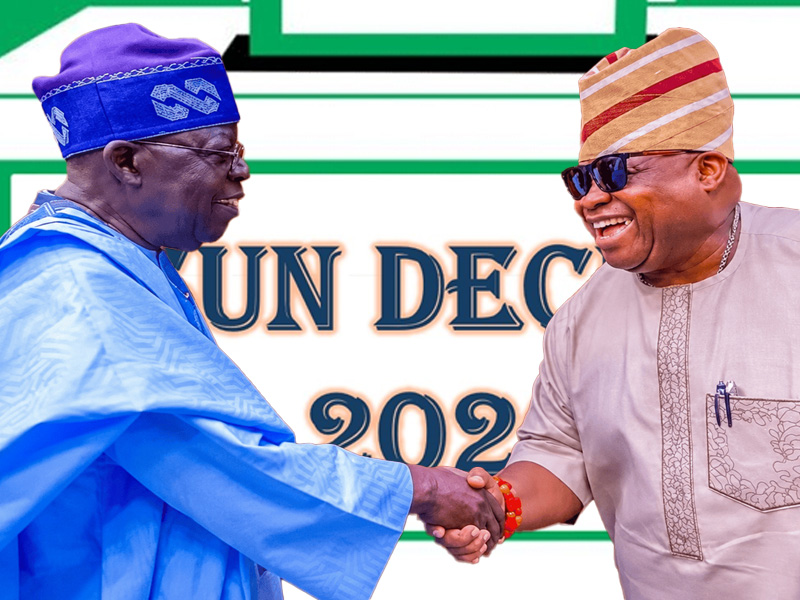
The 2026 Osun State governorship election has produced a clear political verdict, with incumbent Governor Ademola Adeleke securing a second term after defeating the All Progressives Congress (APC) candidate, Bola Oyebamiji.
Adeleke, who contested under the Accord Party, polled 511,067 votes, while Oyebamiji secured 444,815 votes, giving the incumbent a winning margin of 66,252 votes.
Adeleke also won 19 of the state’s 30 local government areas, while Oyebamiji secured victory in 11.
Beyond the numbers, however, the election produced several winners and losers whose political fortunes may extend beyond the result itself. Some strengthened their influence, while others suffered setbacks that could reshape their relevance ahead of the 2027 general elections.
WINNERS
Bola Tinubu
President Bola Tinubu emerged as an unexpected winner despite the APC losing the governorship contest.
His perceived willingness to allow the election process to proceed despite the defeat of his party provided an opportunity to demonstrate that the federal government could accept an opposition victory.
Tinubu had called for a peaceful and transparent election and later congratulated Adeleke, describing the result as a reflection of the people’s will.
The development could strengthen his political standing ahead of 2027 by creating an impression that his administration is willing to accept electoral outcomes that do not favour the ruling party.
Ademola Adeleke
Adeleke was undoubtedly the biggest winner of the election.
After defeating Gboyega Oyetola in 2022, the governor secured another victory four years later, this time defeating a different APC candidate by a wider margin.
His 511,067 votes demonstrated the strength of his political coalition, personal appeal and grassroots structures.
Adeleke’s flamboyant personality and dancing, once mocked by some of his critics, have also become part of his political identity. With the latest victory, the governor now has another four years to consolidate his political legacy.
Davido
Afrobeats superstar David Adeleke, popularly known as Davido, also played a prominent role in the election.
The singer openly campaigned for his uncle and used his enormous social media following to draw national and international attention to the Osun contest.
Although it is impossible to determine exactly how many votes his involvement influenced, Davido succeeded in turning what could have remained a state-level political contest into a subject of wider public discussion.
His involvement also highlighted the growing influence of celebrity-driven political communication in Nigeria.
INEC Chairman Joash Amupitan
INEC Chairman Prof. Joash Amupitan also emerged from the election with an institutional victory.
The election was closely watched because of its political significance, but the electoral commission largely avoided becoming the centre of controversy.
The absence of widespread allegations that INEC openly favoured a particular candidate helped strengthen the perception of the commission as an electoral umpire rather than a political participant.
For Amupitan, the election offered an opportunity to reinforce public confidence in INEC at a time when trust in electoral institutions remains fragile.
Iyiola Omisore
Former Osun Deputy Governor and Senator Iyiola Omisore presents one of the more intriguing cases from the election.
Although he publicly supported APC candidate Bola Oyebamiji, Adeleke defeated Oyebamiji at Omisore’s own polling unit in Ife Ward 1, securing 131 votes against 85.
The result has fuelled speculation about whether some elements of Omisore’s political structure may have supported Adeleke despite his public endorsement of the APC candidate.
If so, it would suggest that Omisore may still retain considerable influence among his political followers.
The Opposition
Adeleke’s victory also provided a psychological boost for opposition politicians preparing for 2027.
The result demonstrated that the APC, despite controlling the federal government and deploying significant political resources, can still be defeated at the state level.
For opposition parties considering alliances or a common presidential candidate against the ruling party, Osun offers a real electoral example rather than merely a theoretical political calculation.
Accord Party
Accord also recorded a major breakthrough by retaining control of Osun State through Adeleke.
The governor’s movement from the PDP to Accord transformed the relatively minor party into the platform controlling the state government.
The victory is particularly significant because it came amid internal disputes within the party. Accord must now demonstrate that its success can be sustained beyond Adeleke’s personal political structure.
LOSERS
Gboyega Oyetola
Former Governor Gboyega Oyetola suffered another political setback following Adeleke’s second consecutive victory over the APC in Osun.
Oyetola lost the 2022 election to Adeleke and had remained one of the APC’s most recognisable figures in the state.
Adeleke’s latest victory makes the challenge of reclaiming Osun considerably more difficult for the APC and its supporters.
Bola Oyebamiji
Oyebamiji suffered the biggest individual electoral loss of the contest.
Although his 444,815 votes represented a strong performance and he won 11 local government areas, he ultimately fell short by 66,252 votes.
He also had the backing of the APC’s considerable political machinery and several influential politicians, making the defeat particularly significant.
The result could raise questions about whether the APC underestimated Adeleke’s grassroots support or whether internal divisions weakened the party’s campaign.
Rauf Aregbesola
Former Governor Rauf Aregbesola’s political influence also appeared to suffer another setback.
Aregbesola backed ADC candidate Najeem Salaam during the election after previously building a formidable political structure during his tenure as governor between 2010 and 2018.
However, the election suggested that the political machinery associated with him may no longer command the influence it once did. The former governor was also reported to have lost his polling unit.
Olagunsoye Oyinlola
Former Governor Olagunsoye Oyinlola also suffered an embarrassing result at his polling unit.
Despite openly supporting the APC and Oyebamiji, Accord defeated the APC at Court Hall I, Okuku, where Adeleke’s party recorded 125 votes against APC’s 85.
While a single polling unit does not determine an election, the result carried symbolic significance because it occurred in the political stronghold of a former governor and prominent party supporter.
APC’s Federal Political Heavyweights
The election also exposed the limitations of relying on national political influence to secure local electoral victories.
The APC deployed prominent figures, including Edo Governor Monday Okpebholo, Imo Governor Hope Uzodimma and Senate President Godswill Akpabio, alongside other party leaders and governors.
Despite the high-profile campaign and extensive political machinery, Adeleke still emerged victorious.
The outcome demonstrated that national political influence cannot automatically be converted into votes at the grassroots level.
Christopher Imumolen and Accord’s Faction
The faction of Accord associated with Christopher Imumolen also suffered a major setback.
The internal dispute within the party produced competing claims over its legitimate leadership and conflicting positions ahead of the election.
Imumolen eventually declared support for Oyebamiji and publicly switched his symbolic party colours in favour of the APC.
However, Adeleke’s Accord structure prevailed at the polls, providing a clear electoral indication of which faction had greater influence on the ground.
Senator Francis Fadahunsi
Senator Francis Fadahunsi’s controversial pre-election comments also became part of the election’s aftermath.
In a widely circulated video, he was quoted making a statement threatening Accord members in Ilesa. His remarks generated outrage and reportedly led to police questioning.
The controversy could continue to affect his political standing, particularly given the sensitivity surrounding inflammatory rhetoric during elections.
Ultimately, Adeleke’s Accord survived the political battle and secured victory, making Fadahunsi’s earlier remarks an additional source of political embarrassment.
What the Osun Election Means for 2027
The Osun governorship election has produced consequences that extend beyond the immediate victory of Ademola Adeleke.
The result demonstrated the limits of federal political influence, challenged the relevance of some traditional political godfathers and highlighted the growing role of celebrity figures in political mobilisation.
It also offered INEC an opportunity to improve public confidence in the electoral process while giving opposition politicians evidence that the APC can be defeated despite its control of federal power.
For Adeleke, however, the biggest challenge begins after the celebration. Having secured another four-year mandate, he must now demonstrate that his performance in office can match the scale of his electoral success.