

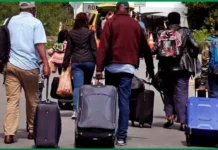

South Africa is on edge ahead of nationwide anti-migrant protests scheduled for today, with growing fears of violence forcing thousands of foreign nationals to flee while many others remain stranded in temporary camps across the country.
The demonstrations come after anti-migrant groups issued a June 30 deadline demanding undocumented immigrants leave South Africa, following weeks of protests, intimidation and attacks targeting foreign nationals.
Although President Cyril Ramaphosa has urged demonstrators to exercise their constitutional rights peacefully, authorities have heightened security across provinces identified as potential flashpoints, including Gauteng, KwaZulu-Natal, the Western Cape and the Eastern Cape.
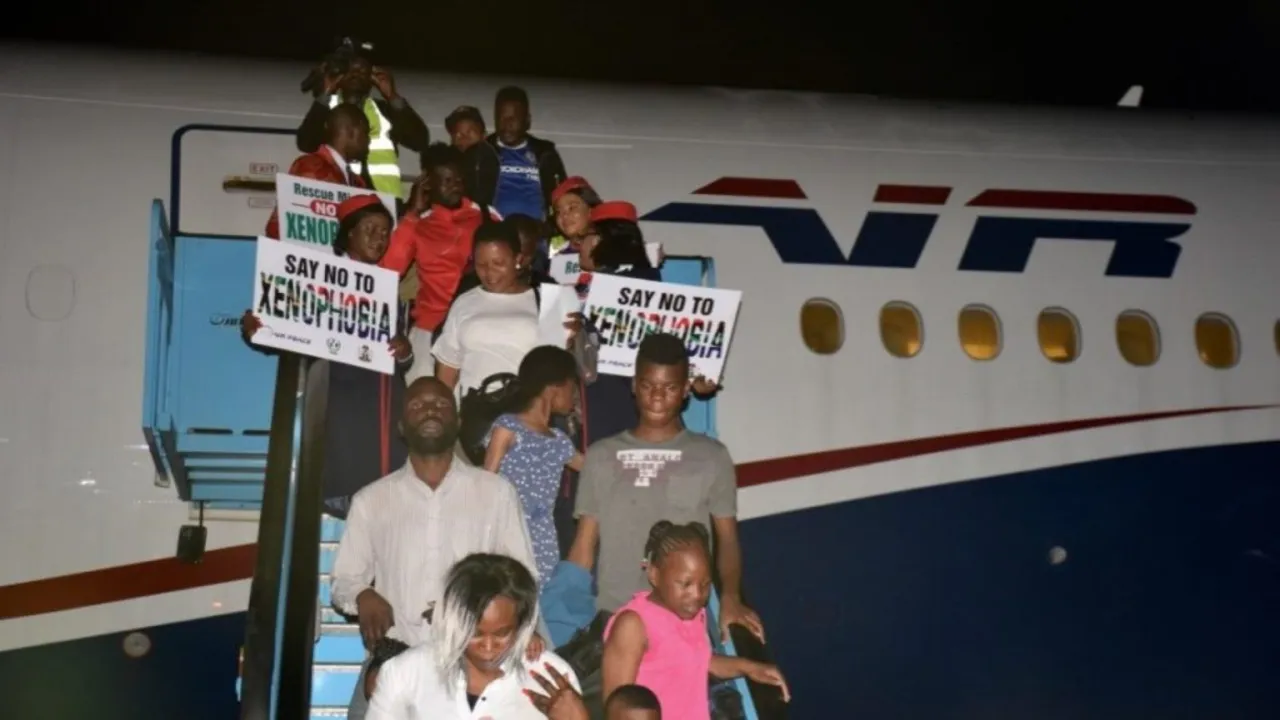
Several African countries, including Nigeria, Ghana, Zimbabwe, Malawi, Mozambique, Kenya and the Democratic Republic of Congo, have begun voluntary repatriation programmes to evacuate citizens seeking to return home amid escalating tensions.
Nigeria has so far repatriated 324 of its citizens through two official evacuation flights under an emergency voluntary return programme. Official estimates place the documented Nigerian population in South Africa at between 25,000 and 35,000.
Many migrants described living in fear ahead of the protests, with some abandoning businesses, homes and even family members to escape potential attacks.
One migrant said he decided to leave after receiving repeated death threats from neighbours who warned that foreigners would be targeted once the June 30 deadline arrived. Another revealed he had to leave his children behind with his South African wife after she said she could no longer support them alone.
President Ramaphosa condemned threats and violence, stressing that the constitutional right to protest does not include intimidation, vandalism or attacks on other people.
He maintained that South Africa remains a constitutional democracy governed by the rule of law and emphasised that legally resident foreign nationals are entitled to the full protection of the country’s Constitution.
Ramaphosa also warned that anyone inciting violence or taking the law into their own hands would face arrest, while welcoming assurances from some protest organisers that demonstrations would remain peaceful.
Despite those assurances, many businesses are expected to limit operations or remain closed over security concerns.
However, business organisations and labour unions have rejected claims that immigrants are responsible for South Africa’s economic challenges.
A coalition under the National Economic Development and Labour Council (NEDLAC), comprising Cosatu, Fedusa, Saftu and Nactu, argued that unemployment, poverty, corruption, weak governance and economic stagnation—not migrants—are responsible for the country’s economic difficulties.
The unions warned that growing anti-migrant sentiment risks deepening social divisions while distracting attention from the country’s structural economic problems.
Similarly, the Pietermaritzburg Chamber of Business said foreign nationals have become convenient scapegoats for broader economic failures, insisting that removing migrants would neither create jobs nor revive struggling industries.
Business groups, including the Johannesburg Chamber of Commerce and Industry, advised members to avoid unnecessary travel to identified protest hotspots but stopped short of recommending business closures.
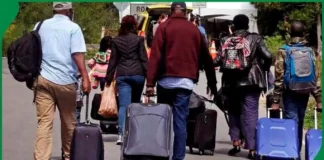
Meanwhile, thousands of migrants remain in makeshift camps awaiting transportation home.
Among them is 28-year-old Wilson Petro, who has spent days at Durban’s Drive-In site preparing for his journey back to Malawi.
“We are here because we have been struggling as foreigners,” he said, expressing hope that his group would soon travel through Limpopo before crossing into Malawi.
At another location, asylum seeker Salima Tusame, who has lived in South Africa since 2015, said she has endured weeks of harassment despite possessing valid immigration documents.
Tusame claimed she had been verbally abused and physically assaulted while trying to regularise her documentation, adding that she now fears the planned demonstrations regardless of her legal status.
KwaZulu-Natal Premier Thami Ntuli also appealed for calm, warning against a repeat of the widespread unrest that devastated the province during the July 2021 riots.
He said the province had yet to fully recover from the economic losses and human suffering caused by the violence, stressing that legitimate concerns over undocumented migration must never become an excuse for xenophobia or lawlessness.
Authorities have vowed to maintain a strong security presence as South Africa braces for what many hope will be peaceful demonstrations rather than another wave of violence targeting foreign nationals.