




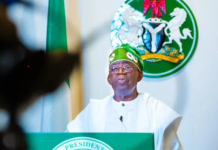



President Bola Ahmed Tinubu has approved a ₦17 billion intervention fund designed to accelerate development at the grassroots level across Nigeria’s 8,804 wards, marking a significant push toward decentralised governance.
The initiative, announced by the Federal Ministry of Health and Social Welfare, aims to place communities at the centre of decision-making by allowing them to identify and implement projects that directly address their most urgent needs. Each ward is expected to collaborate with verified community-based organisations to ensure that projects are both relevant and impactful.
Coordinating Minister of Health and Social Welfare, Muhammad Ali Pate, described the programme as a shift away from traditional top-down development strategies. According to him, the framework empowers local communities to set their own priorities, fostering practical solutions that enhance livelihoods and improve service delivery at the grassroots.
The fund will support interventions in key areas including nutrition, access to essential health commodities such as micronutrients and therapeutic foods, and minor upgrades to schools, primary healthcare centres, and sanitation infrastructure.
Implementation is scheduled to run from March to December 2026. A dedicated programme management unit will oversee execution, alongside monitoring and accountability structures. The ₦17 billion allocation will be kept in a ring-fenced account to ensure transparency in both disbursement and utilisation.
Additionally, a multi-agency task force comprising representatives from finance, humanitarian services, and anti-corruption bodies will supervise the rollout, strengthening oversight and compliance.
Officials say the programme builds on previous reforms, including expanded social intervention initiatives and community-based procurement systems, reflecting a broader policy direction focused on inclusive, bottom-up development.
Observers, however, note that the success of the initiative will depend largely on effective implementation and whether the funding translates into tangible improvements in living standards across Nigeria’s diverse communities.