
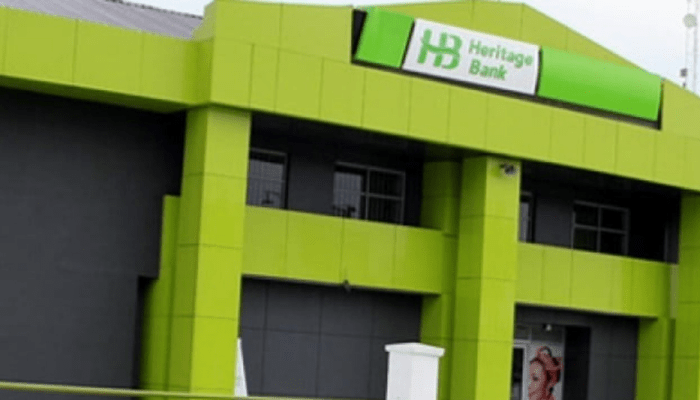





Depositors of the defunct Heritage Bank Plc have raised alarm over the slow pace of liquidation payments, accusing the Central Bank of Nigeria (CBN) and the Nigeria Deposit Insurance Corporation (NDIC) of inconsistency in handling the bank’s collapse.
In a petition addressed to the CBN Governor and copied to the Presidency and the National Assembly, the aggrieved customers lamented that nearly two years after the bank’s liquidation, most depositors have received only 14.2 per cent of their uninsured funds.
They described the payment process as painfully slow, noting that an initial liquidation dividend of 9.2 per cent was paid in April 2024, followed by a second tranche of five per cent released recently.
The depositors said the situation has left many small business owners, retirees and civil servants in dire financial straits, as their savings remain largely inaccessible.
“At the current pace, it is doubtful that depositors will ever recover their full funds, especially considering the time value of money,” the petition stated, describing the process as “disturbing, discouraging and financially devastating.”
The group called on the apex bank to provide bailout support to the NDIC to fast-track payments, arguing that the insurance corporation lacks the financial capacity to complete the liquidation within a reasonable timeframe.
They further pointed to past interventions by the CBN in distressed banks—such as liquidity injections, mergers and outright takeovers—as evidence that the regulator has mechanisms to prevent prolonged depositor losses.
According to the petitioners, the decision to liquidate Heritage Bank without a clear reimbursement roadmap has weakened public confidence in the banking system.
They also recalled that prior to the bank’s closure, regulatory assurances had portrayed the institution as stable, encouraging customers to maintain their deposits.
“The abrupt liquidation without full reimbursement undermines the credibility of the banking sector,” the group said, warning that such actions could erode trust in financial institutions.
The depositors appealed to the Presidency and the National Assembly to intervene by ensuring full repayment, setting a clear timeline for reimbursements, and probing the circumstances surrounding the bank’s collapse.
They also demanded that individuals found culpable of mismanagement or asset diversion be brought to justice.
The group cautioned that continued delays could discourage savings and investment, weaken confidence in Nigerian banks and send negative signals to the global financial community.
“To safeguard the integrity of the financial system and restore public trust, decisive action must be taken immediately,” the petition concluded.