


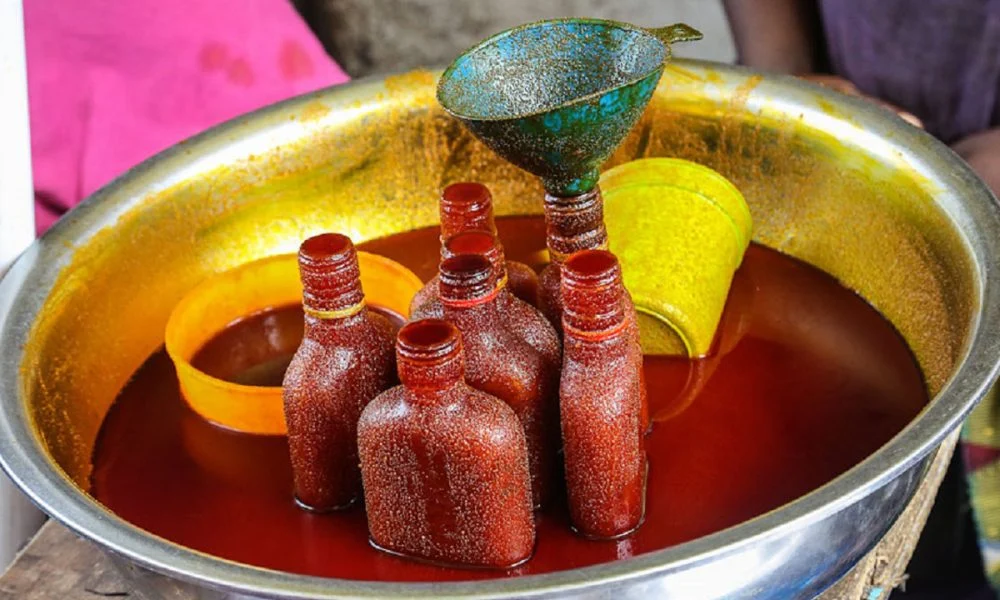





In millions of Nigerian kitchens, unrefined palm oil and ground red pepper (ata gigun) remain daily essentials. Palm oil supplies natural beta-carotene that the body converts into vitamins A and E, along with energy and antioxidants. Ground pepper delivers the heat and flavour that define countless meals. Yet open markets across the country now conceal a quiet and dangerous fraud.
Faced with rising prices and shortages, some traders and processors have turned basic food preparation into a chemical scam. Pale or diluted palm oil is mixed with non-edible industrial dyes such as Sudan III and Sudan IV (red oxide), candle wax, pap and heavy starches to create a thick, rich crimson colour. The same deception has reached the dry pepper trade. Spoiled remnants, dried stems, cassava flour and even fine sawdust are ground together, then laced with dark textile dyes and kolanut to produce fake, brightly coloured “hot” pepper.
Voices from the Market
Experienced Lagos palm-oil seller Mama Ochuko says spotting the difference requires careful observation and taste. “If you see the real one, it’s not too red,” she explained. Genuine oil has a slightly darker top layer and smells of fresh palm kernel. The adulterated version “looks like blood,” feels sticky in the mouth, tastes heavy and often smells foul. Once added to food it immediately alters the colour of fish or meat. The same happens with dyed pepper. She advises buyers to stick to one trusted vendor rather than shopping around.
In Abeokuta, wholesaler Fadairo Yusuf said greedy urban distributors, not rural producers, are responsible. They mix raw palm oil with cooked cornstarch (pap) to thicken it and increase volume. To protect customers he sometimes re-cooks entire gallons at home over firewood to boil off excess water, occasionally losing a keg and a half in the process. “People buy something for N5,000 and want to earn N100,000,” he said, urging regulators to target city wholesalers with surveillance and stiff penalties.
Fellow Ogun State distributor Francis Ikechukwu confirmed the pattern: “The suppliers are the ones mixing it, not the producers themselves.” Quality oil has no offensive odour, he noted, yet some jerrycans marked 25 litres actually contain up to 30 litres of diluted product.
Price Is No Guarantee of Quality
Newsheadline market survey found that adulterated palm oil is no longer sold as a cheap alternative. Traders charge the same price—and sometimes more—than pure oil. Twenty-five-litre jerrycans currently range from N47,000 to N51,000. Mama Ochuko and Ikechukwu both report that the dyed versions frequently sell at identical or higher rates, exploiting buyers who equate the glowing red colour with superior quality.
Health Risks and Expert Warnings
Dr Kunle Ashimi, Chief Medical Officer at the Federal Medical Centre, Abeokuta, and former chairman of the Nigerian Medical Association in Ogun State, described the practice as a serious public-health threat. Industrial azo dyes such as Sudan dyes, Rhodamine B and Metanil Yellow—intended for textiles, plastics and waxes—are being added to palm oil and pepper powder.
Sudan dyes are classified by the International Agency for Research on Cancer as Group 3 carcinogens. Once ingested they can cause genetic damage that raises long-term risk of liver, kidney and bladder cancers. Prolonged low-dose exposure damages the liver and kidneys, triggers acute gastritis, abdominal cramping and enteritis, and can provoke skin rashes, swelling and worsened asthma. The dyes may also introduce heavy metals such as lead and cadmium, contributing to neurological harm, anaemia, hypertension and impaired mental development in children.
Regulatory Responses and Challenges
In May the Lagos State Consumer Protection Agency (LASCOPA) sealed a shop on Idutafa Lane after finding palm oil laced with candle wax, chemicals and dyes. Agency head Afolabi Solebo warned of food poisoning, stomach complications, tissue damage and long-term organ problems.
In August residents in Anambra raised alarms over unnatural bright-red oil, excessive thickness, foul odours and sediments in markets in Onitsha, Awka and Nnewi. Joe Onyiuke, president of the Oil Palm Growers Association of Nigeria, called the adulteration a “national disaster” and “national emergency,” blaming supply shortages and weak market intelligence by regulators.
Past enforcement includes a 2021 Kano State Consumer Protection Council raid that seized 11 drums and 89 jerrycans of fake oil. Viral social-media videos in August 2026 showing oil separating into water and dye stains fuelled public panic. NAFDAC Director-General Prof. Mojisola Adeyeye cautioned against relying solely on “emotionally driven” online reports, stressing that laboratory analysis is required. She confirmed the agency still investigates credible complaints and takes action through seizures, recalls and prosecutions, noting more than 200 monthly complaints, including 225 in August alone.
Ogun State NAFDAC coordinator Akinwale Fagoroye pointed out that unlabelled oil sold in open basins or informal jerrycans falls outside the agency’s primary mandate for packaged products. Visual inspection alone cannot confirm azo dyes without lab tests, yet enforcement teams continue daily market sweeps.
Consumers are left with a clear message from traders and experts: buy from trusted sources, learn the sensory signs of genuine products, and report suspicions to regulators. Until stronger surveillance and penalties close the gaps, the silent chemical trade continues to turn two of Nigeria’s most basic kitchen staples into potential health hazards.