

Anambra debt controversy deepens as government releases N363.381m salary arrears document while Peter Obi disputes claims over debts and liabilities
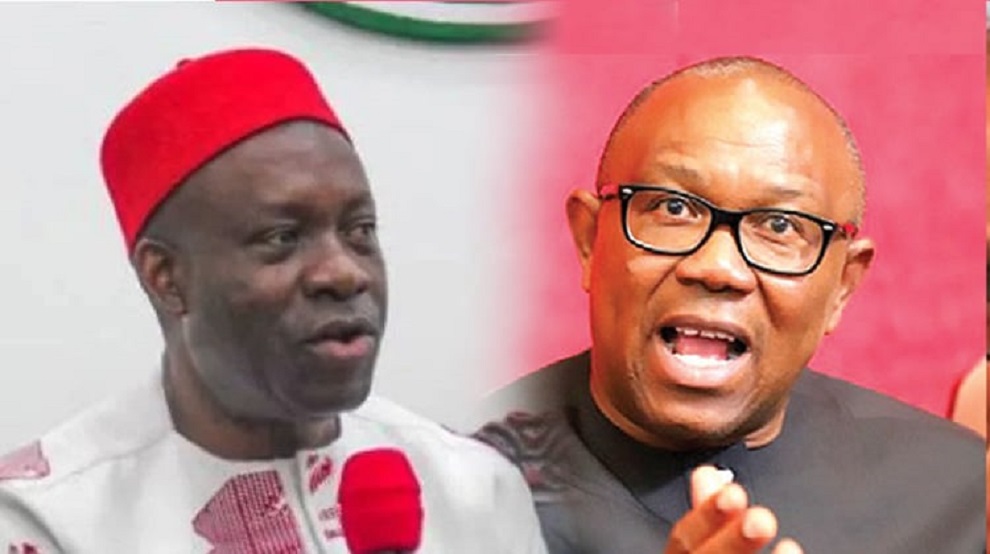
Anambra Debt War Escalates: Govt Releases N363m Arrears Document to Counter Obi’s Claims
The controversy over the financial legacy of former Anambra State Governor Peter Obi has intensified after the state government released a document showing approval for the payment of N363.381 million as the second tranche of salary arrears involving workers, pensioners and next of kin of the defunct Anambra State Water Corporation and the Anambra State Environmental Protection Agency.
The document, dated May 24, 2025, was signed by the then Head of Service, Dame Theodora Okwy Igwegbe, and addressed to Governor Chukwuma Soludo.
The latest development came shortly after Obi, the Nigeria Democratic Congress presidential candidate, insisted during an interview on Arise TV’s Prime Time programme on Thursday that he left Anambra without unpaid salaries, gratuities or pensions when he handed over power in March 2014.
“On the day I left office, the government of Anambra State, which I headed, was not owing any salary, gratuity, or pension to those scheduled to be paid by the state government,” Obi said.
The Anambra State New Media Office subsequently publicised the document on X as part of the state government’s response to Obi’s position.
Its post was captioned, “PART 3: EVIDENCE THAT LYING IS IN PETER OBI’S DNA.”
It added, “The Soludo administration paid the first tranche of State workers’ entitlements—entitlements Peter Obi left unpaid during his eight years as governor. Gov Soludo has now, also, paid the second. Peter Obi knows we know he’s lying.”
According to the document, the N363.381 million was sought as the second tranche under an out-of-court settlement between the state government and the Amalgamated Union of Public Corporations, Civil Service, Technical and Recreational Services Employees.
The settlement, signed on February 6, 2024, concerned arrears involving workers, pensioners and next of kin of the defunct Water Corporation and ANSEPA.
The document stated that the second tranche was due for disbursement in 2026.
The Head of Service wrote, “That the agreed second tranche payment of Three Hundred and Sixty-Three Million, Three Hundred and Eighty-One Thousand Naira only (N363,381,000.00) is due for disbursement in line with the Terms of Settlement signed on 6th February 2024.”
She added that the payment would be processed through the State Government Payroll System via a dedicated account and would “further reinforce your administration’s commitment to social justice, workers’ welfare, and adherence to agreements reached with organised labour.”
However, the document does not, on its own, establish when the underlying arrears were incurred or conclusively prove that they originated during Obi’s tenure, a distinction also noted in reports on the document.
The salary arrears issue is part of a wider dispute over the financial obligations allegedly linked to Obi’s eight-year administration, with the Anambra Government also accusing the former governor of leaving outstanding external financing.
The state government has said eight external facilities associated with projects undertaken during Obi’s tenure had a combined contracted value of $123.77 million, with $92.35 million outstanding as of June 30, 2026, based on figures it attributed to the Debt Management Office.
Obi has rejected the characterisation of the entire $123.77 million as debt he left behind, arguing that the figure conflates approved facilities, actual drawdowns and outstanding balances.
“As Governor of Anambra State, I did not approach any financial institution to borrow funds or issue a bond on behalf of the state,” he said.
Obi also cited former DMO Director-General Abraham Nwankwo, whom he said described him at his farewell ceremony as the only governor during Nwankwo’s 10-year tenure who had not approached him for a loan facility.
The former governor maintained that he left office on March 17, 2014, without unpaid salaries, gratuities or pensions, and without outstanding payments to contractors or suppliers whose completed works had been verified and certified.
He also disputed the description of the multilateral financing linked to projects during his administration as conventional loans personally secured by him.
“The eight facilities identified were primarily World Bank and IFAD development programs negotiated by the Federal Government, with participating states receiving access to the funds through subsidiary arrangements,” he said.
“They were not conventional commercial loans that I personally secured during my tenure.”
Obi acknowledged that Anambra had repayment obligations under the facilities but argued that each facility should be assessed based on its approval, effectiveness, drawdown and repayment history.
He accused the state government of combining three separate categories—the total amount approved for multiyear programmes, the amount actually drawn during his tenure and the balance outstanding at handover—and presenting the aggregate as debt inherited from his administration.
“The government has combined these distinct categories, added them together, and described the resulting US$123.77 million as ‘loans left by Peter Obi.’ That is an incorrect application of public-sector accounting,” he said.
The former governor also questioned the state government’s figures by citing DMO records which he said showed that Anambra’s external debt stood at about $18 million when he assumed office in March 2006, about $30 million when he left in March 2014 and about $45.15 million by December 2014.
“The Anambra State Government must therefore clarify how a state whose recorded external debt was about US$30 million in March 2014 and US$45.15 million in December 2014 could supposedly have inherited US$123.77 million from Peter Obi, who left office in March of that same year,” he said.
Obi also reiterated his claim that he left more than $150 million as the dollar component of his investment in Anambra State when he handed over power.
“On the day I left office, I left more than US$150 million as the dollar component of my investment in Anambra State as governor,” he said, adding that the funds were expected to generate about $10 million annually.
He argued that even if the state’s $123 million debt claim were accepted, the income from the funds he said he left behind would have been sufficient over the years to settle the obligation.
“If they had chosen to repay the US$92.35 million funding, the entire amount would have been covered, leaving approximately US$242 million to be reinvested,” he said.
Obi said he would not be drawn into a prolonged public dispute over his tenure in Anambra.
“Let me reiterate that, when I left office, I left Anambra State in a strong financial position – the strongest of any state in Nigeria – and I stand by that position.
“Through this clarification, I wish to state categorically that I will neither engage nor trade words with anyone regarding my tenure in Anambra State.”
Reacting to Obi’s claim, Anambra Commissioner for Budget and Economic Planning, Chukwukadibia Okoye, said the former governor still had questions to answer over the state’s financial position at the time he left office.
Okoye argued that the availability of assets did not, by itself, eliminate the need to account for liabilities.
According to him, “in public accounting and generally accepted accounting principles, nobody refuses to account for a valid liability, and when it is brought to his attention, his defence becomes that the assets are sufficient to pay undisclosed liability. At the minimum, such accounting records are withdrawn and “restated.” This is the globally accepted standard.”
He questioned whether Obi’s assertion that he left no liability other than the N5 billion disclosed in his handover note accurately reflected the state’s complete financial position.
“The more fundamental question is whether the assertion that HE Peter Obi left no liability other than the ₦5 billion disclosed in his handover note is accurate.
“The Anambra State Government has presented records indicating that there were indeed external debts and other financial obligations that remained unsettled as at the date he left office.
“The issue, therefore, is not merely whether there were assets on one side of the balance sheet capable of covering some liabilities.
“It is whether the handover statement provided a complete and accurate picture of both the assets and liabilities of the State as at 17 March 2014.”
Okoye also questioned the valuation and nature of some of the assets Obi said he left behind, arguing that not every item described as an investment could necessarily be treated as cash or a readily realisable financial asset.
“Not everything described as an investment necessarily represents cash or a readily realisable financial asset. For instance, an uncompleted project cannot ordinarily be treated in the same manner as cash or a liquid financial investment.
“At best, it is a work in progress whose value would need to be independently established.”
He further raised questions about the valuation of equity investments, citing the reported investment in Intafact and alleging that it had subsequently suffered a substantial decline in value.
“This raises an important accounting question: what was the basis of the valuation assigned to such investments at the point of handover, and were those valuations realistic, independently verifiable, and realisable?”
Okoye concluded that Obi’s claim about the $156 million could not, by itself, resolve the dispute.
“So, the $156 million argument does not, by itself, settle the controversy. The questions that need to be answered are much broader.
“What were the State’s complete liabilities and commitments on that same date? Have they been properly and fully disclosed. Does that report represent true and fair position of the assets and liabilities of the state at handover date.
“The real issue is the completeness and accuracy of the 2014 handover position,” Okoye told The Nation.
The latest exchange has further widened the dispute between Obi and the Anambra Government, with both sides relying on financial records and competing interpretations of the state’s liabilities, assets and obligations at the end of his tenure. While the state has pointed to outstanding financing and workers’ arrears, Obi maintains that the figures being attributed to his administration do not accurately represent the debt position he handed over in 2014.