


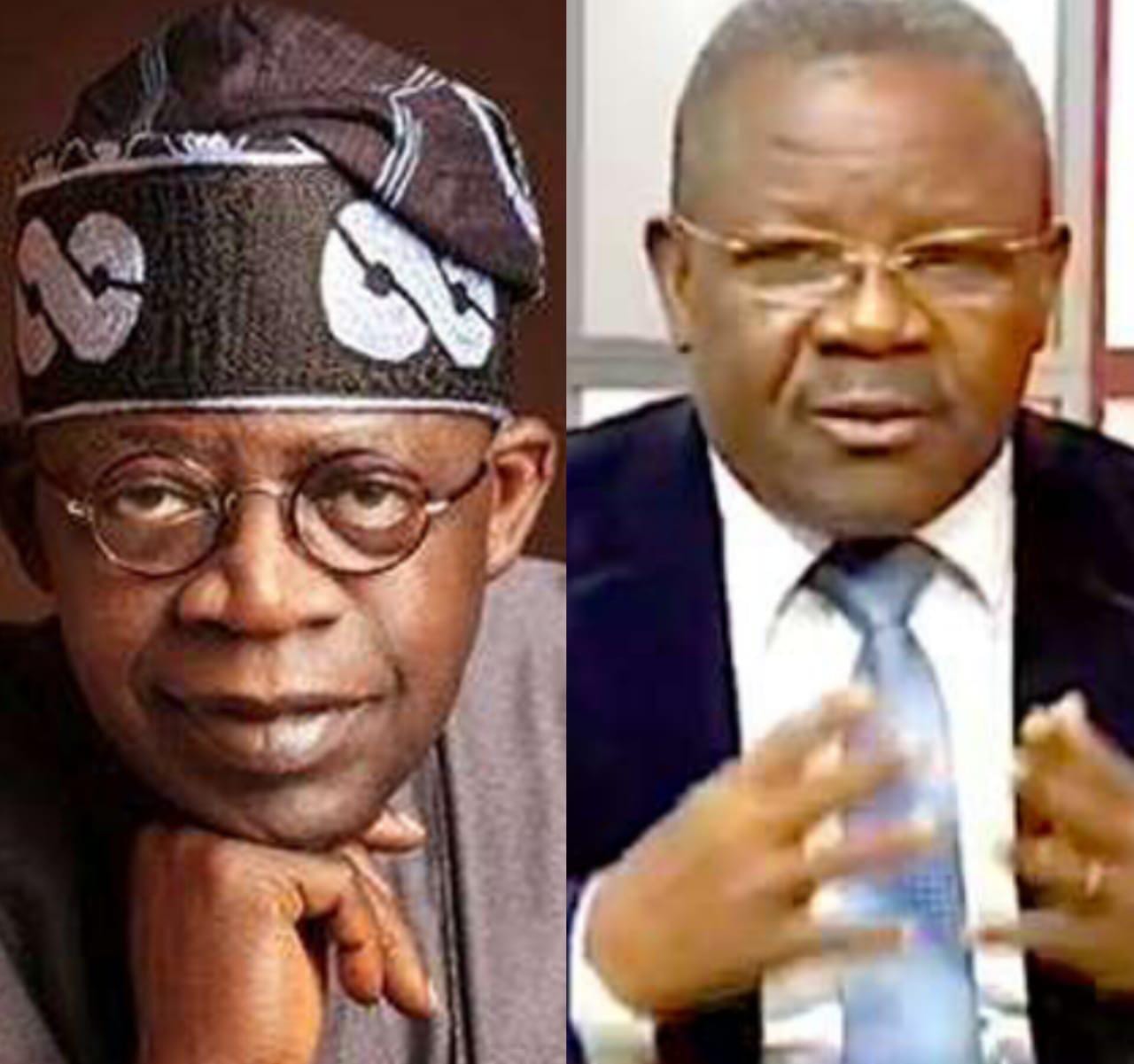
A retired naval officer and professor, Commodore Kunle Olawunmi, has cautioned the Yoruba people against linking their political security and future to the outcome of the 2027 presidential election or the political fortunes of President Bola Tinubu.
In a statement released on Monday, Olawunmi stressed that whether Tinubu wins or loses in 2027, the result must not be framed as a collective victory or defeat for the Yoruba. He insisted that the current administration should be assessed strictly as a government of the Federal Republic of Nigeria, not as a Yoruba ethnic project.
“Tinubu is a Yoruba man, but he is not the Yoruba nation,” Olawunmi declared. He warned that the growing ethnicisation of the presidency risks exposing millions of ordinary Yoruba citizens to collective blame for decisions they neither made nor controlled. A re-election victory could see the administration’s policies and shortcomings portrayed as “Yoruba actions,” while a defeat might fuel resentment from those who view the presidency as an ethnic conquest.
Olawunmi highlighted federal appointments as a flashpoint. Although the Presidency has denied breaching the federal character principle, he argued that the political fallout goes beyond legality. Perceived benefits to a narrow political network, he said, risk being interpreted as gains for the entire Yoruba race. “Private advantage for a few can therefore become public danger for millions,” he warned.
He applied the same logic to economic reforms such as the removal of petrol subsidy and foreign-exchange changes. These, he maintained, remain federal government decisions and should be judged on their impact on households and businesses, not on the president’s ethnicity.
The retired officer rejected any framing of the 2027 election as a referendum on Yoruba safety. “If the political safety of the Yoruba rises when one Yoruba candidate wins and falls when he loses, then the federation has failed to create equal citizenship,” he said. “Presidency is temporary. Nationhood is intergenerational.”
Looking beyond 2027, Olawunmi called for a structured conversation on Yoruba self-determination. He described the Yoruba as a historic national community with shared language, culture, territory, urban centres and political traditions. Self-determination, he stressed, is not a claim of superiority or hostility toward other Nigerians, but a demand for accountable government and the democratic right of a people to shape their political future.
He proposed a representative Yoruba self-determination congress drawing from the six South-West states, Yoruba communities outside the region, women, youths, traditional rulers, professionals, labour, businesses, religious groups and non-Yoruba residents. The body, he said, must remain transparent and not become the property of any individual or organisation.
Olawunmi further advocated an authorised referendum with clear rules on electorate, territory, process and dispute resolution. Support for any constitutional change, he insisted, must rest on a verifiable democratic mandate rather than rallies or social-media campaigns.
Acknowledging that Nigeria’s Constitution currently declares the federation indivisible and that international law does not automatically grant a right to secession, he urged a peaceful, negotiated path through engagement with the National Assembly, state assemblies and other Nigerians under Section 9 of the Constitution. Any future arrangement, he added, should preserve trade, transit, security cooperation and the rights of citizens on both sides of eventual boundaries.
The movement, Olawunmi emphasised, must remain strictly non-violent. He rejected any armed wing, ethnic intimidation or attacks on non-Yoruba residents. “A movement claiming freedom must demonstrate in its conduct that it can be trusted with power,” he said.
He recalled the annulment of the June 12, 1993 election won by the late MKO Abiola as a cautionary lesson: electoral success alone cannot protect a people’s interests when institutions are weak. The experience, he argued, should not breed permanent ethnic hostility but prompt reflection on whether participation in federal contests is sufficient for long-term security.
Olawunmi made clear that his intervention is neither a rescue mission for Tinubu nor an attempt to punish him. Tinubu will eventually leave office, he noted, while the Yoruba people will remain. He therefore urged Yoruba leaders to stop building collective strategy around access to the presidency and called on the president to uphold federal character, protect competitive democracy and treat peaceful advocacy for self-determination as a matter for dialogue rather than repression.
“The time to establish a democratic mandate is before the next crisis, while dialogue remains possible,” Olawunmi concluded. “Their future must be secured by institutions and democratic consent, not by the uncertain protection of one presidency.”