

The Federal Government has urged German businesses and investors to deepen their investments in Nigeria, citing ongoing economic reforms under President Bola Tinubu as a catalyst for renewed growth and investor confidence.
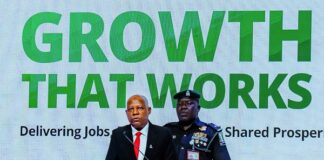
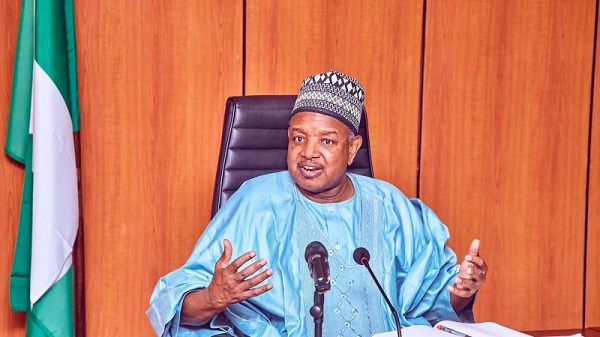
Minister of Budget and Economic Planning, Senator Abubakar Bagudu, made the call on Monday during the Nigeria–Germany Business Day held in Lagos.
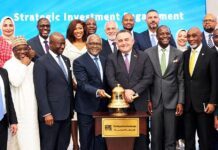
The event, organised by the German Embassy and themed “Germany and Nigeria: Cooperating for Development and Business Promotion,” brought together government officials, investors and business leaders from both countries.
Speaking at the forum, Bagudu said the Tinubu administration had implemented difficult but strategic reforms aimed at stabilising the economy, improving fiscal sustainability and restoring investor confidence.
He noted that the government’s policy direction was gradually yielding positive results, making Nigeria’s business environment more predictable for both local and foreign investors.
According to the minister, key reforms introduced by the administration include the removal of fuel subsidies, liberalisation of the foreign exchange market, enhanced revenue mobilisation and wider structural adjustments designed to support long-term economic growth.
Bagudu revealed that Nigeria’s revenue profile has improved significantly since the reforms began, with total government revenue rising from about N19.9 trillion in 2023 to over N28 trillion in 2025, exceeding official projections.
He also disclosed that the country’s foreign exchange reserves climbed to more than $46 billion in early 2026 — the highest level recorded in nearly eight years.
The minister said the increase in reserves had contributed to stabilising the foreign exchange market while strengthening investor confidence in the economy.
Although inflation surged during the adjustment period, Bagudu stated that recent indicators suggest a gradual moderation in price pressures.
He further explained that international credit rating agencies, including Fitch and S&P Global, had upgraded Nigeria’s outlook to Stable due to growing confidence in the country’s economic reforms and macroeconomic management.
Bagudu added that the Nigerian capital market recorded strong performance in the first quarter of 2026, with the Nigerian Exchange emerging among the better-performing markets in the developing world.
He also highlighted Nigeria’s removal from the Financial Action Task Force (FATF) grey list as another development boosting confidence in the country’s financial and regulatory systems.
The minister stressed that the improving economic indicators should encourage more German companies to explore investment opportunities in Nigeria and strengthen bilateral economic relations.
Describing Nigeria as one of Africa’s most promising long-term growth destinations, Bagudu said trade between Nigeria and Germany increased by nearly 30 per cent to about €3 billion in 2025, making Nigeria Germany’s second-largest trading partner in Sub-Saharan Africa.
He noted that more than 90 German companies currently operate in Nigeria across sectors including energy, manufacturing, healthcare, logistics and industrial services.
On the government’s long-term economic vision, Bagudu said Nigeria remained committed to building a one trillion dollar economy by 2030 through the National Development Plan for 2026–2030.
According to him, the plan positions the private sector at the centre of economic transformation and sustainable growth.
The minister identified renewable energy, agro-processing, manufacturing, digital technology, technical education and vocational training as critical sectors requiring stronger collaboration between Nigeria and international investors.
He also pointed to opportunities for German participation in Nigeria’s energy transition programme, industrialisation drive, digital innovation and skills development initiatives.
Bagudu said Nigeria’s Energy Transition Plan would require substantial private sector investment to improve electricity access and expand clean energy projects nationwide.
He added that ongoing agro-industrial and digital skills programmes were opening up new areas for investment partnerships between Nigeria and Germany.
The minister urged stakeholders from both countries to translate discussions from the business forum into concrete investments and long-term partnerships capable of driving industrial growth, job creation, technology transfer and shared prosperity.