
Home Blog Page 17

Nollywood Star Rotimi Salami Hospitalised After Life-Threatening Health Scare

Popular Nollywood actor, Rotimi Salami, has been hospitalised following a serious health scare that he says nearly cost him his life.

The actor made the revelation on Monday via his Instagram page, sharing a photo from his hospital bed while recounting a harrowing experience over the past 48 hours.

“I survived the last 48 hours because God said yes. I’m not the type to say ‘Devil is a liar’ because I’ve truly stressed this body. Kilanko has taken too much from me,” Salami wrote.

He linked his condition to the intense physical and emotional demands of working on Kilanko, a newly released cinema film produced in honour of late Nollywood actress, Allwell Ademola.

Although Salami did not disclose the exact nature of his illness, he expressed gratitude for surviving the ordeal, hinting at the toll his recent workload had taken on his health.

Following the post, fans and colleagues flooded social media with messages of support, wishing him a speedy recovery and urging him to prioritise his well-being.

The incident has also sparked wider conversations about the pressures faced by actors in the film industry and the importance of maintaining a balance between work and health.

Salami, a prominent figure in Nollywood, is widely recognised for his roles in both Yoruba and English-language films. Over the years, he has built a reputation as a dedicated and consistent performer, with frequent appearances in cinema productions and television projects.

In recent months, the actor has been deeply involved in the production and promotion of Kilanko, a film that has drawn attention within the industry for its tribute to Allwell Ademola.

Presidency Slams Atiku Over Jilli Airstrike Claims, Warns Against Undermining Troop Morale

0

The Nigerian Presidency has strongly criticised Atiku Abubakar over his remarks on the recent airstrike in Jilli, warning that such comments could undermine the morale of troops engaged in counter-insurgency efforts.

Reacting on Monday, presidential spokesman Sunday Dare described Atiku’s stance as “misleading, reckless, and detrimental” to national security operations.

The response follows criticism by Atiku, who alleged that the Nigerian Air Force strike at Jilli Market, located along the Borno–Yobe border, had targeted civilians.

However, Dare insisted that the operation was a “targeted, intelligence-led” mission aimed at dismantling insurgent strongholds in the area.

According to him, the location commonly referred to as Jilli Market no longer functions as a civilian marketplace but has been overtaken by terrorist groups, including Boko Haram and Islamic State West Africa Province.

He explained that the site had evolved into a critical logistics hub used for coordination, supply movement, and sustenance of insurgent operations.

“While it may still be called a market, it has ceased to operate as a legitimate civilian trading centre,” Dare stated, adding that multiple intelligence sources confirmed its role within the insurgency’s supply chain.

The presidential aide warned that portraying the strike as an attack on civilians risks distorting public understanding and weakening support for ongoing military efforts.

He further accused Atiku of inconsistency, noting that the former vice president has often criticised the government for failing to address insecurity, yet condemns decisive action when taken.

“This is not principled opposition; it is opportunism,” Dare said.

The Presidency emphasised the need for unity and responsible commentary in addressing Nigeria’s security challenges, urging public figures to avoid “selective outrage” capable of eroding national resolve in the fight against terrorism.

Pope Leo XIV Fires Back at Trump, Defends Peace Mission Ahead of Africa Tour

0

Pope Leo XIV has pushed back strongly against criticism from Donald Trump, insisting he remains undeterred in his call for global peace and is “not afraid” of the U.S. leader.

Speaking to journalists on Monday aboard a flight to Algiers—the first leg of his Africa tour—the pontiff clarified that his repeated appeals to end wars worldwide are not politically motivated attacks.

“The things I say are not meant as attacks on anyone,” Leo said. “I am not a politician. I am inviting all people to look for ways of building bridges of peace and reconciliation, and to avoid war whenever possible.”

His remarks come shortly after Trump criticized the pope’s stance, describing it as a “terrible foreign policy” on his Truth Social platform. The former president also claimed Leo’s rise to the papacy was tied to expectations that an American pope could better engage with him.

“If I wasn’t in the White House, Leo would not be in the Vatican,” Trump wrote, adding that he opposed any position that would tolerate Iran possessing nuclear weapons.

Responding directly, the pope emphasized that his message is rooted in the teachings of the Gospel, not geopolitics.

“The message of the gospel is very clear: ‘blessed are the peacemakers.’ I will not shy away from announcing it,” he said. “To put my message on the same plane as what the president has attempted to do here is not understanding what the message of the gospel is.”

Despite the sharp exchange, Leo reaffirmed his commitment to what he described as the Church’s mission in today’s world—promoting peace, dialogue, and reconciliation across nations.

He concluded firmly: “I will continue on with what I believe is the mission of the Church.”

Adron Homes Unveils Sallah Mega Promo with 30% Discount and Exciting Gift Rewards for Subscribers

0

As the festive spirit of Eid al-Adha (Sallah) approaches, Adron Homes & Properties, Nigeria’s leading real estate company, has announced a nationwide Sallah Mega Promo designed to reward subscribers with unbeatable discounts, flexible payment plans, and exciting gift items.

The limited-time promotional campaign aims to empower Nigerians to celebrate the season of sacrifice with both joy and long-term investment security by making property ownership more accessible and rewarding. Subscribers can enjoy a 30% discount on all plots across Adron estates nationwide, alongside a flexible payment plan of up to 36 months. In addition, clients can spread their initial deposit over four months, easing financial pressure while securing valuable real estate assets.

According to the company, the Sallah promo reflects its continued commitment to providing affordable housing solutions while rewarding both new and existing clients during key festive periods.

“Sallah is a time of giving, sacrifice, and celebration. At Adron Homes, we believe there is no better time to empower families and investors with the opportunity to own land while also receiving valuable gifts that enhance their celebration,” the company stated.

As part of the promo, subscribers will enjoy a wide range of gift rewards tied to their payment milestones. Platinum plot subscribers stand to receive items such as bags of rice ranging from 10kg to 50kg, food packs with chicken and seasoning, goats and rams for Sallah celebrations, and even a cow or a double-door refrigerator for high-value subscribers. Compact plot subscribers will also benefit from gift items including bags of rice, vegetable oil, cartons of noodles, goats, and other household essentials designed to support festive celebrations.

Over the years, Adron Homes & Properties has remained at the forefront of real estate development in Nigeria, consistently delivering affordable luxury and flexible payment structures tailored to a wide range of investors. The Sallah Mega Promo further reinforces the company’s mission to democratize property ownership while strengthening its relationship with clients through value-driven initiatives.

Prospective subscribers are encouraged to take advantage of this limited-time offer by contacting Adron Homes through its official channels.

📲 WhatsApp: +234 805 101 1951
🌐 Website: Adron Homes Official Website

With the Sallah season fast approaching, this promo presents a unique opportunity for Nigerians to celebrate meaningfully by securing their future through real estate investment while enjoying generous festive rewards.

UK Considers Ban on Social Media for Under-16s Amid Rising Online Safety Concerns

0

The United Kingdom is actively considering a potential ban on social media access for children under the age of 16, as part of a wider strategy to address growing concerns about online safety and excessive screen time among young people.

Prime Minister Keir Starmer has confirmed that the proposal is under review within ongoing government consultations aimed at regulating how minors interact with platforms such as TikTok and Instagram. The discussions also include possible restrictions on app usage patterns that experts say contribute to addictive behaviour.

According to Starmer, the government is examining a range of measures beyond an outright ban, including app curfews, time limits, and tighter controls on algorithm-driven content feeds. He warned that “addictive scrolling” features embedded in many social media platforms are increasingly harmful to children’s wellbeing.

“We’re consulting on whether there should be a ban for under-16s. But equally important, the addictive scrolling mechanisms are really problematic, and they need to go,” he said.

The initiative is designed to assess the broader impact of social media on children’s mental health, sleep quality, academic performance, and family relationships. It also reflects rising concern among parents about the growing influence of digital platforms on everyday life.

Technology Secretary Liz Kendall stated that the public consultation has already received tens of thousands of responses, with input still being gathered from parents, teenagers, and families across the country.

“We want to hear from parents, teenagers, and families about their experiences and views on curfews, AI chatbots, and addictive features,” she said.

The proposal comes as several countries move toward stricter controls on youth access to social media. Australia has already implemented an under-16 ban, while nations such as Greece and Indonesia are also tightening regulations.

However, UK officials emphasize that no final decision has been made. The results of the ongoing consultation will ultimately determine whether the country introduces stricter age restrictions or alternative regulatory measures for social media use among minors.

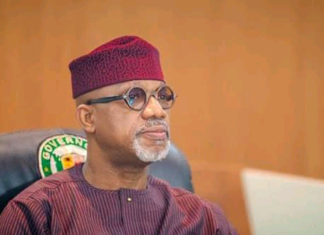
FEATURE: Osoba’s Silent Power Play—How Ogun’s APC Cold War Is Fueling a Powerful Revenge Strategy 

Fresh revelations suggest former Ogun Governor Olusegun Osoba may be strategically benefiting from the ongoing political clash between Dapo Abiodun, Gbenga Daniel, and Ibikunle Amosun. Is this a calculated revenge?

Osoba’s Silent Power Play—How Ogun’s APC Cold War Is Fueling a Powerful Revenge Strategy 

Fresh revelations from the inner workings of Ogun State politics suggest that Olusegun Osoba, long considered a retired power broker, may in fact be quietly orchestrating one of the most strategic compoe state’s recent history, as the escalating conflict between Dapo Abiodun, Gbenga Daniel, and Ibikunle Amosun continues to fracture the ruling APC from within.

While party leaders and stakeholders have made repeated attempts to mend the widening divisions, Osoba has remained conspicuously silent and absent from reconciliation efforts, a posture that insiders now insist is far from accidental.

According to multiple high-ranking political sources, the former governor views the current turmoil not as a crisis to be resolved but as a moment of reckoning. Those familiar with his thinking claim he believes each of the key actors now locked in political battle played either direct or indirect roles in his political humiliation over the years, and for that reason, he sees little incentive to intervene. To him, the unfolding conflict represents a form of delayed justice, a chance to watch the very system that displaced him gradually unravel under its own weight. One senior APC insider described the situation bluntly, suggesting that in Osoba’s calculation, this is “payback season,” and that he would rather see his rivals weakened before making any decisive move.

At the heart of this lingering tension is the shadow of 2003, a year that remains pivotal in Osoba’s political memory. That election not only ended his tenure as governor but also ushered in a new political order that effectively dismantled his dominance in Ogun State. Those close to him say he has never fully reconciled with the circumstances of that defeat, and he continues to associate it with the emergence of a coalition that redefined the state’s power structure. Within that transformation, figures such as Gbenga Daniel, who succeeded him, Ibikunle Amosun, who rose within the same political wave, and Dapo Abiodun, who later consolidated influence under that evolving order, are all seen as beneficiaries of the system that replaced him. To Osoba’s loyalists, they are not just political actors but enduring symbols of a structure that pushed him aside.

His attempt to reassert control through strategic alliances also appears to have deepened his grievances. In 2011, Osoba reportedly threw his weight behind Ibikunle Amosun with the expectation that the alliance would dismantle Daniel’s political network and restore his own relevance. Instead, insiders say the relationship quickly deteriorated as Amosun consolidated power independently and sidelined the very structure that had supported his rise. By 2015, Osoba’s influence within the state had significantly diminished, and the fallout reportedly extended to his son, Olumide Osoba, whose political prospects were affected by the shifting dynamics.

A similar pattern of disappointment is said to define his relationship with Dapo Abiodun. Despite claims that Osoba played a role in Abiodun’s emergence as governor, sources within the party allege that his camp has since been marginalized. Loyalists reportedly found themselves excluded from key appointments and strategic decision-making processes, while his grip on party structures weakened considerably.

Tensions are believed to have escalated further when a commissioner aligned with Abiodun contested against Olumide Osoba during APC primaries, a move interpreted within Osoba’s camp as a calculated attempt to undermine his family’s political standing. Although the commissioner eventually stepped down, his subsequent reappointment reportedly deepened the sense of betrayal.

In this context, Osoba’s continued silence begins to take on a different meaning, one that aligns with a broader strategic outlook.

By allowing the conflict between Abiodun, Daniel, and Amosun to intensify, he is said to be benefiting from a situation in which no single faction can consolidate power. The ongoing hostilities keep Abiodun politically constrained, Daniel preoccupied, and Amosun locked in a struggle to maintain relevance. As each camp expends energy battling the others, Osoba’s position as an elder statesman and indispensable power broker is quietly reinforced. Those observing the situation closely suggest that the longer the crisis persists, the more it elevates his relevance, ensuring that no serious political calculation in Ogun State can afford to ignore him.

Even so, questions remain about whether he still possesses the structural strength to fully capitalize on this moment. Analysts point out that his political machinery is no longer as formidable as it once was, with an aging network of loyalists, limited grassroots regeneration, and weak succession planning posing significant challenges. Yet, despite these limitations, his experience, patience, and deep understanding of the state’s political terrain continue to command respect and caution among both allies and rivals.

As Ogun State’s political heavyweights remain locked in a prolonged battle for supremacy, a compelling narrative is taking shape around the man who has chosen not to speak. Whether by deliberate design or by the natural consequences of a fractured political landscape, Olusegun Osoba appears to be steadily reclaiming relevance at the very center of the unfolding drama. And if the current crisis continues along its present trajectory, it may ultimately confirm what some insiders already believe—that the quietest player in the room could yet emerge as the most consequential, having watched patiently as those who once inherited his throne struggle to hold on to it.

JAMB Adjusts 2026 UTME Schedule, Shifts First Session Arrival Time to 7:00 a.m.

0

The Joint Admissions and Matriculation Board (JAMB) has announced a minor revision to the timetable for the 2026 Unified Tertiary Matriculation Examination (UTME), affecting candidates scheduled for the first session.

In a statement shared on its official X handle on Monday, the examination body disclosed that candidates in the first session are now expected to arrive at their Computer-Based Test (CBT) centres by 7:00 a.m., instead of the previously announced 6:30 a.m.

JAMB also confirmed that the first session will now run from 8:30 a.m. to 10:30 a.m., replacing the earlier schedule.

“Attention 2026 UTME Candidates: This is to notify you of a slight adjustment to the arrival scheduled time, particularly for the first session, which is now 7:00am as against the earlier published 6:30am, while the scheduled start time for the session is now 8:30 am and end time 10:30 am,” the board stated.

The board further clarified that candidates do not need to reprint their examination slips as a result of the updated timetable.

According to JAMB, the revised structure maintains four daily examination sessions running from Monday to Friday, designed to improve operational efficiency across CBT centres nationwide.

Officials explained that the adjustment was introduced following concerns from candidates and parents over early morning travel challenges, including safety risks and transportation difficulties.

The 2026 UTME is scheduled to take place from Thursday, April 16 to Saturday, April 25, 2026.

Naira Stability Comes at a Cost as Reserves Slide Amid Global Tensions

0

Nigeria’s currency, the naira, has demonstrated notable resilience amid heightened global uncertainty, but experts warn that this stability has come at a considerable cost.

Lukman Otunuga, Head of Market Research at FXTM Academy, described the naira’s performance as commendable, noting that it currently stands as the second best-performing currency in Africa against the US dollar so far this year, behind only the Zambian kwacha.

However, this relative strength has been supported by sustained interventions from the Central Bank of Nigeria (CBN), which appear to be weighing on the country’s external reserves. Data shows that Nigeria’s foreign exchange reserves declined for 16 consecutive days up to April 8, falling to $48.94 billion — the lowest level recorded since mid-February.

Otunuga explained that the CBN has remained committed to defending the local currency, particularly during March, when rising geopolitical tensions triggered volatility across emerging markets.

Attention is now shifting to domestic economic indicators, with Nigeria’s March inflation report expected to provide fresh direction. Otunuga projected that the Consumer Price Index (CPI) could ease to 13.4 percent year-on-year, down from 15.1 percent in February.

A sustained slowdown in inflation, he noted, may create room for the CBN to consider cutting interest rates — a move that would contrast with the tightening stance adopted by many central banks globally in response to inflationary pressures linked to geopolitical conflicts.

On the global front, unresolved tensions in the Middle East continue to rattle financial markets. Recent negotiations between the United States and Iran ended without agreement after 21 hours of talks, particularly over Iran’s nuclear programme and control of the Strait of Hormuz — a critical artery for global oil supply.

Otunuga warned that the uncertainty has intensified risk aversion among investors, dragging equities while pushing oil prices higher. Brent crude surged by as much as nine percent to around $104 per barrel amid fears of supply disruptions.

He added that Iran’s rejection of US shipping restrictions and threats targeting Gulf ports have further heightened market anxiety, with developments around the Strait of Hormuz posing ongoing risks to global inflation and economic growth.

In commodities, oil’s sharp rally has also influenced other asset classes. Gold prices initially declined under pressure from rising inflation concerns tied to higher oil prices. Although the precious metal later rebounded above $4,700, bearish sentiment persists due to expectations of prolonged elevated interest rates and a stronger US dollar.

Otunuga highlighted key technical levels for gold at $4,825, $4,700, and $4,600, noting that market direction will largely depend on evolving macroeconomic and geopolitical developments.

Religion Key to Unity, National Growth — Minister Goronyo Says at Sokoto Mosque Commissioning

0

The Minister of State for Works, Bello Goronyo, has emphasized the vital role of religion in fostering unity, social cohesion, and national development across Nigeria.

Speaking at the commissioning of the Isah Mai Kware Juma’ah Mosque in Sokoto State, Goronyo said religious institutions remain central to shaping moral values that encourage sincerity, accountability, and responsible leadership among citizens.

He described the newly commissioned mosque as more than a place of worship, noting that it serves as a symbol of collective commitment toward peaceful coexistence and community development.

According to a statement issued by his Special Assistant on Media, Abdullahi Mohammed, the minister also praised the Governor of Sokoto State, Ahmed Aliyu, for driving development across key sectors in the state.

Goronyo noted that the governor’s initiatives have strengthened infrastructure and enhanced harmonious relations among diverse religious communities.

The minister further acknowledged the contributions of Aliyu Magatakarda Wamakko, a leader of the All Progressives Congress (APC) in the state, commending his influence in advancing governance and development.

He also lauded President Bola Ahmed Tinubu for implementing policies aimed at improving infrastructure, boosting economic growth, and steering national progress.

The commissioning ceremony drew stakeholders and community members, reinforcing the importance of collaboration between religious and public institutions in supporting sustainable development across the country.

Elon Musk’s ‘APC’ Tweet Sparks Confusion, Humor Among Nigerians

0

A social media post by Elon Musk has stirred widespread reactions among Nigerian users after confusion over his use of the term “APC.”

The billionaire entrepreneur, who leads Tesla, shared a post on X (formerly Twitter) on Sunday describing the Tesla Cybertruck as “an APC from the future.”

While the tweet gained global attention, it resonated differently in Nigeria, where “APC” is widely recognised as the acronym for the All Progressives Congress, the ruling party that produced President Bola Tinubu.

This overlap in meaning led to a flood of reactions from Nigerians, many of whom initially assumed Musk was referencing the political party rather than an Armoured Personnel Carrier—a military vehicle often used for troop transport and whose rugged design the Cybertruck is frequently compared to.

Some users expressed confusion, directly asking Musk to clarify his statement, while others cautioned him about the sensitivity of the acronym in Nigeria’s political climate.

A number of commenters highlighted the emotional weight the term “APC” carries locally, linking it to economic hardship and insecurity. Others, however, responded with humor, joking about political interpretations and playfully suggesting Musk’s tweet had hidden political undertones.

Amid the reactions, several users stepped in to explain the intended meaning, noting that “APC” in this context refers to a military-grade Armoured Personnel Carrier, not a political organisation.

The incident underscores how global communication on social media can take on unexpected local meanings, especially when language overlaps with politically charged terms.