
Home Blog Page 67

808 Million Trapped in Extreme Poverty as UN Warns 2030 Goal Slipping Out of Reach

0

The United Nations has sounded a fresh alarm over rising global poverty and hunger, warning that the world is veering off course in its bid to eradicate extreme poverty by 2030 — a core target of the Sustainable Development Goals (SDGs).

In a statement released Monday, the UN disclosed that 808 million people — roughly one in every 10 globally — were living in extreme poverty in 2025. The figure reflects an upward revision following an update to the international poverty line, now set at less than $3.00 per person per day at 2021 purchasing power parity.

“Eradicating extreme poverty for all people everywhere by 2030 is a pivotal aim of the Sustainable Development Goals,” the organisation said.

While acknowledging significant reductions in extreme poverty over the past decades, the UN warned that progress has stalled in recent years. If current trends persist, an estimated 8.9 per cent of the global population will still be trapped in extreme poverty by 2030.

The global body also described as “shocking” the resurgence of hunger levels to figures last recorded in 2005, noting that rising food prices are affecting more countries now than during the 2015–2019 period.

The twin crises of poverty and food insecurity, it said, pose a growing threat to global stability.

The UN stressed that poverty is multidimensional, driven not only by lack of income but also by unemployment, social exclusion, and heightened vulnerability to disasters, diseases and economic shocks.

It warned that inequality harms societies at large, undermining economic growth, weakening social cohesion, fuelling political and social tensions, and in some cases triggering instability and conflict.

“As human beings, our well-being is linked to each other,” the statement noted.

On social safety nets, the UN said strong protection systems are critical in preventing people from falling into poverty during crises.

Despite temporary expansions during the COVID-19 pandemic, nearly half the world’s population — 47.6 per cent or about 3.8 billion people — remain without any social protection coverage as of 2023. This includes an estimated 1.4 billion children.

Between February 2022 and February 2023, 105 countries and territories rolled out nearly 350 social protection measures in response to the global cost-of-living crisis. However, 80 per cent of these interventions were short-term.

“To achieve the Goals, countries will need to implement nationally appropriate universal and sustainable social protection systems for all,” the UN said.

The organisation urged governments, the private sector and citizens to intensify efforts to tackle poverty.

Governments were encouraged to create enabling environments that generate productive employment, especially for marginalised populations. The private sector, the UN said, must ensure that economic growth is inclusive and contributes meaningfully to poverty reduction.

It also highlighted the transformative role of science and innovation in improving access to safe drinking water, reducing deaths from water-borne diseases and strengthening hygiene standards.

The UN maintained that coordinated, sustained action across sectors is vital to lifting millions out of poverty and ensuring that no one is left behind by 2030.

Presidency Debunks ‘Poison Plot’ Rumour at Aso Rock, Labels Video Fake News

0

The Presidency has firmly dismissed viral social media reports alleging that kitchen staff at the Presidential Villa were arrested over a supposed plot to poison President Bola Ahmed Tinubu.

The Special Adviser to the President on Information and Strategy, Bayo Onanuga, described the claims as baseless and urged Nigerians to disregard the circulating video.

The now-viral clip, which surfaced online over the weekend, purported to show activity within Aso Rock Presidential Villa and was accompanied by a voiceover alleging that a presidential chef had been arrested over an attempted poisoning.

The narration claimed that the arrest followed intelligence reports of suspicious food preparation activities in restricted areas of the Villa and suggested that a special police squad had intervened to neutralise a potential threat.

It further alleged that a member of the kitchen staff had been taken into custody for questioning and that security agencies were conducting an ongoing investigation.

Reacting via his official X account, Onanuga categorically refuted the report.

No Aso Rock kitchen staff arrested. No Aso Rock kitchen staff attempted to poison President Tinubu. Please ignore this fake news being disseminated by this video,” he stated.

The Presidency did not provide additional details regarding the source of the video or the motive behind its circulation but maintained that the claims were entirely fabricated.

The development underscores growing concerns over the spread of misinformation on social media, particularly regarding matters of national security and the presidency.

With the latest denial, the Presidency has sought to reassure the public that no such security breach or arrest occurred within the Presidential Villa.

Dangote Cement, Sinoma Sign $1bn Strategic Agreements for cement Projects Across Africa

0

Dangote Cement, Sinoma Sign $1bn Strategic Agreements for cement Projects Across Africa

Dangote Cement Plc (DCP), a subsidiary of Dangote Industries Limited, at the weekend in Lagos signed a landmark agreement with Sinoma International Engineering for the construction of 12 new projects and expansion of others across Africa.

The landmark agreement, with an estimated investment of over $1 billion, reinforces the Company’s long-term growth strategy and aligns with the broader aspirations of the Dangote Group’s Vision 2030.

Speaking at the signing ceremony, Founder & President of Dangote Group, Aliko Dangote, described the new projects as part of carefully designed critical enablers of DCP’s ambition to achieve 80 million tonnes per annum (MTPA) production capacity by 2030, while supporting the Group’s overarching target of generating $100 billion in revenue within the same period.

He said that the projects will strengthen Dangote Cement’s domestic market dominance, drive its export activities, optimize existing operational assets as well as enhancing production efficiency and capacity expansion.

Under the Strategic Framework Agreement, Sinoma International Engineering will collaborate with Dangote Cement on the delivery of new plants, brownfield expansions, and modernization initiatives aimed at strengthening operational performance across key markets.

The new projects include a new integrated line in Northern Nigeria with satellite grinding unit, new line in Ethiopia and other projects in Zambia/Zimbabwe, Tanzania, Sierra Leone and Cameroun. In Nigeria, Sinoma will also handle different projects in Itori, Apapa, Lekki, Port Harcourt and Onne.

The projects signal DCP’s sustained commitment to consolidating its leadership position within the African cement industry, while enhancing its competitiveness on the global stage.

Chairman, Board of Directors, Dangote Cement Plc, Emmanuel Ikazoboh, during the agreement signing event explained that the new projects will enable the company to play a critical role in actualizing Dangote Group’s Vision 2030. The new projects, when completed, will increase Dangote Cement’s capacity, and dominant position in Africa’s cement industry.

For the Group Managing Director of Dangote Cement, Mr. Arvind Pathak, the agreement reflects the company’s determination to grow its investments across African markets to close supply gaps and support the continent’s infrastructural ambitions. According to him, Dangote Cement is committed to making Africa fully self‑sufficient in cement production, create more values and linkages leading to increased economic activities and reduction in unemployment.

It should be noted that Dangote Cement recently scaled up its Gas Sales and Purchase Agreements (GSPA) with subsidiaries of the Nigerian National Petroleum Company Limited (NNPC Ltd): Nigerian Gas Marketing Limited and NNPC Gas Infrastructure Company Limited (NGIC).The agreement signing serves as an enabler of DCP’s strategic objectives.

The agreement guarantees the gas required to support the drive towards CNG adoption as Autogas and to meet the increasing gas demand as production capacities in Nigeria are expanded. It also promotes the adoption of cleaner fuel for both Autogas through CNG and gas to support increased production output.

Dangote Cement currently operates in multiple African countries, with integrated plants, grinding facilities, and distribution hubs strategically located to serve diverse markets. The company’s ongoing projects include plant upgrades, capacity expansions, and the introduction of advanced energy‑efficient technologies designed to reduce operational costs and carbon footprint. Read More

Diaspora Group Slams Legal Notice on VeryDarkMan Over Alleged Defamation of Seyi Tinubu

0

The Future Platform–Diaspora Group has issued a formal legal notice to controversial social media influencer Martin Vincent Otse, popularly known as VeryDarkMan, over alleged defamatory remarks directed at Seyi Tinubu.

In a statement released over the weekend, the group expressed alarm over what it described as rising cyberbullying and reputational attacks in Nigeria’s digital landscape, warning that the spread of unverified allegations could trigger serious legal consequences.

The statement, jointly signed by Convener Austine Dafe and Publicity Secretary Kunle Olaosebikan, stressed that while freedom of expression is a cornerstone of democracy, it must operate within established legal boundaries.

According to the group, public commentary capable of damaging an individual’s reputation must be supported by credible and verifiable evidence — particularly when shared across digital platforms with vast audiences.

“Freedom of speech does not extend to cyberbullying, defamation, or the dissemination of unverified allegations capable of damaging reputations,” Dafe stated.

He added that social media platforms must not become spaces for character assassination without due process, emphasizing that individuals with substantial online followings bear both moral and legal responsibilities.

The group called on Otse to immediately cease further publication or repetition of statements it considers defamatory against Tinubu.

It also demanded a full public retraction of any claims not backed by demonstrable evidence, along with a formal apology issued through the same platforms where the alleged remarks were circulated.

Future Platform–Diaspora Group further indicated it reserves the right to pursue all available legal remedies under Nigerian law, including civil proceedings and claims for damages, should the alleged conduct continue.

While clarifying that the action is not intended to silence legitimate criticism or democratic engagement, the group maintained that accountability in public discourse ultimately strengthens democracy.

It also urged stricter enforcement of cybercrime and defamation laws to protect personal dignity in Nigeria’s rapidly evolving digital space.

The development adds another layer to ongoing debates about free speech, influencer responsibility, and the limits of online activism in Nigeria’s social media era.

2027: INEC’s Coup Against Dapo Abiodun | By Seun Olagunsoye

0

The Independent National Electoral Commission appears to have carried out an administrative coup against so many politicians who have come unprepared

2027: INEC’s Coup Against Dapo Abiodun

By Seun Olagunsoye

I have never been tired of telling people that the best education I had was acquired during my A’ Level years in the 80s. It was my first exposure to maturity and discernment, the age of consciousness when I started living on my own terms and could define why I do certain things.

One of my subject combinations was economics and the subject in which I had a Distinction at my school certificate level was expanded into three complex learnings handled by three different teachers. This was when I was able to unilaterally and psychologically summarize the whole subject area which we have of then defined as the “social science which deals with human behavior in relation to ends and scarce means with alternative uses”. Economics is simply about “Choices” or decisions that we make among “alternatives”;  where the Opportunity Costs are about what we forego or a decision that we “refused” to make.

In later years, I have had to make practical decisions on my own from a B-Cost factor perspective; in making several choices on the basis *”of what Benefit and at what Costs”*. This decision-making process has proven to be beneficial at all critical crossroads.

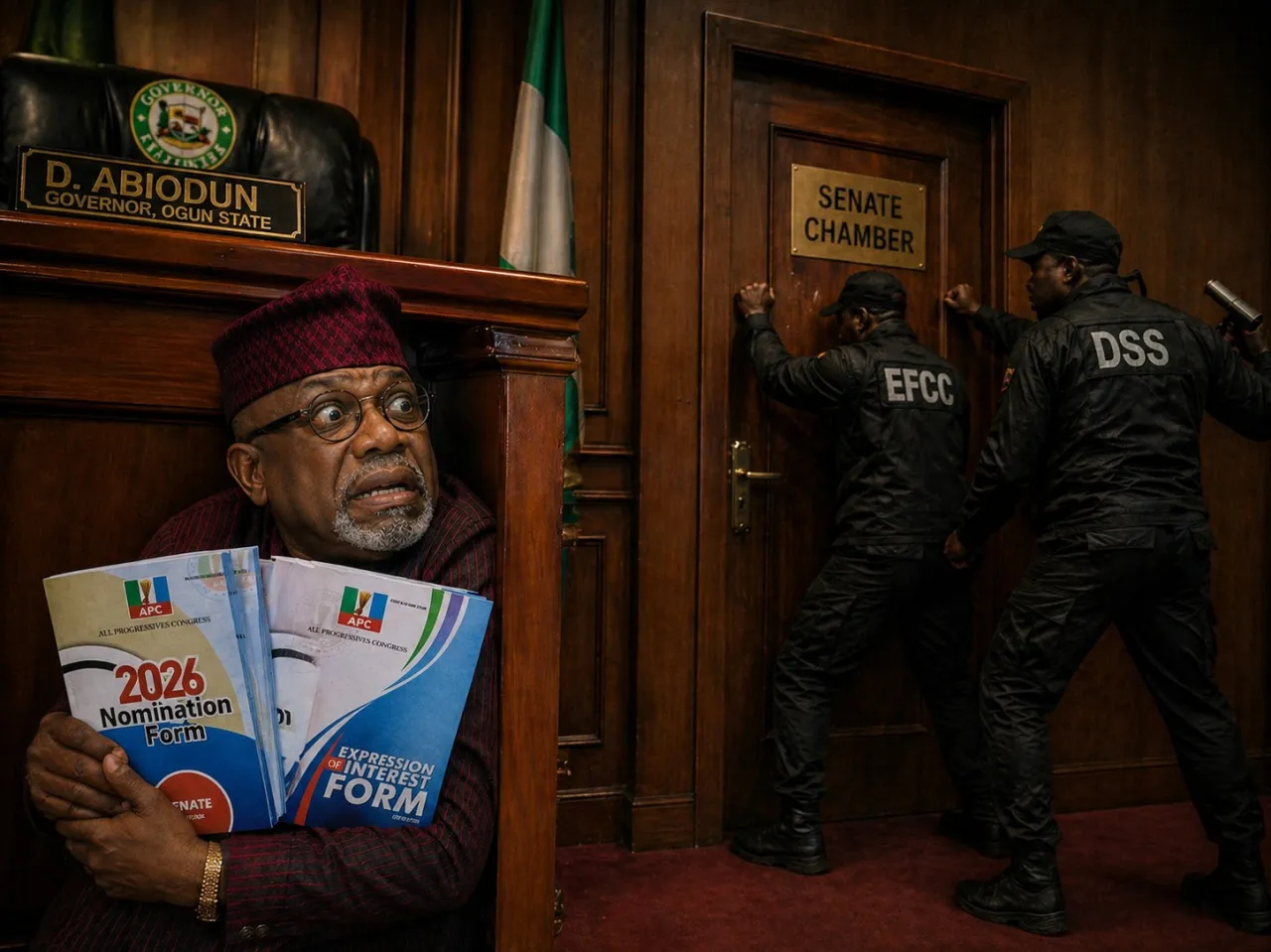
The Independent National Electoral Commission appears to have carried out an administrative coup against so many politicians who have come unprepared, with a rescheduled time table which abridged the grace period and lifespan of some outgoing Governors, including that of Mr. Dapo Abiodun of Ogun State.

Mr. Abiodun is touted among the list of those eyeing a transition from Governor to Senate (though one would have thought a serious and truly hardworking Governor would wish to be allowed to rest on a Leave of absence after the 8 years exertion). It is therefore important to X-ray this chance in case it is true, using the B-Cost factor lens. What are the “Benefits” that Mr. Abiodun brings to the table, and at what “Costs” to Mr. President, Asiwaju Bola Ahmed Tinubu, to the people of Ogun State; and to the people of Ogun East Senatorial District where he hopes to represent.

In 2019, Asiwaju Bola Ahmed stood firmly on the side of Dapo Abiodun to pick the APC party ticket and was also for him all through the general elections. The simple narrative was that a lot of heads combined to “assist” Dapo Abiodun win with a paltry 19,000 votes margin. How did he pay back the President?

The whole narrative of the 2023 elections was summarized in the “Eleyi” sobriquets, where he openly canvased, mocked and disrespected Asiwaju in the Primaries. He sang denigrating songs before the Ogun State Delegates in Abuja to mock the man who gave all in his power to support Dapo Abiodun to become the Governor. Even during the Presidential elections, he traded off the victory of Asiwaju in his polling unit (where he personally voted) and in his entire Iperu Ward. Money allegedly released to him to support security operations and as honorarium to traditional rulers that received Asiwaju in audience at the Cultural Centre in Abeokuta before the elections remains unpaid till this moment, only to keep those for his own re-election two weeks later.

But as Karma will have it, Dapo Abiodun himself lost his 2023 Governorship elections, especially in his Senatorial District and was again “assisted” mainly through the legal process. It is clear that someone who was assisted to win elections in two consecutive circles has no particular values to add to the re-election of Asiwaju Bola Ahmed Tinubu. On the contrary, his plan was to lurk under the shadow of the President’s popularity to worm his way into the Senate. The question then is, can the President carry a political liability into the next phase of contest where he needs to get the maximum votes that he can get.

The reason for the lack of lustre Dapo Abiodun’s performance during the 2023 elections was basically in the universe of values, a disconnect from the people. Mr. Abiodun’s government and economic policies target only Mr. Abiodun and no one else. Projects benefit only him and his circle of cronies (not more than two). Appointments were given as a charity and usually at the last minute for political expediency. People who were appointed don’t even get to see him, he doesn’t pick their calls, no cabinet meetings because he feels he does not need them, they do not occupy any space in his political trajectory.

The people were appointed only to say “Thank You” because there is no work for them except to fill up blank spaces some according the law, and others just for the optics. With this kind of mindset and motive, win or lose at the Primaries, Dapo Abiodun has no more need of all these people. For someone who had lost two previous elections, the next contest is not considered from a test of popularity but of potential manipulation to ride on the crest of Asiwaju Bola Ahmed Tinubu’s popularity and not on his own. So, he does not need any worker to mobilise public support for him but a handful of men, especially through INEC who can execute the manipulation and they will also be discarded after the ballots. Procurement has been his political template. Those elders that have been on monthly payrolls would have outlived their relevance and the tap will be closed.

The Leaderships of the transport unions that he patronised all through would have expired in their usefulness and all that would be left is to appoint some last minute undertakers to consolidate on his own economic benefits derivable from that venture. The party leaderships have no place in Dapo Abiodun’s next agenda with or without a ticket in his hands. As a Governor, he had the opportunity of putting thousands of people to work, as a Senator, he can only appoint six trusted people as Aides. Dapo Abiodun’s brand of politics is not of populism or popularity, but strictly a business affair.

With INEC’s new time table however, Dapo Abiodun has just about sixty days to play the “nice man” card. He will pick calls and hold meetings in the next 60 days; he will pretend to be a listening Governor; he will be less caustic; he will be jovial and gentle even to the most stupid ideas, after all it is just a matter of time. The carnival will soon be over. Worse still, once he loses the ticket, he will make hell for those who collect money from him and fail to deliver their Constituencies as he had done in the past when he lost the Ogun East Senatorial ticket and in subsequent elections when he went after those who collected money from him during the election process.

For those singing Dapo Abiodun’s Hosanna today, their Hallelujah has been muffled within the next 60 days of a sprint run. The Rule of Epicharmus suggests knowing how has treated another person before, Dapo Abiodun is not that kind of leader who needs the crowd, he is sufficient only in himself and his epicurean lifestyle. He can never any people’s choice but an Opportunity Cost and an alternative forgone in any political process.

Seun Olagunsoye is a public analyst, Writes this piece from Ijebu-Ode

The views and opinions in this article are solely those of the author and do not necessarily represent the position or editorial stance of Newsheadline247.

The platform publishes this piece to encourage diverse perspectives and is not responsible for the content, accuracy, or implications of the opinions expressed. Full responsibility rests with the author.

Nigeria Unveils Data-Driven Customs Reform Model at WCO Brussels, Links Trade Efficiency to Revenue Growth

0

Nigeria has taken the spotlight at the 17th Session of the Capacity Building Committee of the World Customs Organization (WCO) in Brussels, unveiling a bold data-driven reform communication model that directly ties customs modernisation to trade efficiency, revenue expansion, and stakeholder confidence.

At the high-level session in Brussels, the Nigeria Customs Service (NCS) demonstrated how measurable performance indicators — rather than routine activity reports — now define its reform narrative. The approach positions communication as a strategic lever for maritime trade facilitation across Nigeria’s ports and supply chains.

The presentation was delivered by Deputy Comptroller Abdullahi Maiwada, the Service’s National Public Relations Officer, under the leadership of Comptroller-General Adewale Adeniyi, who also chairs the WCO Council.

Presenting a paper titled “Communicating the Results of Capacity-Building Initiatives More Effectively: Nigeria Customs Service Experience and Lessons Learned,” Maiwada detailed the Service’s deliberate transition from conventional reporting to impact-focused storytelling anchored on verifiable data.

He explained that the new framework rests on three pillars: institutional capacity building, human resource development, and stakeholder engagement — ensuring reforms are not only implemented but clearly understood and trusted within the trade ecosystem.

Using the Time Release Study (TRS) as a case study, Maiwada revealed how transparent data tools and infographics showed that a significant share of cargo clearance delays stemmed from systemic idle time, not inspection procedures.

The result, he said, was a shift from defensive explanations to performance benchmarking, fostering shared accountability among shipping lines, terminal operators, and cargo owners.

On the Advance Ruling programme, the NCS disclosed that 83 Advance Rulings were issued in 2025. Registered accounts surged from 60 in December 2024 to 173 in December 2025 — a 188.3 percent increase in stakeholder participation.

The initiative accounted for 2.9 percent of total revenue from goods valued at N240.89 billion in 2025, reinforcing the role of structured communication in promoting predictability and voluntary compliance.

Under the Authorised Economic Operator (AEO) Programme, about 120 companies have obtained full certification. Additionally, 3,270 officers were trained nationwide as AEO Champions to deepen implementation and stakeholder engagement.

The Service also highlighted the deployment of its indigenous Unified Customs Management System, B’Odogwu, describing it as a milestone in Nigeria’s digital customs transformation, supported by sustained sensitisation and user engagement.

Maiwada pointed to the Customs Integrity Perception Survey as another breakthrough tool, enabling measurable assessment of integrity management and strengthening public trust through continuous evaluation.

He urged WCO member administrations to embed communication units at the design stage of reform initiatives, humanise institutional processes, sustain engagement beyond isolated events, and enhance peer learning among customs bodies.

At the close of the session, Nigeria nominated LI Yan of China Customs as Chair of the 18th Session of the WCO Capacity Building Committee — a move that received unanimous backing from delegates.

Li Yan, China’s Customs Attaché to Brussels since 2020, has overseen multiple multilateral and bilateral initiatives within the WCO, serving four terms as Vice Chair and securing re-election at the 17th Session — reflecting sustained confidence in her leadership.

For Nigeria, the Brussels engagement marked more than a conference appearance. It signalled a strategic repositioning of customs communication as a measurable driver of maritime efficiency, trade facilitation, and revenue performance — a reform narrative designed to resonate far beyond the conference hall.

Iranian Media: Family Members of Supreme Leader Ayatollah Ali Khamenei Killed in Alleged U.S.-Israeli Strikes

0

Iranian Media: Family Members of Supreme Leader Ayatollah Ali Khamenei Killed in Alleged U.S.-Israeli Strikes

Iranian media outlets reported Sunday that three close family members of Iran’s Supreme Leader, Ayatollah Ali Khamenei, were killed in what were described as U.S. and Israeli strikes.

According to Fars News Agency, the daughter, son-in-law, and granddaughter of the country’s highest authority died in the attacks. The outlet cited “informed sources in the Supreme Leader’s household” as confirming the deaths.

“After establishing contact with informed sources in the Supreme Leader’s household, the news of the martyrdom of the daughter, son-in-law and granddaughter of the Revolutionary Leader has unfortunately been confirmed,” the agency reported.

The reports have not yet been independently verified, and no official statement has been released by Iranian authorities beyond the media confirmations. There has also been no immediate comment from U.S. or Israeli officials regarding the claims.

The development, if confirmed, would mark a significant escalation in already heightened tensions between Iran, the United States, and Israel.

‘Find Him Dead or Alive’: How Bola Ige’s 1979 Victory Saved Veteran Journalist Adetola Adeniyi from Jail

0

Veteran journalist, Chief Adetola Adeniyi, has opened up on a life shaped by precocious brilliance, fearless journalism and brushes with death — revealing how the 1979 electoral victory of Bola Ige altered what could have been a long prison sentence.

In this revealing conversation with AYOOLA OLASUPO, the former ombudsman traces his journey from a restless child prodigy in Yorubaland to one of Nigeria’s most outspoken media figures, who once faced orders to be found “dead or alive.”

Born on May 29, 1945, Adeniyi describes himself as a child shaped by discipline, culture and boundless energy. By age 10, he had finished primary school; by nine, he had founded a social club called the Isamuro Boys and earned the nickname “Never Tired.”

His early years combined Quranic education, Western schooling and hunting expeditions. He acted in school plays, led boxing training sessions and represented his school at the Western Nigeria Festival of Arts, where his team emerged victorious.

“I was a leader even as a child,” he recalls. “People doubted my age because I was the youngest in class, yet I led.”

Adeniyi’s passion for journalism began in secondary school, where he served as a school reporter and earned another nickname — “Lucky Star.”

His professional career would later be defined by bold commentary. He wrote controversial pieces predicting the fall of military regimes and criticised powerful figures, including former leaders such as Yakubu Gowon and Shehu Shagari.

Though arrests and torture followed some publications, Adeniyi insists fear never guided his pen.
“I wasn’t afraid,” he says. “I knew consequences could come, but I never allowed emotion to dictate my writing.”

As Africa’s first newsroom ombudsman at the Daily Times, Adeniyi saw himself as a defender of the public.

One of his most notable interventions was his campaign for the construction of an overhead pedestrian bridge on the Lagos-Abeokuta Expressway in 1974 after repeated fatal accidents. His advocacy eventually forced authorities to act.

He also investigated corporate injustice, including a controversial case involving a worker who died during office hours under scandalous circumstances — a story that exposed ethical and moral contradictions within society.

Adeniyi’s writing style and worldview, he says, are deeply rooted in Yoruba culture. He began as an Akewi, chanting poetry on Radio Nigeria at age 16.

He credits Yoruba traditions for instilling discipline, moral values and a profound respect for elders — principles he believes are fading in modern Nigeria.

“There’s no culture superior to the Yoruba culture,” he says, while maintaining reverence for tradition and communal humanity.

Perhaps the most chilling chapter of his career unfolded during the turbulent politics of 1979. Working with the Nigerian Tribune, which was widely seen as aligned with Obafemi Awolowo and his political movement, Adeniyi became a target.

He alleges that then military administrator Paul Tafa issued a chilling directive: “Find Tola Adeniyi dead or alive, but better alive. Remove one eye and cut off one leg.”

Warned by insiders, Adeniyi went into hiding. He was later arrested, stripped naked, beaten and thrown into a cell with condemned criminals. Charged with felony, his fate hung in the balance.

“If Bola Ige had not won the election in 1979, I would have gone to jail,” he says, crediting Ige’s victory for changing the political equation and ultimately sparing him prolonged imprisonment.

Reflecting on the current state of journalism, Adeniyi expresses concern over poor remuneration and deteriorating moral standards.

He argues that many young journalists operate under severe economic hardship, making ethical resilience more difficult in an already compromised system.

“When a country sinks morally, don’t expect journalists to be different,” he says, though he also laments what he describes as declining professional rigour.

His career came at a personal cost. Twice in 1979, his family fled their home following intelligence reports of planned attacks. His wife, he says, stood firmly by him — reading his articles before publication and never wavering in courage.

As he approaches another birthday on May 29, Adeniyi says survival itself feels like victory.
“My organs are working. I can still walk unaided. I just thank my destiny helpers and whoever sent me here.”

For a man who once stared down threats of assassination and imprisonment, that gratitude carries the weight of history.

World Cup Lifeline on Hold: FIFA Delay Over DR Congo Eligibility Puts Super Eagles in Limbo

0

Nigeria’s football community is growing increasingly anxious as FIFA continues to delay a decision on the eligibility of players fielded by DR Congo during last November’s Africa 2026 World Cup play-off.

The unresolved case could determine whether the Nigeria national football team receive an unexpected lifeline back into contention for the global tournament.

The Nigeria Football Federation formally raised the issue in December, alleging that some Congolese players—including Aaron Wan-Bissaka and Axel Tuanzebe—may be ineligible under Congolese law, which reportedly prohibits dual citizenship.

DR Congo’s Leopards defeated Nigeria on penalties to secure passage to an intercontinental play-off against either Jamaica or New Caledonia. However, Nigerian officials argue that FIFA was misled into approving players who allegedly hold European passports alongside Congolese nationality.

NFF General Secretary Mohammed Sanusi insisted that the matter hinges on domestic citizenship laws, claiming FIFA may have been “deceived” in clearing the players.

The Congolese Football Federation has dismissed the protest as an attempt to “win via the back door.”

FIFA has confirmed it is reviewing the complaint but has provided no timeline for a verdict. The prolonged silence has fueled uncertainty across the continent, particularly as the intercontinental play-off approaches.

Nigeria, bronze medallists at the 2025 Africa Cup of Nations, risk missing a second consecutive World Cup. DR Congo, meanwhile, are seeking a return to the global stage for the first time since 1974, when they competed as Zaire.

Observers warn that a late administrative decision could overturn on-field results and disrupt tournament logistics.

The delay has ignited intense debate among supporters. While some fans have urged calm and focus on upcoming competitions, others fear Nigeria’s hopes are fading.

Super Eagles midfielder Alex Iwobi admitted the uncertainty is unsettling.

“We are still waiting; hopefully, we can go to the World Cup,” he said recently.

Beyond Nigeria and DR Congo, the situation is also being closely monitored by Jamaica’s football authorities, who are concerned that a last-minute ruling could disrupt preparations for the March play-off.

The controversy has revived broader debates about eligibility rules in international football, particularly when domestic citizenship laws intersect with FIFA regulations. Past precedents show that disciplinary rulings can take months, often emerging long after matches have been played.

For Nigeria—boasting global stars such as Ademola Lookman and Victor Osimhen—the decision could either reopen the door to the 2026 World Cup or confirm elimination.

As the countdown to the intercontinental play-off continues, the Super Eagles’ fate remains suspended between hope and heartbreak, with FIFA’s final word set to determine whether Nigeria’s campaign ends on the pitch—or in the courtroom.

Senate Moves to Legalise State Police by 2026 as Tinubu Pushes Urgent Constitutional Reform

0

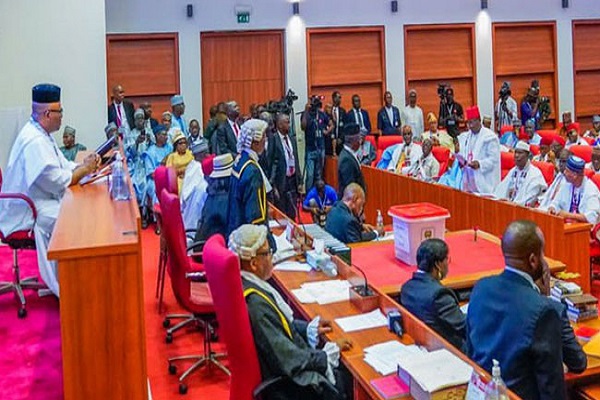
The Senate has pledged to complete the amendment of the 1999 Constitution to pave the way for the establishment of state police before the end of 2026, signaling a major shift in Nigeria’s security architecture.

The commitment follows a formal request by President Bola Tinubu urging the National Assembly to initiate constitutional changes that would decentralise policing as part of broader efforts to combat insecurity nationwide.

Senate to Resume Constitutional Review
Speaking with Sunday PUNCH, Senate spokesperson Yemi Adaramodu disclosed that the upper chamber would immediately resume work on the constitutional review process once plenary reconvenes next week.

According to him, groundwork on the proposal had already been laid before legislative attention shifted to electoral reforms and the 2026 Appropriation Bill.

“We are going to commence the process of reviewing the constitution for the establishment of state police immediately we resume next week,” Adaramodu said, assuring Nigerians that the amendment would be concluded before electioneering begins ahead of the next general elections.

He added that extensive consultations had already been conducted across geopolitical zones, with reports and stakeholder submissions compiled by the constitutional review committee.

President Tinubu first pressed the issue during an interfaith breaking of fast at the Presidential Villa, Abuja, urging lawmakers to “start thinking how best to amend the constitution to incorporate the state police for us to secure our country.”

Addressing members of the House of Representatives days later, the President warned that the creation of state police must not be “a straight free fall for everybody,” stressing the need for checks and balances to prevent abuse by state governors.

Security stakeholders have largely welcomed the proposal but warned of potential pitfalls.

APC chieftain Ayodele Arise, speaking on Arise TV, suggested that the amendment process could begin with a review of Section 214 of the Constitution to move policing from the Exclusive List to the Concurrent List. This would allow both federal and state governments to operate separate police formations.

“As far as the security situation in the country is concerned, there is definitely a shortage of security personnel,” Ngelzarma noted, arguing that decentralised policing could improve response to local crimes.

However, he cautioned that recruitment into state police formations must reflect ethnic and religious diversity to prevent domination by any group.

Similarly, National Publicity Secretary of Afenifere, Jare Ajayi, described the reform as necessary but urged lawmakers to insert clear legal safeguards limiting governors’ powers over state police.

“The National Assembly must make provisions in the bill to limit the powers of governors to curb abuse of state police,” Ajayi said, recommending that citizens be granted the right to challenge misuse in court.

With the electoral amendment bill already signed into law and budget deliberations underway, Adaramodu insisted that the Senate would fast-track the constitutional amendment process.

“Before electioneering starts, we would have done and dusted it, then pass it on to Mr President for his assent,” he assured.

If successful, the amendment would mark one of the most consequential security reforms since the return to democracy, potentially reshaping Nigeria’s policing system and redefining federal-state power dynamics in the fight against crime.