
Home Blog Page 86

N’Assembly: ₦1.504trn Army Budget Inadequate for Security Emergency, Yet Approved

0

N’Assembly: ₦1.504trn Army Budget Inadequate for Security Emergency, Yet Approved

The National Assembly of Nigeria on Monday declared that the proposed 2026 budget for the Nigerian Army falls short of what is required to effectively prosecute the state of emergency on insecurity declared by the President.

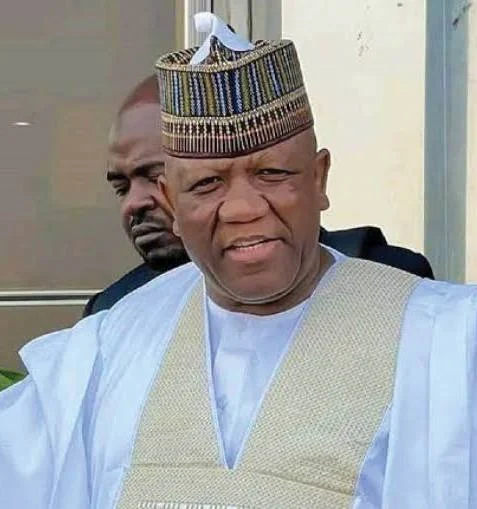
Speaking at a joint sitting of the Senate and House of Representatives Committees on Army, Chairman of the Senate Committee, Abdulaziz Yar’Adua, acknowledged that while the allocation was commendable, it remained inadequate given the Federal Government’s renewed push to intensify security operations nationwide.

Despite the reservations, the joint committee approved ₦1.504 trillion as the Army’s budget for the 2026 fiscal year, as earlier submitted by the President in December 2025.

Yar’Adua disclosed that lawmakers were satisfied with the presentation by the Chief of Army Staff but expressed concern over persistent delays in the release of funds, a challenge he said affects multiple Ministries, Departments and Agencies (MDAs).

“After listening to the presentation of the Chief of Army Staff, members expressed satisfaction. However, the major issue remains the delay in the release of funds,” he said.

The senator assured the Army of legislative backing, emphasising its critical role in safeguarding national stability.

He further noted that approximately 70 per cent of the 2025 budget had been rolled over into the 2026 fiscal year.

Chairman of the House Committee on Army, Aminu Balele, commended the Chief of Army Staff and personnel for their dedication in combating insurgency and defending Nigeria’s territorial integrity.

He pledged that the House would continue to push for the timely release of appropriated funds.

“In my capacity as Chairman of the House Committee on Army, I assure you that we are ready to push for the timely release of funds so you can deliver on your mandate,” Balele said.

He also acknowledged the support of the Speaker of the House of Representatives, Tajudeen Abbas, for prioritising security funding.

The approval underscores lawmakers’ recognition of mounting security challenges, even as concerns linger over whether the allocated resources are sufficient to meet the demands of the ongoing security emergency. Read More

Toke Makinwa Explains Why She Stopped Paying Tithes to Churches

Toke Makinwa Explains Why She Stopped Paying Tithes to Churches

Media personality Toke Makinwa has revealed that she no longer pays tithes to churches, explaining that she now prefers to channel her financial support directly to individuals and institutions in urgent need.

Speaking during a conversation with media entrepreneur Chude Jideonwo, Makinwa questioned the practice of donating to religious institutions she believes are already financially stable.

“I kinda stopped paying tithes to the church because all the churches I know are rich, and I decided that I’m not doing that anymore,” she said.

According to her, the decision came after reflecting on the growing wealth of churches while many individuals struggle to afford basic necessities. She noted that she would rather support hospitals, maternity wards, and people facing urgent financial challenges.

“If I have money and someone tells me they need it to pay rent, why should I pass it into a building that’s already rich? I would rather give my tithe to strangers who tell me their actual needs,” she stated.

Makinwa further argued that many churches frequently request donations for building projects despite already possessing substantial resources.

“Every church is building. Every Sunday, there’s a building fund envelope. You guys have so much money and it’s not taxed. It’s a business, if we are going to be real. Because if that pastor dies today, either his wife or his child becomes the next pastor,” she said.

During the discussion, Jideonwo also raised concerns about what he described as unintended harm caused by certain religious practices, including what he termed “post-traumatic church syndrome.”

Reflecting on her personal journey, Makinwa disclosed that a decade ago she handed over entire endorsement earnings to her church in pursuit of blessings.

“Ten years ago, I didn’t touch one naira from an endorsement deal; I carried it all into the church. Now, I give where it directly helps someone in need,” she said.

Her comments have reignited conversations about tithing, religious accountability, and personal philanthropy in Nigeria’s faith-driven society. Read More

Nigeria’s Inflation Dips to 15.10% in January 2026 as Food Prices Ease – NBS

0

Nigeria’s Inflation Dips to 15.10% in January 2026 as Food Prices Ease – NBS

Nigeria’s headline inflation rate eased to 15.10 percent in January 2026, down slightly from 15.15 percent recorded in December 2025, according to the latest Consumer Price Index report released by the National Bureau of Statistics (NBS).

In its CPI report published Monday, the statistics agency disclosed that the Consumer Price Index declined to 127.4 points in January from 131.2 points in December, representing a 3.8-point decrease month-on-month.

The NBS also noted that food inflation slowed to 8.89 percent in January, compared to 10.84 percent in the previous month, signaling a modest relief in food price pressures.

“In January 2026, the headline inflation rate eased to 15.10%, down from 15.15% in December 2025,” the bureau stated.

On a month-on-month basis, headline inflation stood at -2.88 percent in January 2026, marking a significant drop from the 0.54 percent recorded in December 2025.

According to the NBS, this indicates that the rate of increase in the average price level slowed considerably compared to the previous month.

The December 2025 figure of 15.15 percent had reflected a marginal uptick in inflation before the latest moderation.

Despite the recorded disinflation, many Nigerians continue to express concerns over the rising cost of living, as household expenses remain elevated across the country.

The latest data underscores ongoing efforts to stabilise prices amid broader economic adjustments, though consumer sentiment suggests that relief at the market level remains gradual. Read More

Senate Directs North-Central Development Commission to Prioritise Agriculture, Security in N140bn 2026 Budget

0

Senate Directs North-Central Development Commission to Prioritise Agriculture, Security in N140bn 2026 Budget

The Nigerian Senate has called on the North-Central Development Commission (NCDC) to prioritise agriculture and security in its proposed N140 billion budget for the 2026 financial year.

Chairman of the Senate Committee on NCDC, Titus Zam, made the recommendation on Monday when the commission’s management appeared before the committee to defend its 2026 budget estimates.

The Nigerian Senate committee initially went into a closed-door session to deliberate on the budget proposal before emerging to announce its position.

Addressing journalists after the session, Zam said the committee had carefully reviewed all items in the estimates and found them relevant to the developmental needs of the North-Central region.

“As a committee overseeing this commission, we have requested them to prioritise their expenditures in line with their mandate so that the people of the North-Central region will benefit and derive value from the resources allocated to them,” he said.

He stressed that the commission’s mandate must address critical sectors including agriculture, security, health, education, infrastructure, and other essential social services.

“North-Central is predominantly agricultural, so agriculture must take pride of place, and it has been embedded in their budget,” Zam noted.

He added that the commission is also exploring collaboration with security experts and regional stakeholders to strengthen support for security agencies operating in the zone.

However, the lawmaker expressed dissatisfaction with the implementation of the capital component of the 2025 budget, describing the challenge as part of broader national implementation setbacks.

According to him, the committee resolved to recommend the appropriation of N140 billion for the commission in 2026, emphasising that the funds must be effectively utilised for the benefit of the region.

“This is the resolution of the committee,” Zam stated.

The development signals the Senate’s push for targeted investments in agriculture and security as key pillars of growth and stability in the North-Central region. Read More

US Freezes Assets of Eight Nigerians Over Boko Haram, ISIL Links

0

US Freezes Assets of Eight Nigerians Over Boko Haram, ISIL Links

The United States government has frozen the assets and properties of eight Nigerians accused of having links to terrorist groups including Boko Haram and the Islamic State of Iraq and the Levant (ISIL).

The action was detailed in a 3,000-page document dated February 10, released by the Office of Foreign Assets Control (OFAC), an arm of the United States Department of the Treasury.

The publication, titled Specially Designated Nationals and Blocked Persons List, outlines individuals and entities whose assets are blocked under US sanctions programmes.

According to OFAC, the sanctions are part of Washington’s broader counter-terrorism strategy aimed at disrupting terrorism financing and restricting financial dealings with designated persons. The agency said the list serves as a compliance tool to notify the public of individuals and entities whose property and interests are blocked.

Among the Nigerians named is Salih Yusuf Adamu, also known as Salihu Yusuf, who was previously convicted in the United Arab Emirates in 2022 for helping to establish a Boko Haram cell that attempted to transfer $782,000 from Dubai to Nigeria to fund insurgent activities.

Babestan Oluwole Ademulero, born in 1953, was designated under terrorism sanctions and listed under multiple aliases.

Also named were Abu Abdullah ibn Umar Al-Barnawi (Ba Idrisa), reportedly born in Maiduguri, Borno State, and flagged under terrorism-related sanctions.
Abu Musab Al-Barnawi (Habib Yusuf), identified as a Boko Haram leader.

Khaled (Khalid) Al-Barnawi, linked to Boko Haram and listed under several aliases.
Ibrahim Ali Alhassan, reportedly residing in Abu Dhabi and linked to Boko Haram.
Abu Bakr ibn Muhammad ibn Ali Al-Mainuki (Abu-Bilal Al-Minuki), identified as having ties to ISIL.

Nnamdi Orson Benson, designated under cybercrime-related sanctions (CYBER2).
Under the sanctions, all property and interests belonging to the listed individuals within US jurisdiction are blocked. US persons are generally prohibited from engaging in transactions with them. The measures were enforced under Executive Order 13224, which targets terrorists and those providing support to terrorist activities.

The development follows recent recommendations by the United States Congress urging visa bans and asset freezes on individuals and groups accused of religious persecution in Nigeria.

Those reportedly recommended include former Kano State Governor Rabiu Kwankwaso, as well as the Miyetti Allah Cattle Breeders Association of Nigeria and Miyetti Allah Kautal.

In October 2025, US President Donald Trump announced that Nigeria would again be placed on the US State Department’s religious freedom watchlist as a “Country of Particular Concern,” citing alleged persecution of Christians. Nigeria had previously been designated under Trump in 2020 before being removed from the list by his successor, Joe Biden.

The United States designated Boko Haram as a Foreign Terrorist Organisation in 2013. The group has been responsible for thousands of deaths across northern Nigeria and the Lake Chad Basin since 2009.

The latest sanctions underscore Washington’s sustained focus on countering terrorism financing, violent extremism, and cyber-related threats linked to Nigeria and the wider region. Read More

Senate Defends Discretionary E-Transmission Clause as Igini Warns Lawmakers Risk 2027 Defeat

Senate Defends Discretionary E-Transmission Clause as Igini Warns Lawmakers Risk 2027 Defeat

The Senate of Nigeria has defended its controversial decision to make electronic transmission of election results discretionary rather than mandatory in the proposed Electoral Bill 2026, insisting the move was guided by empirical data and Nigeria’s infrastructural realities.

However, former Resident Electoral Commissioner, Mike Igini, has warned members of the 10th National Assembly that weakening real-time e-transmission safeguards could cost many of them their seats in the 2027 general election.

Clarifying the position of the upper chamber, Senate Leader Opeyemi Bamidele said the amendment to Clause 60(3) of the Electoral Bill followed extensive consultations and careful analysis of official statistics—not political pressure.

Originally, Clause 60(3) stipulated that presiding officers “shall electronically transmit the results from each polling unit to INEC Result Viewing Portal (IReV) in real time.

But the Senate revised the clause, removing the mandatory “real time” requirement and introducing a proviso that in the event of internet failure, Form EC8A would serve as the primary means of collation.

Bamidele explained that while electronic transmission remains desirable, lawmakers had to consider infrastructural limitations before enacting binding legal provisions.

Citing data from the Nigerian Communications Commission (NCC), he noted that broadband coverage stood at about 70 percent in 2025, while internet penetration was only 44.53 percent of the population.

In a statement titled “Proviso to Real-Time Transmission of Polling Unit Results: Why a Majority of Legislators May Not Return in 2027,” Igini urged lawmakers to delete the Senate’s newly introduced caveat and restore the original provision mandating real-time uploads to the Independent National Electoral Commission (INEC) Result Viewing Portal.

Beyond technical arguments, Igini delivered a blunt political message: legislators who dilute electoral transparency may be engineering their own defeat.

He reminded the 10th Assembly that previous National Assemblies failed to close loopholes in the electoral framework—loopholes that were later exploited against many of their members.

According to him, numerous lawmakers who lost party tickets and defected to other platforms were defeated not due to weak grassroots support, but because results were allegedly manipulated during collation at ward and local government levels.

Igini argued that the absence of mandatory real-time transmission creates room for alterations outside public scrutiny, particularly at collation centres.

The debate over Clause 60(3) has become one of the most contentious aspects of the Electoral Bill 2026, with transparency advocates insisting that mandatory real-time transmission is crucial to safeguarding electoral integrity.

As the amendment process continues, the outcome could significantly shape public confidence in Nigeria’s electoral system—and potentially determine the political fortunes of current lawmakers in 2027. Read More

ONSA Denies El-Rufai’s Claim of Toxic Chemical Import, Refers Matter to DSS for Probe

0

ONSA Denies El-Rufai’s Claim of Toxic Chemical Import, Refers Matter to DSS for Probe

The Office of the National Security Adviser (ONSA) has denied allegations by former Kaduna State Governor, Nasir El-Rufai, that it imported a highly toxic chemical substance from Poland.

El-Rufai had written to the National Security Adviser, Nuhu Ribadu, seeking clarification over what he described as the alleged procurement of approximately 10 kilograms of thallium sulphate by ONSA.

In his letter, the former governor raised concerns about public safety, transparency, and regulatory compliance, noting that thallium salts are highly toxic and tightly controlled substances.

He requested details on the intended purpose of the chemical, supplier identity, import permits, total quantity and concentration, storage arrangements, regulatory coordination with agencies such as NAFDAC and NCDC, as well as any public-health risk assessments or mitigation plans.

El-Rufai stressed that his inquiry was made “in good faith” to ensure due process and maintain public trust in national institutions.

In a letter dated February 11, 2026, and signed by Brigadier-General OM Adesuyi on behalf of the NSA, ONSA firmly denied the allegation.

The letter stated that the office had “neither procured nor initiated any process for the purchase of such material, and has no intention of doing so.”

It further disclosed that the allegation had been referred to the Department of State Services (DSS) for a comprehensive investigation.

According to ONSA, El-Rufai and any other individuals with relevant information would be invited by the DSS to provide evidence to assist in establishing the facts and ensuring due diligence.

Online publication TheCable reported that the letter, which was initially rejected, was eventually delivered on Sunday to a security aide of the former governor.

As of press time, El-Rufai had not publicly responded to ONSA’s denial or the referral of the matter for investigation.

The development adds a fresh layer of intrigue to the unfolding exchange, with attention now shifting to the DSS investigation to determine the veracity of the claims. Read More

Peter Obi Dumps LP, Declares 2027 Presidential Bid on ADC Platform in Uyo

0

Former Anambra State Governor, Peter Obi, has formally declared his intention to contest the 2027 presidential election on the platform of the African Democratic Congress (ADC), expressing confidence that he will emerge victorious.

Obi made the announcement in Uyo during the OBIDIENT Conference and the official unveiling of ADC as his new political platform. The event, themed “Activating the PO Effect in ADC,” attracted supporters and members of the OBIDIENT Movement from across the country.

Explaining his decision to quit the Labour Party (LP), Obi alleged that the Independent National Electoral Commission (INEC) would not recognise the party’s leadership as long as he remained a member.

“I left LP when I was informed that as long as I remained there, INEC would not recognise its leadership and that there were moves to keep me off the ballot,” he told supporters.

‘I will contest anywhere,’ in a defiant tone, Obi vowed to contest the 2027 election regardless of obstacles.

“I will contest the coming election even if it is conducted anywhere. And if they refuse to transmit election results, we will ensure the results are transmitted,” he declared, drawing loud applause.

Obi used the platform to criticise the current administration’s borrowing pattern, warning that Nigeria’s rising debt profile—particularly loans with repayment timelines stretching to 2045 and 2050—could mortgage the future of younger generations.

He argued that economic recovery requires fiscal discipline, transparency, and targeted investment in productive sectors rather than what he described as unsustainable borrowing.

Outlining his vision for 2027, Obi pledged to prioritise education and healthcare as the bedrock of national development.

“We must invest in our people. Education and health are not optional; they are essential. That is how nations rise,” he said.

On corruption and public accountability, Obi maintained that leadership by example is crucial. He reiterated that during his tenure as governor, neither he nor his family benefited from public office.

“When I became governor, I told my wife to forget about the Office of the First Lady because we were not elected together. I approved over 100 Certificates of Occupancy on government land, but none went to my family or me. If you find any, petition me,” he stated.

Coordinator of the Obidient Movement Worldwide, Dr. Tanko Yunusa, urged supporters to strengthen their grassroots structures within the ADC ahead of 2027.

Similarly, Akwa Ibom State Coordinator, Dr. Ben Smith, described the 2027 contest as a generational mission focused on youth employment, security, workers’ welfare, and renewed national hope.

Obi’s declaration in Uyo signals a major political realignment as he prepares for another presidential run under a new platform, setting the stage for what promises to be a fiercely contested 2027 general election. Read More

Tinubu Demands Release of Riek Machar, Pushes Swift South Sudan Peace Deal at AU Summit

0

Tinubu Demands Release of Riek Machar, Pushes Swift South Sudan Peace Deal at AU Summit

President Bola Tinubu has reaffirmed Nigeria’s commitment to the speedy implementation of the revitalised peace agreement in South Sudan, calling for the immediate and unconditional release of First Vice President Riek Machar and other detained opposition leaders.

Tinubu’s position was conveyed by Vice President Kashim Shettima at the African Union High-Level Ad Hoc Committee for South Sudan, also known as the C-5 Plus Summit, held in Addis Ababa on the sidelines of the 39th AU Assembly of Heads of State and Government.

The summit was chaired by South African President Cyril Ramaphosa.

“We wish to specifically call on the government to consider the immediate and unconditional release from detention of the Vice President and other key opposition figures,” Tinubu stated.

He also urged the convening of an all-inclusive national dialogue and reconciliation forum in South Sudan, calling on all parties to participate constructively in mediation efforts without preconditions.

Nigeria, he said, stands with other African nations in recognising the South Sudanese people’s aspirations for peace, stability, and sustainable development.

“We reiterate our doctrinal commitment to accompany the South Sudanese Transitional Government of Unity and the good people of the country to actualise their aspiration for lasting peace and development,” he added.

Tinubu emphasised that national unity and elite consensus are essential to advancing South Sudan’s fragile transition. He urged African leaders to prioritise inclusive, peaceful, and transparent elections as the foundation for rebuilding trust and confidence in the country’s future leadership.

He also referenced Nigeria’s involvement in the Regional Partnership for Democracy and highlighted how insecurity and political tensions continue to hinder security sector reforms and constitution drafting in South Sudan.

President Ramaphosa described the C-5 Plus Summit as a clear demonstration of African leaders’ resolve to secure lasting peace in South Sudan, noting that implementation of the revitalised agreement remains delayed eight years after its endorsement.

The President of Djibouti and Chairman of the Intergovernmental Authority on Development (IGAD), Ismail Omar Guelleh, also reaffirmed regional support for peace efforts and proposed appointing a lead mediator to oversee implementation and address emerging challenges.

Other key participants included the Prime Minister of Ethiopia, Abiy Ahmed, and the President of Algeria, Abdelmadjid Tebboune, alongside representatives from Chad, Rwanda, and other African nations.

In a related development, Tinubu pledged Nigeria’s full infrastructural and operational backing for the Combined Maritime Task Force in the Gulf of Guinea.

He said Nigeria would provide office facilities, naval vessels, helicopters, and temporary personnel to strengthen regional efforts against transnational organised crime and bolster maritime security.

The twin commitments underscore Nigeria’s expanding diplomatic and security engagement across Africa, positioning the country as a key stakeholder in both continental peacebuilding and maritime stability. Read More

How UNILAG Law Faculty Helped Me Deliver Stronger Bills in Reps — Dayo ‘Bush’ Alebiosu

0

Lagos Commissioner Dayo Alebiosu says UNILAG Law Faculty strengthened his work in the House of Reps at Law Annex unveiling

UNILAG Law Shaped My Legislative Success — Alebiosu

The Lagos State Commissioner for Waterfront Infrastructure Development, Dayo Bush Alebiosu, has credited the Faculty of Law at the University of Lagos with significantly shaping his effectiveness in public service, particularly during his tenure in the House of Representatives.

Alebiosu made the remarks at the unveiling of the renovated Law Annex Lecture Hall of the university’s Faculty of Law, describing the institution as instrumental to his legislative achievements.

Although trained as an architect, Alebiosu said the demands of chairing the House Committee on Treaties and Agreements required a deeper legal foundation.

He revealed that he sought guidance from Professor Akin Oyebode, a respected scholar of international law, who assembled a team of faculty experts and students to support the committee’s work.

“That collaboration helped us produce some of the best bills, policies, and legislative frameworks for the country,” Alebiosu said.

He noted that the experience demonstrated how collaboration between academia and public institutions can strengthen governance and improve policy outcomes.

Alebiosu emphasized that the partnership reinforced the importance of bridging the gap between “town and gown” through practical engagement between universities and government institutions.

The Commissioner spoke at the ceremony held in honour of retired Supreme Court Justice George A. Oguntade, an event attended by members of the bench, bar, academia and government officials.

Reflecting on his personal relationship with Justice Oguntade, Alebiosu described the jurist as a father figure he had known since birth, adding that this connection made his involvement in the project especially meaningful.

In his address, Justice Oguntade urged students to uphold integrity, discipline and strong character, stressing that these values remain fundamental to sustaining the credibility of the legal system.

The Dean of the Faculty of Law, Abiola Sanni, highlighted the importance of continuously improving educational facilities to shape future legal minds.

Also present at the event were the Chief Judge of Lagos State, Kazeem Olanrewaju Alogba, Senior Advocates of Nigeria, respected scholars and members of the legal community.

The renovation of the lecture hall was championed by Olugbenga Ajala and supported by several donors committed to advancing legal education.

Alebiosu described the initiative as a major investment in the future of legal education and a reflection of how collaboration between professionals and academic institutions can create lasting societal impact.

The ceremony concluded with a guided tour of the renovated Law Annex, symbolizing renewed commitment to strengthening legal training in Nigeria. Read More