
Home Blog Page 96

Mariam Timmer, Princess Jecoco Return For Historic Ultimate Girls Trip: Africa reunion

0

Mariam Timmer, Princess Jecoco Return For Historic Ultimate Girls Trip: Africa reunion

Showmax has announced that The Real Housewives Ultimate Girls Trip: Africa reunion will air in two parts, premiering on 20 February and 27 February 2026.

Since the spin-off of The Real Housewives launched in 2021, this marks the first time an Ultimate Girls Trip cast has reunited, cementing the season’s place as a historic milestone for the franchise.

The two-part reunion hosted by South African media personality MaBlerh will see the cast, including Nigeria’s Mariam Timmer (The Real Housewives of Lagos) and Princess Jecoco (The Real Housewives of Abuja), come together to reflect on the season, address unresolved tensions and unpack the moments that defined their shared experience.

Ahead of the reunion, the full season of The Real Housewives Ultimate Girls Trip: Africa is now available to stream on Showmax, giving fans the chance to binge all episodes before the cast come together one final time.

Part one of the reunion premieres on 20 February, followed by part two on 27 February 2026 on Showmax. Read More

₦603M NNPC Job Fraud: EFCC Drags Suspect, Gidado Ibrahim to Court, Accomplice, Halimat Tejuosho Still at Large – Shocking Details Emerge

EFCC docks Gidado Ibrahim in FCT High Court over ₦603.4m fraud involving fake promise of NNPC Group Managing Director post

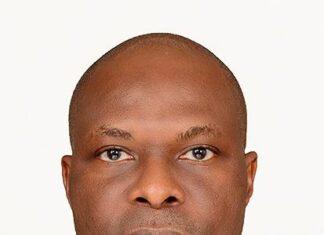
Halimat Adenike Tejuosho

EFCC Arraigns Suspect Over ₦603m NNPC Job Scam – Pastor, Associate Accused of Fake GMD Appointment Promise

The Economic and Financial Crimes Commission (EFCC) has arraigned Gidado Ibrahim before Justice H. Muazu of the Federal Capital Territory High Court, Maitama, Abuja, over an alleged ₦603.4 million scam involving a fictitious promise to secure the position of Group Managing Director (GMD) at the Nigerian National Petroleum Corporation (NNPC).

Ibrahim, alongside Halimat Adenike Tejuosho—who remains at large and was arraigned in absentia—was docked on Monday, February 9, 2026, on an amended six-count charge bordering on obtaining money by false pretence, fraud, and forgery.

Prosecution counsel Y. Tarfa informed the court of the amended charge and urged Ibrahim to take his plea. The defendant pleaded not guilty to all six counts when read to him.

According to the EFCC, between August and October 2024, the defendants allegedly collected the sum of ₦603,400,000 from complainant Oluseye Yomi-Sholoye under the false pretence that they would facilitate her appointment as NNPC Group Managing Director—a claim investigators say the duo knew was untrue.

Count one accuses the defendants of obtaining the money through misrepresentation, an offence contrary to Section 1(a) of the Advance Fee Fraud and Other Fraud Related Offences Act, 2006, and punishable under Section 1(3) of the same Act.

In count two, Ibrahim is specifically charged with knowingly using as genuine a forged document titled “Presidential Villa State House, Office of the National Security Adviser,” an offence contrary to Sections 366 and 364 of the Penal Code Law.

After the not-guilty plea, Tarfa requested a trial date and asked the court to remand the defendant in a correctional facility pending trial.

Defence counsel B. B. Alhaji informed the court that a bail application had been filed but was not yet ready for hearing. He pleaded with the judge to remand his client in EFCC custody instead of prison, citing health concerns.

Justice Muazu adjourned the case to February 17, 2026, for the hearing of the bail application and ordered Ibrahim remanded at the Kuje Correctional Facility.

The complainant, Oluseye Yomi-Sholoye, is a Lagos-based General Overseer of a white garment church and a former oil industry professional who previously worked with Texaco and Chevron.

EFCC investigations remain ongoing, particularly into the whereabouts and role of the second defendant, Halimat Adenike Tejuosho, who is still at large.

The case underscores the persistent use of high-profile job promises in public institutions as bait for large-scale fraud, with the anti-graft agency vowing to pursue full accountability. Read More

NAHCON Boss Steps Down as EFCC Probes ₦50bn Hajj Funds Scandal – What This Means for 2026 Pilgrimage

Prof Abdullahi Usman, NAHCON chairman, has resigned amid a deepening EFCC probe over alleged multi-billion-naira fraud in 2025 Hajj operations

newsheadline247
EFCC

NAHCON Chairman Prof Abdullahi Usman Resigns Amid EFCC Multi-Billion Fraud Probe

In a major shake-up at Nigeria’s Hajj management body, Professor Abdullahi Saleh Usman has resigned as Chairman of the National Hajj Commission of Nigeria (NAHCON). The development was confirmed late Monday night by his media assistant, Ahmed Muazu, to journalists.

No official reason was given for the resignation, but it comes amid intense scrutiny from the Economic and Financial Crimes Commission (EFCC), which is investigating alleged large-scale financial misconduct tied to the 2025 Hajj operations.

Prof Usman was appointed by President Bola Tinubu in 2024, succeeding Jalal Arabi—who was removed over similar allegations of fund misappropriation. His brief tenure overseeing the 2025 pilgrimage was overshadowed by controversies, including claims of financial mismanagement that sparked internal divisions and public outrage.

The EFCC had previously detained Prof Usman along with other NAHCON directors over accusations of diverting and misappropriating funds exceeding N50 billion. Specific allegations include unauthorized spending of N25 billion on Masha’ir tents, N7.9 billion for contingency housing, and N1.6 billion on travel for officials’ spouses.

The probe also led to the detention of NAHCON’s Commissioner for Policy, Personnel, and Finance, Aliu Abdulrazak, and Director of Finance and Accounts, Aminu Y. Muhammed.

During an earlier House of Representatives public hearing, Prof Usman acknowledged internal issues, stating there were “dirty deals” within the organization but committed to supporting transparency efforts.

The crisis intensified in January 2026 when some NAHCON commissioners reportedly petitioned President Tinubu with a vote of no confidence in Usman, citing leadership failures, poor administration, extra-budgetary spending, and abuse of office. The petition highlighted that he was already under EFCC investigation.

Vice President Kashim Shettima intervened recently, convening a meeting with stakeholders to mediate and stabilize the commission.

Prof Usman’s resignation—confirmed as forced in some reports following board pressure and anti-corruption probes—leaves uncertainty over NAHCON’s leadership and preparations for the 2026 Hajj, when millions of Nigerian pilgrims are expected to undertake the sacred journey.

The EFCC investigation continues, with stakeholders calling for swift accountability to restore integrity to Nigeria’s Hajj operations. Read More

RECAP: Tinubu Brokers Rivers Truce, US Lists 18 Nigerians for Deportation, Other Major Headlines

0

RECAP: Tinubu Brokers Rivers Truce, US Lists 18 Nigerians for Deportation, Other Major Headlines

President Bola Ahmed Tinubu stepped into Nigeria’s political spotlight once again as his intervention in the Rivers State crisis produced a rare moment of symbolism: Governor Siminalayi Fubara and FCT Minister Nyesom Wike leaving the Presidential Villa together.

The development headlined a series of major political and governance stories, including fresh deportations of Nigerians from the United States, tensions over mining and insecurity, renewed outrage over electoral reforms, and a legal battle in Oyo over traditional authority.
Here are today’s top stories:

  1. Tinubu Brokers Peace as Fubara, Wike Exit Villa Together
    President Tinubu’s mediation efforts in the long-running Rivers State political feud appeared to ease tensions on Sunday as Governor Fubara and Minister Wike departed the Presidential Villa in the same vehicle after separate meetings.
  2. The symbolic gesture has been widely interpreted as a possible thaw in relations between the former allies-turned-rivals, whose political fallout has destabilised Rivers State for nearly two years.
  3. US to Deport 18 More Nigerians on Criminal List
    The United States Department of Homeland Security has announced plans to deport 18 additional Nigerians listed among the country’s “worst-of-the-worst” criminal offenders.
    The move raises the total number of Nigerians scheduled for removal to 97, with offences ranging from wire fraud and mail fraud to identity theft, as Washington intensifies its crackdown on criminal immigrants.
  4. FG Rejects Northern Governors’ Call to Suspend Mining

  5. The Federal Government has rejected calls by northern governors and traditional rulers to impose a six-month suspension on mining activities amid rising banditry linked to illegal mining.
    According to the Minister of Solid Minerals Development, a blanket ban would inflict serious economic damage. Instead, the government says it is pursuing a targeted security strategy to flush out criminal networks operating around mining sites.
  6. Senate Reconvenes Amid Electoral Act Backlash
    Nigeria’s Senate will reconvene in an emergency session on Tuesday following widespread public outrage over recent amendments to the Electoral Act, particularly the removal of provisions mandating real-time electronic transmission of election results.
    Civil society groups, labour unions and political activists have continued to protest the move, insisting that electronic transmission remains critical to electoral transparency and credibility.
  7. Oyo Princes Head to Court Over Alaafin’s Supremacy
    Princes from Oyo State have launched a legal battle to preserve the supremacy and traditional authority of the Alaafin of Oyo.
    The suit follows growing concerns within the royal family that recent legal and political developments could weaken the historic status of the Alaafin within Yorubaland’s traditional hierarchy.
    Together, the developments underscore a tense political climate, with power struggles, reform battles and institutional authority all shaping Nigeria’s evolving governance landscape. Read More

Remo Secondary School To Get ₦1bn AI-Driven Digital Classroom

0

Remo Secondary School To Get ₦1bn AI-Driven Digital Classroom

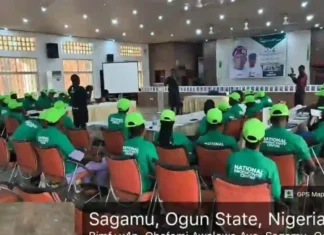
The Ogun State Government has announced plans to deliver a 900-capacity, Artificial Intelligence-enabled digital learning complex at Remo Secondary School, Sagamu, in a move aimed at strengthening technology-based education across the state.

Governor Dapo Abiodun disclosed activities marking the institution’s 80th anniversary, noting that the proposed facility represents a deliberate investment in modern learning infrastructure designed to prepare students for a rapidly evolving, knowledge-driven global economy.

He explained that the digital classroom project complements ongoing smart-education initiatives within the school, which already features a functional resource centre and a state-of-the-art robotics laboratory established to nurture innovation, problem-solving skills, and digital competence among learners.

Reaffirming his commitment to the school’s growth, the governor announced a financial pledge of ₦100m, stating that ₦50m representing half of the amount would be released immediately to kick-start development efforts. He also assured stakeholders that at least one of the outlined projects would be fully executed before the end of his administration.

Abiodun further disclosed that the state government had upgraded the school’s science laboratories, equipping them with modern facilities and teaching tools to ensure safer and more effective practical learning experiences for students.

He added that renovation works had also been completed on both the male and female hostels to improve accommodation standards, enhance security, and promote the overall well-being of boarding students.

Describing Remo Secondary School as a symbol of enduring heritage, the governor said the anniversary celebration went beyond mere commemoration of years of existence, emphasising the institution’s long-standing role in shaping generations of leaders and professionals.

He praised members of the old students’ association for their unwavering support and contributions to the school’s development, stressing that their collective efforts demonstrate a shared commitment to sustaining its legacy of excellence.

According to him, the projects and improvements carried out at the school reflect a strong belief in education as a foundation for future growth, as well as the power of collaboration between government, alumni, and the wider community.

Abiodun also revealed that the institution had been recognised as one of Ogun State’s model schools, urging students to remain focused on their academic pursuits, uphold strong moral values, and continue the tradition of excellence for which the school is known.

FG Begins ASUU Welfare Implementation, Pays 40% Allowance Increase to Lecturers

FG Begins ASUU Welfare Implementation, Pays 40% Allowance Increase to Lecturers

The Federal Government has commenced the implementation of key welfare components contained in the 2025 renegotiated agreement with the Academic Staff Union of Universities (ASUU), signalling progress in addressing long-standing demands of university lecturers.

The Minister of Education, Dr Tunji Alausa, disclosed this in a statement issued on Monday, confirming that payment of the 40 per cent increase in the Consolidated Academic Allowance (CAA) for ASUU members began last month.

“Some federal universities have already begun reflecting the approved increase in their salary payments,” Alausa said in the statement released by the ministry’s Director of Press and Public Relations, Boriowo Folasade.

He explained that the government is taking steps to ensure uniform implementation of the allowance increase across all federal universities.

“To ensure nationwide compliance, all federal universities are being formally notified to fully cascade the approved increment across their institutions and integrate it into their payroll structures so that all eligible academic staff members benefit accordingly,” the minister stated.

Alausa further revealed that the allowance increase has been duly captured and circularised by the National Salaries, Incomes and Wages Commission (NSIWC), providing the legal and administrative backing for its implementation.

According to him, the incorporation of the enhanced allowance into the 2026 national budget is part of the statutory process to sustain the payment framework.

The development marks a significant step in the Federal Government’s efforts to improve staff welfare in public universities and maintain industrial harmony within Nigeria’s tertiary education system. Read More

Africa Sits on $29.5tn Mineral Wealth but Loses Value Without Processing – AFC Report

0


Africa holds an estimated $29.5 trillion in mine-site mineral value, accounting for nearly 20 per cent of global mineral wealth, yet captures only a small share of the economic value embedded in this vast endowment, a new report by the Africa Finance Corporation (AFC) has revealed.
The study, released on Monday and titled Compendium of Africa’s Strategic Minerals, was launched at the Mining Indaba in Cape Town. It reframes Africa’s mineral sector through a development-driven lens, placing industrialisation, infrastructure and long-term regional demand at the heart of mineral strategy.
According to the AFC, about $8.6 trillion of Africa’s mineral wealth remains undeveloped, largely due to fragmented geological data, uneven coverage and limited transparency. These gaps, the report said, heighten risk perception and continue to constrain exploration and investment across the continent.
The study stressed that improving the availability and quality of geological data is a critical first step in de-risking mining projects and unlocking exploration capital.
It also noted that traditional mine-site valuations significantly understate Africa’s true mineral potential because they exclude the value added when raw minerals are processed into steel, aluminium, fertilisers, batteries and industrial alloys.
“When measured at the point of industrial use, Africa’s mineral endowment expands by an order of magnitude, revealing substantial latent value,” the report stated.
Launching the Compendium, AFC President and Chief Executive Officer, Samaila Zubairu, said the initiative was designed to convert Africa’s mineral endowment into tangible development outcomes.
“Today, AFC is proud to launch the Compendium of Africa’s Strategic Minerals, an initiative to reframe the sector through an African lens and convert endowment into execution pathways for our collective prosperity,” Zubairu said.
He explained that the report maps full mineral value chains, linking reserves and production to processing capacity, power and transport infrastructure, as well as regional industrial corridors, to improve data transparency, lower capital costs and guide smarter investment into beneficiation.
The Compendium found that mineral production, enabling infrastructure and demand rarely align at scale across Africa, calling for stronger regional planning anchored in the continent’s long-term demand fundamentals.
Using the steel value chain as an example, the report noted that while Africa hosts world-class deposits of manganese, chromium, nickel and iron ore, its supply chains remain tied to Asian demand cycles rather than Africa’s own development needs.
This exposure, the report warned, has proven economically costly. The slowdown in Asian steel demand—linked to China’s property downturn—has triggered shocks across African mineral markets.
In the Democratic Republic of the Congo, cobalt production quotas have been introduced to manage oversupply and falling prices. South Africa has seen primary steelmaking capacity shut down amid weak domestic demand and high costs, while major manganese operations in Gabon have periodically suspended production due to softer alloy demand from Asia.
“These outcomes are occurring even as Africa continues to expand transport networks, power systems, housing and industrial capacity that require these materials,” the report noted, adding that the real challenge lies in aligning mineral production, processing capacity and infrastructure investment around Africa’s own long-term material needs.
The AFC report placed infrastructure at the centre of mineral strategy, describing it not as a passive enabler but as the system that links raw materials, processing and demand. Power cost and reliability, transport connectivity and access to industrial land were identified as decisive factors in making mineral beneficiation viable.
To support this, the Compendium mapped mineral deposits alongside railways, ports, power hubs and transmission networks to identify where regional value chains can realistically be developed. It called for targeted investments in shared rail corridors and cross-border power transmission, particularly in mineral-rich regions.
The report also highlighted infrastructure’s role in Africa’s competitiveness in an era of green industrialisation, noting that clean energy, efficient logistics and integrated corridors such as the Lobito Corridor could reduce carbon intensity and improve access to markets demanding low-carbon and traceable supply chains.
The study pointed to emerging momentum across the continent, including Angola’s development of one of the world’s largest high-grade rare earth magnet metal deposits, Mozambique’s growing role as a graphite and anode materials hub, advancing battery-grade manganese sulphate projects in Southern Africa, and the resumption of uranium production in Namibia and Malawi in 2024–25.is this a business news or politics news???

Ekiti Polls: Senator Ayo Arise Backs Oyebanji’s Re-Election, Calls for Massive APC Mobilisation

0


Former member of the National Assembly, Senator Ayo Arise, has declared his support for Ekiti State Governor, Biodun Oyebanji, urging party members and stakeholders to rally behind the governor ahead of the June 20 governorship election.
Senator Arise said Governor Oyebanji had earned the right to seek a second term, citing what he described as significant improvements in key sectors across the state.
The former Chairman of the Senate Committee on Privatisation made the call during a consultation tour with political leaders and stakeholders of the All Progressives Congress (APC) in Ikole and Oye Local Government Areas.
As part of the engagement, Arise met with APC chairmen from Ikole, Oye, Ido/Osi, Moba and Ilejemeje Local Government Areas, which constitute the Ekiti North Senatorial District.
He urged party members to intensify mobilisation efforts, particularly through the ongoing extension of the e-registration of new members and the revalidation of existing party members, noting that a strong and united party structure would boost the governor’s re-election chances.
According to him, strengthening the APC’s membership base would not only enhance Governor Oyebanji’s electoral prospects but also position the party more favourably for future elections in the state.
Senator Arise commended the governor’s investments in the agriculture sector, describing Ikole Local Government as a major beneficiary following the attraction of investors such as Agbayewa Farms and its designation as a Special Agriculture Processing Zone.
He said communities including Ipao, Oke Ako, Irele and Iyemero, captured within the processing zone, had emerged as hubs of commercial agriculture, creating employment opportunities for thousands of youths.
Arise also cited infrastructure projects such as the Itapa–Ijelu–Omu Road and the Ido–Ipere–Iludun Road, among others, as evidence of the governor’s commitment to the development of Ekiti North, urging residents to reciprocate with their votes.
He called on party leaders and members to make the governorship election a priority, stressing that Governor Oyebanji’s victory would ensure the continuity of good governance and purposeful leadership in the state.
Reflecting on his own time in the Senate, Arise said the quality of representation he provided in the areas of infrastructure, projects and human capital development remained unprecedented, adding that he was willing to serve again if given the opportunity.
Party leaders in Ikole Local Government Area, including Chief Ayodele Owoeye, Hon. Segun Adelugba and Mrs. Oluyinka Awe, described Arise’s tenure in the Senate as a “golden era of representation.”
They highlighted the Federal University, Oye-Ekiti, which Arise influenced to the district during his time in the Senate, as a landmark legacy project that has transformed the educational, economic and social life of communities such as Ikole, Itapa, Ilupeju and Ayegbaju.
Similarly, Prince Ore Fabunmi and Mrs. Beatrice Adeleye, speaking for the Elders’ Forum in Oye Local Government Area, praised Arise’s contributions to the growth of the APC, describing him as a dependable and competent leader.

Economic Opportunities for Women Key to Global Development — UN’s Amina Mohammed

0


The United Nations Deputy Secretary-General, Amina Mohammed, has underscored the importance of providing economic opportunities for women, describing it as a cornerstone of national and global development.
Mohammed made the remarks on Monday during a high-level engagement at the United Nations House in New York, where she received the Founder of Women Leaders Support Advancement (WLSA), Deborah Jan Hornecker, alongside members of the organisation and its diaspora leadership.
According to a statement released by WLSA, the UN official acknowledged Nigeria’s efforts in supporting women—particularly the vulnerable and underserved—while commending WLSA’s grassroots-focused initiatives aimed at empowering women within local communities.
She encouraged the organisation to sustain its humanitarian interventions, stressing that inclusive social and economic opportunities for women remain critical to sustainable development worldwide.
Mohammed described WLSA’s work as “timely and impactful,” urging continued advocacy and action to uplift women seeking improved livelihoods, dignity, and economic independence.
Responding on behalf of WLSA and its partner organisations—DEFAUYA Women Foundation, Ramat Foundation, and Chayah Hope Foundation—Hornecker expressed gratitude for Mohammed’s leadership and unwavering support for women-centred initiatives.
She reaffirmed WLSA’s commitment to improving the welfare of disadvantaged Nigerian women, noting that grassroots empowerment remains central to the organisation’s mission.
As part of its alignment with the Sustainable Development Goals (SDGs) and broader humanitarian action, WLSA also participated in an economic summit held at the Nigerian House in New York.
Delivering a keynote address titled “Women at the Centre of Global Progress: Leadership, Inclusion, and Collective Responsibility,” Hornecker highlighted the urgent need for global support systems for vulnerable women.
She described WLSA as a purpose-driven movement bridging advocacy and opportunity—from grassroots women entrepreneurs to Nigerian women thriving in global institutions—ensuring that women at all levels are recognised, supported, and empowered.
“Empowering women and youths is fundamental to stabilising societies and strengthening economies,” she said, citing real-life humanitarian encounters involving widows, abandoned patients, and unsupported new mothers as the driving force behind WLSA’s compassionate interventions.
Hornecker also called on Nigerian women in the diaspora to actively contribute to community development at home, while urging leaders at all levels to embrace servant leadership rooted in humanity and compassion.
She concluded that women are not peripheral to progress but central to it, stressing that resilient, inclusive, and prosperous nations are built when women lead and are adequately supported.
Women’s empowerment efforts continue to gain momentum in Nigeria, with initiatives such as the Nigeria for Women Program Scale-Up Project, which aims to reach 25 million beneficiaries nationwide by providing access to finance, skills, and markets. The European Union has also concluded a digital skills programme in North-East Nigeria, training over 18,000 women, youths, and persons with disabilities, and establishing 32 IT hubs.

FRSC Cracks Down on One-Way Driving on Lagos–Ibadan Expressway as Kara Bridge Repairs Worsen Gridlock

0


The Federal Road Safety Corps (FRSC) has issued a stern warning to motorists plying the Lagos–Ibadan Expressway to desist from driving against traffic as rehabilitation works continue on the Kara Bridge, stressing that offenders will face sanctions regardless of their status or affiliation.

The Lagos Sector Commander of the Corps, Kehinde Hamzat, gave the warning on Monday during an on-the-spot assessment of the worsening traffic congestion along the corridor.

Responding to complaints that some security operatives and government officials were flouting traffic rules, Hamzat described the act as unacceptable and an abuse of office. He revealed that details of such vehicles were being documented for onward reporting to the appropriate authorities.

“It is wrong. Many times, we take their details. I saw one pass at the Opic turning; we have taken the details and will report appropriately,” he said in an interview with Channels Television.

According to the sector commander, internal disciplinary measures within affected agencies are often more severe than FRSC penalties, noting that such misconduct stains both the institution and the individual involved.

Traffic congestion has intensified following the commencement of repair works on the Kara Bridge, which the FRSC earlier said would last at least two months. The Corps noted that damaged portions of the road had contributed to several crashes, especially as motorists attempted to dodge oncoming vehicles.

To hasten completion, two expansion joints on the bridge are being repaired simultaneously using faster-curing materials. Hamzat also blamed overloading by heavy-duty vehicles for the deterioration of the road, disclosing that weighbridges would be deployed to curb the practice.

On traffic control, he said FRSC personnel had been strategically deployed along the expressway to block motorists from driving against traffic. According to him, entry points such as Warewa and the Opic turning are being closely monitored to prevent one-way driving.

While acknowledging delays for motorists heading into Lagos, Hamzat stressed that discipline remains the only way to avoid a total breakdown of traffic flow.

“Yes, people coming into Lagos will feel some pains because of the construction backlog. But moving traffic is better than blocking both sides of the road,” he said.

He warned that allowing one-way driving at critical points could paralyse movement on both sides of the expressway, adding that several offenders had already been arrested and would face fines and prosecution.

The sector commander disclosed that FRSC officers would remain on duty throughout the duration of the repairs, operating in shifts and in collaboration with other security agencies to ensure compliance and safety on the busy corridor.

Hamzat appealed to motorists for patience and cooperation, noting that adherence to traffic rules would ease congestion and reduce the risk of accidents during the rehabilitation period.