




Zamfara State Governor, Dauda Lawal, has described the Glo-Djigbé Industrial Zone (GDIZ) in the Benin Republic as a practical model for transforming Zamfara’s agricultural sector through value addition, industrialisation and job creation.
Governor Lawal made the remark on Friday during a working visit to the 1,640-hectare industrial hub alongside Vice President Kashim Shettima and governors from Imo, Plateau, Kwara, Katsina and Jigawa states.
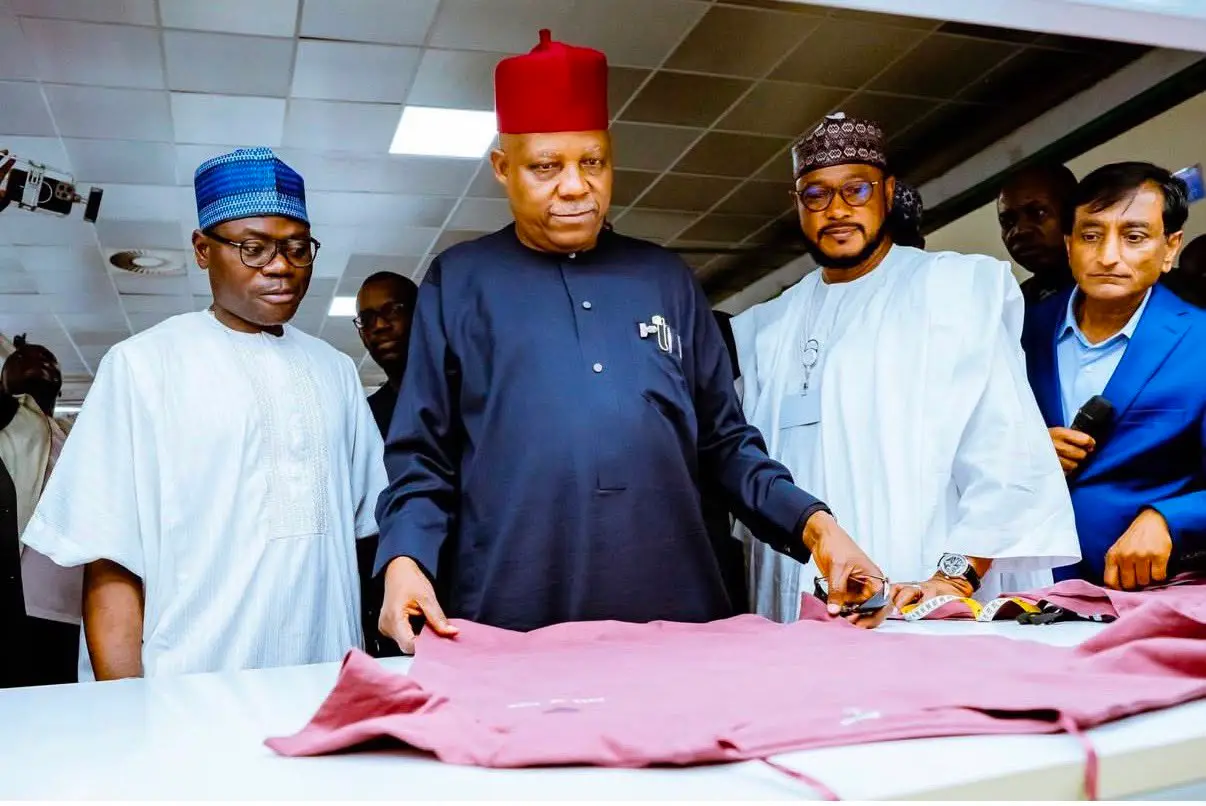
The delegation toured the integrated textile and agro-processing facilities, where locally cultivated cotton is converted into yarn, fabric and finished garments, while cashew and soybeans are processed for both local consumption and export. The industrial zone, developed through a partnership between the Beninese government and ARISE Integrated Industrial Platforms, has created more than 25,000 jobs since production began in 2021.
For Governor Lawal, whose state is known for its vast arable land and agricultural potential, the visit provided an opportunity to study strategies that could accelerate Zamfara’s agricultural transformation.
The governor has consistently maintained that Zamfara possesses a strong comparative advantage in agriculture, with fertile land suitable for the cultivation of a wide range of crops, including cotton and soybeans. During the Africa Investment Forum in Morocco last November, he signed a Memorandum of Understanding with the Ministry of Finance Incorporated (MOFI) under the INTEGRANIUM Initiative to drive large-scale agricultural development in the state.
The visit formed part of efforts to strengthen the implementation of Nigeria’s Special Agro-Industrial Processing Zones Programme by drawing lessons from Benin’s approach to agricultural value addition, industrial infrastructure, investment mobilisation and export-oriented production.
Particular attention was given to the textile park’s integrated production chain, covering cotton spinning, weaving, fabric processing and garment manufacturing.
Governor Lawal said Zamfara could benefit from the global cotton market by expanding cotton production, reviving dormant textile manufacturing hubs and strengthening the agricultural value chain to create jobs, boost non-oil exports and stimulate economic growth.
His participation in the visit also aligns with Zamfara’s 10-year Development Plan (2025–2034), which aims to position the state as a leading centre for economic transformation through mechanised farming, agro-processing, strategic partnerships and value-chain development.
Other governors on the delegation included Hope Uzodimma of Imo State, Caleb Mutfwang of Plateau State, AbdulRahman AbdulRazaq of Kwara State, Dikko Radda of Katsina State and Umar Namadi of Jigawa State.
The outcomes of the visit are expected to guide the establishment of garment-training centres and dedicated agro-processing infrastructure in agricultural communities across Nigeria.