






By Lukman OMIKUNLE
Lawyers question the House of Representatives’ powers to summon telecom CEOs over poor services, citing constitutional limits and a pending lawsuit
House of Reps Telecom CEOs’ Summons: Lawyers Raise Legal Questions
Lawyers have questioned the constitutional authority of the House of Representatives to summon telecommunications company chief executives over poor network services, arguing that lawmakers must distinguish their oversight responsibilities from the regulatory powers of the Nigerian Communications Commission (NCC).
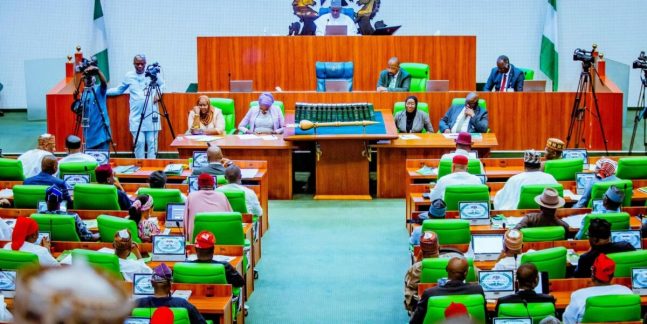
The legal concerns followed the House ad hoc committee investigating poor telecommunications services, chaired by Olumide Osoba, which renewed its invitation to telecom executives on Wednesday, October 28, after rejecting a request by the chairman of the Association of Licensed Telecommunications Operators of Nigeria (ALTON), Gbenga Adebayo, to represent them.
The committee reportedly gave the executives until November 4, 2026, to appear, warning that failure to comply could result in arrest.
But legal practitioners have challenged the scope of the investigation, particularly with a related lawsuit reportedly filed by ALTON still pending.
Chief Olusesan Bankole, a prominent legal practitioner and the Balogun of Konifewo-Ota, Aworiland, argued that Section 88 of the 1999 Constitution does not confer unrestricted powers on the National Assembly to investigate private commercial activities merely because they affect the public.
“Any investigation that goes beyond making laws or exposing corruption in the management of budgeted public funds is invalid,” Bankole stated.
He maintained that the quality of telecommunications services falls principally within the regulatory responsibilities of the NCC, established under the Nigerian Communications Act 2003.
“And they can’t regulate or impose fine; that is the work of the regulator, which is the NCC,” he insisted.
Bankole also questioned the committee’s insistence that the chief executives appear personally, arguing that telecommunications companies could appoint authorised representatives to speak on their behalf.
“By the Companies and Allied Matters Act, a telecom is a legal entity that can be represented by any such person appointed by the legal entity,” he said.
He further argued that the investigation raised sub judice concerns because of the pending legal challenge, although the precise scope of the suit and its implications for the committee’s proceedings would need to be established.
Lawyer and public policy commentator Ilemona Onoja has also questioned whether Section 88 provides a sufficient basis for investigating private telecom operators over service complaints that fall within the NCC’s regulatory jurisdiction.
Onoja argued that lawmakers should focus on the structural challenges undermining network expansion and service delivery rather than concentrating primarily on compelling executives to attend hearings.
These challenges include the vandalism of fibre-optic cables, multiple taxation and inconsistent right-of-way charges imposed on telecommunications operators by different levels of government.
He maintained that addressing the obstacles could improve the investment climate, accelerate infrastructure deployment and ultimately enhance service quality for subscribers.
The dispute comes amid persistent complaints about dropped calls, slow internet speeds and network interruptions, as operators contend with infrastructure damage, insecurity and the high cost of expanding their networks.
Data attributed to the NCC’s quality-of-experience monitoring recorded 44,678 fibre-related incidents between January and September 2026. The reported causes included cable degradation, vandalism, connection problems and damage associated with road construction and other civil works.
Cable degradation accounted for 17,462 incidents, while vandalism and connection problems accounted for 9,283 and 9,008 incidents respectively.
In August, the NCC reportedly raised concerns about more than 5,000 fibre cuts recorded during the first half of the year, with road construction, excavation and related civil works identified among the causes.
Damage to fibre-optic infrastructure can disrupt the connections carrying network traffic between sites, affecting voice calls and data services.
Operators also face difficulties accessing telecommunications infrastructure because of insecurity. Industry figures cited in the report recorded 23,954 cases of denied access to telecom infrastructure between January and September, including 17,482 incidents linked to insecurity.
A further 3,732 theft incidents reportedly involved items such as cables, diesel, batteries and generators.
Despite these challenges, telecommunications operators and tower companies reportedly invested about ₦2.53 trillion in 2025, with another ₦1.86 trillion earmarked for 2026.
MTN Nigeria reported capital expenditure of ₦620.5 billion in the first half of 2026 and said it had deployed more than ₦1.62 trillion in network infrastructure since January 2025.
The NCC has also reported more than 6,500 network interventions in 2026, including equipment upgrades, new sites and capacity expansion.
According to the figures provided, about 75 million subscribers had received compensation for poor service, while nearly three million received refunds for failed airtime and data transactions.
The commission’s compensation framework, which reportedly took effect in April 2026, provides for automatic airtime credits to eligible subscribers in areas where operators fail to meet prescribed quality-of-service benchmarks. Such compensation does not preclude regulatory penalties in cases of serious or repeated non-compliance.
The controversy has renewed debate over the respective responsibilities of lawmakers and the telecommunications regulator in addressing persistent service complaints.
While the National Assembly has legislative and oversight functions, the extent to which those powers apply to particular investigations depends on the constitutional provisions invoked, the purpose of the inquiry and the relevant facts.
Lawmakers could also examine whether existing laws adequately protect critical telecommunications infrastructure, whether government agencies coordinate road construction with fibre deployment and how multiple charges affect the cost of network expansion.
The November 4 hearing is expected to bring the dispute into sharper focus, but the legal questions surrounding the summons remain distinct from the broader concerns of millions of subscribers seeking reliable telecommunications services.