


Home Blog Page 10

OGD — The Man, The Mission, The Legacy

By Lukman OMIKUNLE

From engineer to governor, statesman, and philanthropist, Otunba Gbenga Daniel’s vision for governance, humanity, and innovation continues to define modern leadership in Nigeria

How Otunba Gbenga Daniel’s Vision, Leadership, and Legacy Continue to Shape Ogun

When history remembers the men who defined leadership in Nigeria’s Fourth Republic, Otunba (Engr.) Gbenga Daniel, FNSE, FAEng, will stand among those who led with vision, governed with compassion, and served with uncommon purpose.

OGD, as he is fondly called, has become more than a name — he is a movement, a model, and a metaphor for transformational leadership rooted in intellect, humility, and human impact.

Born on April 6, 1956, Gbenga Daniel’s life story reads like a testament to diligence, discipline, and destiny.

Before the allure of politics, he had already conquered the world of engineering and enterprise. As Managing Director of Kresta Laurel Limited, OGD built one of Nigeria’s foremost engineering and elevator technology companies — a business synonymous with innovation, precision, and integrity.

He brought that same corporate efficiency and forward-thinking mindset into public service when destiny called him to govern Ogun State in 2003.

As governor, Daniel reimagined Ogun not as a sleepy neighbour to Lagos, but as “The Gateway to the Future.”

His administration transformed the state’s identity — from a civil service economy to an industrial hub attracting over 100 new manufacturing firms, according to the U.S. diplomatic cables (WikiLeaks, 2008).

Under his watch, internally generated revenue grew eightfold, industrial estates multiplied, and infrastructure received historic investment.
He launched power projects, championed local content in free trade zones, and turned Ogun into the preferred destination for global and local investors.

The world took notice. Diplomats, investors, and development agencies saw in him what Nigerians were beginning to realise — a leader who understood the language of progress.

“Ogun has land, labour, and leadership,” the Wikileaks cable summarised. “Daniel has made the state business-friendly.”

But beyond figures and factories was the human side of OGD’s governance.

He expanded access to education, empowered the youth, and invested in technical training. His administration revived public schools, built model institutions, and equipped young people with the skills to compete in a digital economy.

In healthcare, he prioritised rural clinics, maternal health, and hospital upgrades.
In housing, he built communities; in roads, he built access; in policy, he built hope.

OGD’s leadership model was not transactional — it was transformational.

“Development without human compassion is just construction,” he once remarked.

After leaving office, Daniel did not retreat — he redefined what political retirement should look like.

Through the Gateway Front Foundation (GFF), he continued to empower widows, fund scholarships, support healthcare initiatives, and nurture the dreams of young Nigerians.

His humanitarian projects became a continuation of the values he championed in office — compassion, inclusion, and empowerment.

In 2023, the call to service came again — this time to the Senate of the Federal Republic of Nigeria, representing Ogun East under the Tinubu administration’s Renewed Hope Agenda.

At the National Assembly, OGD has emerged as one of the most respected voices on private-sector innovation, industrial growth, and regional integration.

He embodies the bridge between policy and productivity, ensuring that governance remains people-centred and development-driven.

What makes OGD’s story profound is not just what he achieved, but how his ideas continue to shape Ogun’s trajectory long after his tenure.

Subsequent administrations have built on his industrial blueprint — from the Olokola Free Trade Zone to the Ogun-Guangdong Industrial Park, the Kajola Railway Industrial Zone, Gateway Agro-Cargo International Airport and the state’s expanding network of roads and power projects.

Ogun today remains one of Nigeria’s most industrially active states — a living testament to the foundation laid by his vision of “Gateway Prosperity.”

Yet, perhaps OGD’s greatest legacy lies in his character — his simplicity, his intellect, and his refusal to weaponise politics.

He has remained a rallying point for unity across the Southwest and a stabilising force in Nigeria’s often turbulent political climate.
He embodies a rare blend of an engineer’s logic, an entrepreneur’s vision, and a statesman’s grace.

To his admirers, he is the builder who never stopped building — from roads to relationships, from policies to people.

To his critics, he is the strategist who never lost relevance, adapting to every political season with wisdom and calm authority.

And to his people, he is simply the man who cared — and still does.

As Otunba Gbenga Daniel marked his 70th birthday in grand style, he did so not as a retired politician, but as an active architect of Nigeria’s continuing story.

His life proves that vision and virtue are not mutually exclusive, that power can serve humanity, and that leadership can inspire hope beyond tenure.

From boardrooms to ballot boxes, from Abeokuta to Lagos to Abuja, OGD’s imprint is everywhere — in industries he attracted, lives he touched, and values he upheld.

“My purpose has always been simple,” he once told journalists. “To build — people, ideas, and systems that outlive us all.”

At 70, Otunba Gbenga Daniel stands as a living institution of service, foresight, and faith in the Nigerian project — a man whose mission has become his legacy, and whose legacy continues to build the future.

Adeleke Launches Osun Security Trust Fund to Boost Safety Through Public-Private Partnership

0

Governor Ademola Adeleke has officially launched the Osun State Security Trust Fund, a strategic initiative aimed at strengthening the state’s security framework, improving logistics for security agencies, and addressing emerging threats.

The announcement was made on Tuesday at the governor’s office in Abere, where Kunle Adepoju, Chairman of Media and Publicity for the initiative, described the move as a clear demonstration of the governor’s commitment to ensuring safety, stability, and economic growth in Osun State.

Adepoju emphasized that security remains the bedrock of development, noting that without it, businesses cannot thrive, communities cannot prosper, and citizens cannot live with confidence. He explained that while the government holds primary responsibility for security, evolving challenges require a more inclusive and collaborative approach.

“The Trust Fund is not just a financial mechanism; it is a platform for partnership,” he said. “It brings together government, private sector players, development partners, and individuals to pool resources and equip security agencies with modern tools, training, and intelligence capabilities.”

According to him, the initiative is designed to address critical gaps in security operations by providing advanced technology, improved logistics, and enhanced intelligence gathering systems.

Adepoju also assured that transparency and accountability would be central to the fund’s operations. He revealed that a governance structure has been established to ensure proper oversight, prudent management, and regular public reporting of all contributions and expenditures.

Speaking further, Secretary of the Implementation Committee, Barrister Femi Oyedipe, highlighted the financial burden of security on government, stressing that no administration can single-handedly fund security infrastructure.

He noted that the Trust Fund is structured around a Public-Private Partnership (PPP) model, allowing stakeholders to contribute toward security funding. Oyedipe added that a board comprising key stakeholders has been set up to oversee requests and ensure timely intervention in critical security needs.

He also referenced Lagos State’s pioneering role in establishing a Security Trust Fund, noting that Osun’s initiative builds on a proven model while adapting it to local realities.

The Osun State Security Trust Fund is expected to enhance collaboration, improve operational efficiency, and create a safer environment for residents and investors alike.

Tinubu Reshuffles Cabinet, Replaces Edun with Oyedele as Finance Minister

0

President Tinubu reshuffles cabinet, replaces Wale Edun with Taiwo Oyedele as Finance Minister, names Darma housing minister nominee

Tinubu Drops Edun, Dangiwa in Cabinet Shake-Up, Elevates Oyedele to Finance Role

President Bola Ahmed Tinubu has approved a minor cabinet reshuffle affecting key portfolios in the Federal Executive Council, with changes aimed at boosting economic delivery and strengthening coordination across ministries.

The development was disclosed in an official memo issued by George Akume, and signed by his Special Adviser on Media and Publicity, Yomi Odunuga.

Under the reshuffle, Wale Edun will exit the cabinet as Minister of Finance and Coordinating Minister of the Economy. He is to hand over to Taiwo Oyedele, who has been elevated to assume the top finance role after previously serving as Minister of State in the ministry.

Similarly, Ahmed Musa Dangiwa is to step down from his position as Minister of Housing and Urban Development, handing over to the Minister of State pending the confirmation of a substantive replacement.

In his place, President Tinubu has nominated Muttaqha Rabe Darma as minister designate for the Housing and Urban Development Ministry, subject to the necessary legislative process.

According to the memo, all handing over procedures are to be concluded on or before April 23, 2026, underscoring the administration’s push for a seamless transition.

Explaining the rationale behind the reshuffle, Akume said the changes are designed to “strengthen cohesion and synergy in governance” while accelerating the delivery of economic reforms under the administration’s Renewed Hope Agenda.

“The President has exercised his constitutional powers in effecting these changes to ensure more impactful service delivery to Nigerians,” the statement noted, referencing provisions of the 1999 Constitution (as amended).

President Tinubu also commended the outgoing ministers for their contributions to national development and wished them success in their future endeavours.

He further assured members of the cabinet that efforts to reinvigorate governance structures would remain an ongoing process, signalling that additional adjustments could follow as the administration pursues its policy objectives.

Patrice Evra Slams Theo Walcott Over Arsenal vs 2008 Manchester United Comparison: “He Shouldn’t Be on TV”

0

Former Manchester United defender Patrice Evra has once again taken aim at former Arsenal forward Theo Walcott over his controversial comparison between Arsenal’s current squad and Manchester United’s legendary 2008 team.

The debate was originally sparked in January when Walcott asked Wayne Rooney whether the 2008 United side could match up against Mikel Arteta’s 2025/26 Arsenal team ahead of their Champions League clash with Inter Milan. Rooney’s response was emphatic, insisting his former side would “batter” the modern Gunners squad.

Evra later weighed in with a far more explosive reaction. The French defender dismissed Walcott’s comments outright, joking that the ex-Arsenal winger must have been “drunk” during the discussion and questioning his suitability as a pundit.

The conversation resurfaced during a recent discussion featuring former United teammates Rio Ferdinand and Ryan Giggs, when Ferdinand revisited Walcott’s original claim.

Evra responded humorously but sharply, saying he was tempted to leave the show altogether. He added that Walcott’s comparison reflected what he described as Arsenal’s “delusional” outlook.

“That’s the problem with Arsenal,” Evra said. “Now he’s comparing this team to our 2008 team. I believe he is a threat to society. He should not be on TV. That kind of talk is dangerous for kids.”

He went on to reiterate his criticism, arguing that such comparisons lacked realism and showed “false beliefs,” recalling previous remarks in which he compared Arsenal’s title challenges to a Netflix drama.

Evra concluded by insisting Walcott should not be given a media platform if he continues making such claims, describing the debate as disrespectful to football history.

Onanuga Compares Atiku, Peter Obi, Labels Former VP a “Serial Defector” Amid Presidential Ambition Talk

0

Bayo Onanuga, Special Adviser on Information and Strategy to President Bola Tinubu, has sparked political debate after describing former Vice President Atiku Abubakar as a “serial defector,” while drawing comparisons with Labour Party’s Peter Obi.

Onanuga made the statement in a post on X (formerly Twitter), where he reacted to a documentary highlighting Atiku’s long-standing political journey and presidential ambitions.

In his post, he referred to Atiku as “a serial defector like Peter Obi, and a veteran presidential candidate,” a comment that has since stirred discussions across Nigeria’s political space.

Atiku Abubakar, who previously served as Vice President, has pursued the presidency multiple times since 1993, making him one of Nigeria’s most consistent presidential contenders in recent political history.

Court Adjourns El-Rufai’s Bail Hearing to June 2026 Amid ICPC Corruption Trial

0

Justice Darius Khobo of the Kaduna State High Court has adjourned the bail application of former Kaduna State Governor, Nasir El-Rufai, to the first week of June 2026.

El-Rufai is currently standing trial on multiple counts brought by the Independent Corrupt Practices and Other Related Offences Commission (ICPC), bordering on alleged financial impropriety and abuse of office.

Following Monday’s proceedings, El-Rufai’s legal counsel, Ukpon Akpan, criticised the repeated postponement of the bail hearing, describing it as “politically motivated” and expressing concern over what he termed delays in the judicial process.

The former governor reportedly arrived at the court premises around 9 a.m. in a convoy, accompanied by operatives of the ICPC and personnel of the Department of State Services (DSS).

Outside the courtroom, supporters of El-Rufai gathered in anticipation of the hearing, while security agencies maintained tight control of the environment, restricting movement around the court vicinity to ensure order.

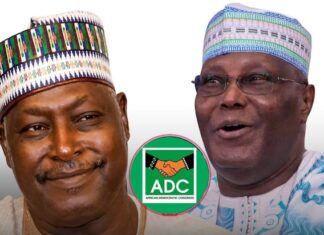
With the adjournment, the African Democratic Congress (ADC) chieftain is expected to remain in custody until June 2026, when the court will rule on his bail application or determine whether he will continue to be held pending trial.

Davido Confirms Joint Album with Chris Brown, Set for 2027 Release

Nigerian Afrobeats superstar Davido has confirmed plans for a joint album with American R&B singer Chris Brown, with the project expected to drop next year.

Speaking during a recent episode of the Swift Conversations podcast, Davido disclosed that while his current musical direction leans heavily toward African sounds, he remains open to international collaborations.

“The music I am making now is very African,” he said. “In this next project, I am working with a lot of my original producers from back home. However, I am still an American, so definitely there’s going to be collaborations.”

He then revealed the long-anticipated project: “Me and Chris Brown got an album coming next year.”

The duo’s musical chemistry dates back to their 2019 hit Blow My Mind, which marked the beginning of a series of collaborations. Since then, both artists have teamed up on multiple tracks, building a strong cross-continental fan base.

Hints about a joint album have circulated for years, with Davido first teasing the idea in 2023. He also noted that both artists have a collection of unreleased songs, further fueling anticipation for the upcoming project.

The announcement is expected to excite fans of Afrobeats and R&B alike, as the collaboration promises a fusion of African rhythms with global influences.

“Frank Demands U.S. Sanctions on Gbajabiamila Over ‘Anti-Democratic’ Remarks”

0

Former Deputy National Publicity Secretary of the All Progressives Congress (APC), Timi Frank, has called on the United States government to investigate and impose sanctions on the Chief of Staff to the President, Femi Gbajabiamila, over comments he described as harmful to Nigeria’s democratic system.

Frank’s demand follows a viral video in which Gbajabiamila was heard telling Leke Abejide, a member of the House of Representatives from Kogi State, to remain in the African Democratic Congress (ADC) and destabilize the party from within.

In the clip, Gbajabiamila allegedly said: “Don’t come to APC. Stay in ADC and scatter them… stay in ADC and win your election… bring Bala Gombe, and we’ll support him. Good luck in court.”

Reacting strongly, Frank described the remarks as “reckless” and indicative of a broader strategy to weaken opposition parties, including the Peoples Democratic Party (PDP).

He argued that such statements raise serious concerns about the commitment of President Bola Ahmed Tinubu’s administration to democratic principles and institutional independence.

“When a Chief of Staff makes such comments, it reflects the mindset of the presidency,” Frank said. “It suggests a deliberate attempt to undermine opposition parties and consolidate power.”

Frank further warned that references to court outcomes in the remarks could be interpreted as interference with the judiciary, potentially eroding public trust in the legal system.

“Any suggestion that court decisions can be influenced undermines confidence in democratic institutions,” he stated, calling for clarity to avoid what he termed “dangerous interpretations.”

The political activist also insisted that Gbajabiamila should resign, describing it as the only honourable course of action.

“If this had happened in the United States, the official involved would have stepped down immediately,” he said.

Frank revealed plans to submit a formal petition to the U.S. Embassy in Nigeria, urging international scrutiny of the matter.

He concluded by stressing the need for public officials to uphold constitutional values and respect the separation of powers.

“Power is transient, but institutions must endure. Any action or statement that weakens them must be addressed,” Frank added.

Political Shake-Up: Eight Reps Defect Across Parties Ahead of 2027 Polls

0

Eight members of the House of Representatives on Tuesday announced their defection to different political parties, signaling early realignments ahead of the 2027 general elections.

The lawmakers spread across four parties, with three joining the African Democratic Congress (ADC), two moving to the All Progressives Congress (APC), two defecting to the Accord Party, and one aligning with the Peoples Democratic Party (PDP).

Among the defectors, Abubakar Abdul Buba (Niger) and Ibrahim Mohammed Bunza (Kebbi) switched from the PDP to the APC, while Sani Yakubu Noma (Kebbi) moved from the PDP to the ADC.

Mudashiru Alani and Olusoji Adetunji, both from Osun State, also left the PDP for the Accord Party. In a similar move, Thaddeus Attah (Lagos) defected from the Labour Party (LP) to the ADC.

Meanwhile, Bashir Usman Zubairu (Kaduna) crossed from the APC to the ADC, and David Abel Fouh (Taraba) moved from the APC to the PDP.

The lawmakers blamed their defections on lingering internal crises within their former parties, including legal battles, factional divisions, and unresolved disputes, which they said hampered their effectiveness in serving their constituents.

In a related development, the House adjourned plenary until Wednesday in honour of a late member representing Dawakin Kudu/Warawa Federal Constituency of Kano State, who died after a prolonged illness.

Deputy Speaker Benjamin Kalu, who presided over the session, described the loss as a “dark moment” for the House, highlighting the deceased lawmaker’s contributions to the Committee on Constitution Review.

Dressed in black attire to reflect the mood of mourning, Kalu noted that the atmosphere in the chamber underscored the gravity of the loss.

Ogun East Senate Race: Questions Mount Over Abiodun’s Collaborative Capacity

0

The race for the All Progressives Congress (APC) senatorial ticket in Ogun East is gaining traction, with the debate evolving beyond name recognition to a more critical issue: suitability for legislative office.

In Nigeria’s political landscape, incumbency often brings significant advantages, sometimes overshadowing deeper considerations of competence. This has fueled assumptions that executive experience alone qualifies an individual for the Senate. However, such assumptions are increasingly being questioned, particularly in the case of Ogun State Governor, Dapo Abiodun.

At the heart of effective legislative service lies a frequently overlooked quality—collaborative temperament. The Senate operates not as an extension of executive authority but as a complex system built on negotiation, compromise, and strategic alliances. Success in such an environment depends largely on the ability to foster relationships, manage differences, and build consensus across political divides.

This raises concerns about Abiodun’s leadership profile. His tenure as governor has been marked by strained relationships with key political stakeholders, including influential figures within Ogun’s political structure. Rather than isolated disagreements, observers point to a consistent pattern of friction that suggests deeper challenges in relationship management.

Since Nigeria’s return to democracy in 1999, Ogun State has had a lineage of governors expected to maintain political continuity and cohesion. Yet, Abiodun’s administration has reportedly struggled to sustain harmony with some of his predecessors, a situation that has heightened tensions within the state’s political ecosystem.

This trend carries significant implications. The office of a governor is designed to unify political interests, harmonise factions, and strengthen institutional continuity. Persistent estrangement from key actors, therefore, signals not just political discord but potential limitations in governance approach.

The contrast between executive and legislative roles is stark. While governors can rely on authority and directives, senators must depend on persuasion, emotional intelligence, and sustained engagement. The transition demands not only procedural adjustment but also a shift in mindset—one that prioritises inclusion over control.

Comparative examples from other states underscore this distinction. In Ekiti, Governor Biodun Oyebanji has fostered a culture of political inclusion, bridging divides among predecessors from varying political backgrounds. Similarly, Ondo State has demonstrated that even with diverse political histories, functional relationships among stakeholders can be maintained to ensure governance stability.

Ogun State, however, presents a different picture. Political relations at the elite level have often been characterised by suspicion and periodic breakdowns in communication. Analysts warn that this pattern may pose a challenge in a legislative setting, where influence is built on networks rather than hierarchy.

The Senate, by design, thrives on collaboration. Legislative success depends on the ability to negotiate, build alliances, and maintain trust across competing interests. In such a system, a leadership style perceived as confrontational or isolating could prove limiting.

Supporters of the governor may point to his administrative visibility and infrastructure efforts as evidence of readiness for higher office. However, critics argue that visibility does not equate to influence, and authority does not replace the need for persuasion in a legislative environment.

For Ogun East, the stakes are high. The district requires representation that can effectively navigate federal structures, secure development projects, and influence national policy. These outcomes are typically achieved through strong networks and collaborative engagement.

Ultimately, the choice before APC delegates and voters is not merely about individuals but about governing philosophy. It is a decision between leadership rooted in executive assertion and one grounded in consensus-building and political inclusion.

As the contest unfolds, the central question remains whether Abiodun’s leadership style aligns with the demands of legislative service. For many observers, the answer will be pivotal in determining not just electoral outcomes, but the quality of representation Ogun East stands to gain.