
Home Blog Page 11

Tinubu Will Secure Second Term Despite Criticism, Says Team Prosper Coordinator

0

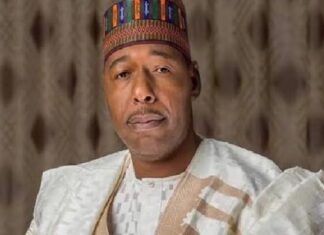
The National Chairman and Coordinator of Team Prosper, Shehu Bankole-Hameed, has expressed strong confidence that President Bola Ahmed Tinubu will secure re-election in 2027, insisting that ongoing reforms have placed Nigeria on a path of sustainable growth.

In an interview, Bankole-Hameed dismissed claims by opposition parties that the ruling All Progressives Congress (APC) has failed to meet public expectations. He argued that recent economic policies, including the removal of fuel and foreign exchange subsidies, are necessary steps toward transparency and long-term stability.

According to him, critics who yearn for previous economic structures are ignoring the benefits of a more inclusive and sustainable system. He maintained that Nigeria is on a “sound footing,” despite current economic challenges.

Assessing the administration’s performance, Bankole-Hameed said Tinubu assumed office at a time of declining investor confidence and mounting economic pressures. He noted that reforms introduced by the government have restored credibility and attracted recognition from international financial institutions.

“While the reforms are yet to fully mature, progress is evident,” he said, adding that short-term hardship is often part of broader economic transformation.

On concerns about multiple pro-Tinubu groups operating without coordination, the Team Prosper coordinator described such activities as part of political mobilisation rather than premature campaigning. He stressed that his organisation is focused on promoting the administration’s achievements and message of inclusiveness.

Responding to allegations that the APC is behind internal crises in opposition parties such as the Peoples Democratic Party (PDP), Labour Party (LP), New Nigeria Peoples Party (NNPP), and African Democratic Congress (ADC), he described the claims as unfounded.

He argued that internal challenges within opposition parties stem from their own structural weaknesses, not interference from the ruling party.

On insecurity, Bankole-Hameed acknowledged that the situation remains a major concern, describing it as “the elephant in the room.” He, however, suggested that the issue is less about lack of intelligence and more about insufficient action against known actors within the system.

He called for stronger collaboration between federal and sub-national authorities, including faster implementation of decentralised policing structures.

Addressing speculation about the role of Vice President Kashim Shettima ahead of 2027, he urged caution and warned against creating unnecessary political tension. He described Shettima as “responsible” and advised that he should be allowed to continue in his current role without distractions.

On the possibility of a united opposition, Bankole-Hameed said while such a coalition could pose a challenge, it remains unlikely due to a lack of coordination and strategic planning among rival parties.

He concluded that electoral victory in 2027 would depend on preparation, discipline, and consistency, expressing confidence that the APC is well-positioned to retain power.

OGUN EAST ON THE BRINK: INSIDE THE “KANGAROO” ENDORSEMENT OF DAPO ABIODUN AND THE RISING IJEBU RESISTANCE

0

The so-called endorsement of Governor Dapo Abiodun as senatorial candidate for Ogun East is not just controversial, it is politically combustible, procedurally suspect, and dangerously destabilizing. What played out in Ijebu-Ode bears all the hallmarks of a premeditated imposition rather than a democratic consensus. In political terms, this was not an endorsement; it was an orchestration.

Ogun East, historically a politically sophisticated and culturally cohesive bloc, is now witnessing a dangerous escalation. Reports emerging from the APC stakeholders’ meeting in Ijebu-Ode suggest that the process was hijacked by loyalists and appointees of the governor, effectively shutting out dissenting voices, most notably that of the sitting senator, Gbenga Daniel (OGD).

The optics alone are troubling, a serving senator, former governor, and ranking political figure was allegedly prevented from participating in a meeting within his own constituency. That is not just disrespect it signals a breakdown of internal party democracy.

The reaction from the grassroots has been swift and fierce. Under the umbrella of the Ijebu-Remo Youth Forum, there is a clear, unified position, the Ogun East senatorial seat is not negotiable.

Their support for Gbenga Daniel is rooted not only in his political pedigree but also in his deep cultural legitimacy within Ijebuland. As a member of the Awujale Royal Court and holder of the Otunba Obalofin title, OGD occupies a rare intersection of politics and tradition something that cannot be manufactured through political maneuvering.

For many in Ijebu, this is no longer just politics; it is about identity, heritage, and autonomy.

More alarming are allegations of physical violence and security breaches during the endorsement event. Names like Biyi Adeleye, “Danku,” Tunde Diya and others have surfaced in connection with attacks, including an alleged assault on a DSS official in Ijebu-Ode.

Political thuggery is not new in Nigeria, but the reported targeting of a state security operative elevates the issue from partisan conflict to a full-blown security crisis. The comparison with the tragic killing of an Area Commander in Ijebu-Ife is not incidental it is a warning sign. Ogun East has seen this script before, and the consequences were severe.

Calls for arrest, blacklisting, and even monitored parole for the alleged perpetrators reflect the depth of anger and the demand for accountability.

Beyond the immediate crisis lies a broader question about Governor Abiodun’s political future. Critics are already framing his senatorial ambition as both ethically and legally questionable, citing unresolved controversies surrounding his past ranging from alleged financial improprieties abroad to discrepancies in official records.

Whether these claims hold in court is secondary to their political impact, they erode trust and provide ammunition to opponents within and outside the party.

For a candidate seeking endorsement, perception is everything and right now, the optics are damaging.

The All Progressives Congress faces a defining moment in Ogun State. If the party leadership validates what many are calling a “kangaroo endorsement,” it risks alienating a critical voting bloc in Ogun East.

The warning from stakeholders is clear, impose a candidate against the will of the people, and the electoral consequences will be severe.

Ogun East is not just another district, it is a strategic stronghold. Losing it could have ripple effects across the state’s political architecture.

There is still a narrow window to de-escalate. It requires decisive intervention from national leadership, adherence to due process, and a clear repudiation of violence as a political tool.

Failure to act risks pushing Ogun East into a cycle of confrontation that could spiral beyond party politics into broader civil unrest.

At its core, this crisis is about a fundamental question, will Ogun East be allowed to choose its representative, or will that choice be dictated by a few powerful actors?

The answer will not only determine the fate of the APC in the district but also test the resilience of democratic norms in Ogun State.

Right now, the signals from Ijebu are unmistakable this is a battle they are prepared to fight to the end.

~ Olusegun Asegbe For Ijebu-Remo Youths Forum

Nigeria’s Economy Rebounds as Tinubu’s Reforms Drive Growth Above 4% — Edun

0

Nigeria’s economy is showing strong signs of recovery and entering a phase of accelerated growth following sweeping reforms introduced by the administration of President Bola Ahmed Tinubu.

Minister of Finance and Coordinating Minister of the Economy, Wale Edun, disclosed this during a press briefing on the sidelines of the Spring Meetings of the World Bank and the International Monetary Fund (IMF) in Washington, D.C.

Edun explained that the government’s economic policies since 2023 represent a clear departure from short-term fixes, focusing instead on structural reforms designed to ensure long-term stability and resilience.

According to him, the reforms are already yielding results, with economic growth now exceeding four per cent and external reserves rising significantly to nearly $50 billion.

He noted that key policy decisions — particularly the liberalisation of the foreign exchange market and the removal of fuel subsidies — have helped correct longstanding distortions in the economy, enabling it to better withstand global economic pressures.

Despite these gains, the minister acknowledged that inflation remains a major concern, driven by rising energy costs, food supply challenges and transportation expenses. He, however, assured that targeted interventions are being implemented to support vulnerable Nigerians while boosting agricultural production to ease price pressures.

Edun stressed that fiscal discipline remains central to the government’s strategy, with resources now being allocated more efficiently following the elimination of subsidy burdens.

He also pointed to renewed investor confidence, citing major investments such as the Dangote Refinery as evidence of growing private sector participation. Small and medium-scale enterprises, he added, are equally benefiting from reforms aimed at improving the business climate.

Looking ahead, the minister expressed optimism that Nigeria is transitioning into a new economic phase marked by faster growth and increased job creation, especially in critical sectors like power, agriculture, infrastructure and technology.

He further revealed that discussions with global partners at the meetings reflected continued international support for Nigeria’s reform agenda, alongside rising investor interest in key sectors such as energy and agribusiness.

Also speaking, Governor of the Central Bank of Nigeria (CBN), Olayemi Cardoso, said monetary authorities remain aligned with the government’s reform efforts, prioritising stability amid global economic uncertainties.

Cardoso highlighted improvements in exchange rate conditions and external reserves, noting that consistency in policy implementation will be crucial in sustaining investor confidence.

On the banking sector, he disclosed that the ongoing recapitalisation programme has attracted significant investor interest, with about N4.65 trillion already mobilised. Most banks, he said, have met the new capital requirements, positioning them to better support lending and economic expansion.

Both officials expressed confidence that sustained reforms will further stabilise the economy, boost investment and drive long-term growth while improving living standards for Nigerians.

Tinubu Approves New Police Academy Campus in Erinja Ogun, Releases N15bn Grant

0

President Tinubu approves a new Nigeria Police Academy campus in Ogun State with a N15bn grant to boost training and manpower development

Tinubu Approves Police Academy Campus in Ogun with N15bn Funding

President Bola Ahmed Tinubu has approved the establishment of a new campus of the Nigeria Police Academy in Erinja, located in Yewa South Local Government Area of Ogun State, in a move aimed at strengthening police training capacity and addressing the country’s growing security demands.

The decision, announced in a statement on Monday by Bayo Onanuga, Special Adviser to the President on Information and Strategy, also includes the approval of a N15 billion take-off grant to support the immediate development of the new institution.

The initiative aligns with the provisions of the Nigeria Police Academy (Establishment) Act, 2021, which provides for the expansion of the academy’s main campus in Wudil, Kano State, into multiple campuses across Nigeria. The new Ogun facility is expected to significantly boost training capacity as the Nigerian Police Force intensifies recruitment to meet rising manpower needs.

Funding for the project will be drawn from the 2026 allocation of the Tertiary Education Trust Fund, with the N15 billion earmarked for critical infrastructure, academic facilities, student accommodation, and essential training assets required for a modern policing institution.

The choice of Erinja as the host community followed recommendations from a high-level consultative meeting involving key stakeholders, including the Minister of Police Affairs, the Minister of Education, Tunji Alausa, officials of the Federal Ministry of Education, the Inspector-General of Police, and the Executive Secretary of the National Universities Commission.

Deliberations at the meeting focused on factors such as student intake capacity, funding availability, academic quality assurance, and the urgent need to expand the workforce of the Nigerian Police Force. The establishment of the new campus is therefore seen as a strategic step toward enhancing professional training standards and strengthening internal security across the country.

IMF/World Bank Talks: Dangote Pushes Infrastructure, Jobs for Africa’s Growth

Aliko Dangote has reiterated that infrastructure expansion, employment generation, and strong private sector investment are critical drivers of Africa’s economic transformation

IMF/World Bank Meetings: Dangote Champions Infrastructure, Job Creation as Catalysts for Africa’s Economic Growth

Africa’s leading industrialist and President and Chief Executive of the Dangote Group, Aliko Dangote, has reaffirmed the central role of infrastructure development, job creation, and private sector investment in accelerating Africa’s economic transformation.

Dangote made this assertion during a series of high-level engagements with global financial leaders on the sidelines of the recently concluded International Monetary Fund (IMF) and World Bank Spring Meetings in Washington, D.C. The meetings formed part of his ongoing efforts to mobilise investment flows and deepen strategic partnerships within Nigeria’s energy and industrial sectors.

Speaking during a keynote address at the World Bank’s Water Forward event, Dangote emphasised the urgency of scaling private sector participation to reposition water systems as enablers of industrialisation and employment across developing economies. He noted that infrastructure, particularly effective and sustainable water management, remains foundational to inclusive growth and long-term economic resilience.

“Africa’s growth story will be defined by our ability to invest in infrastructure that supports industry, creates jobs, and unlocks productivity across the continent,” Dangote said. “When the private sector is fully engaged, especially in critical areas like water and energy, it becomes a powerful engine for inclusive and sustainable development.”

As part of his engagements, Dangote also held strategic discussions with senior global financial leaders, including World Bank President Ajay Banga, focusing on accelerating capital inflows into Africa’s industrial sector. He stressed that rapid industrialisation is vital to strengthening economic resilience, promoting diversification, and reducing the continent’s exposure to external shocks.

Dangote further outlined the Group’s Vision 2030 strategy, which targets the significant expansion of operations across the Dangote Refinery, Fertiliser and Petrochemical Complex, and other business units, with the goal of achieving annual revenues of US$100 billion. According to him, the strategy reinforces the Group’s long-standing commitment to Africa-led industrial growth and sustainable development.

Reiterating his position, Dangote underscored that robust private sector participation—backed by reliable infrastructure—is essential to unlocking the economic value of water resources and advancing inclusive development across Africa.

The World Bank event attracted a distinguished audience, including heads of government, the United Nations Secretary-General, leaders of European development institutions, and representatives of multilateral development partners.

If you’d like, I can tighten this further for wire distribution, adapt it to an IMF-only framing, or localise it more strongly for Nigerian media.

From 9 A1s to Law School First Class… The Stunning Rise of Emmanuel Oyelami

25-year-old Emmanuel Oyelami earns First Class at the Nigerian Law School, continuing a record of excellence from WASSCE to the University of Ibadan

Meet Emmanuel Oyelami, 25-Year-Old Nigerian Who Earned First Class at Law School

At just 25, Emmanuel Oyelami Timileyin has etched his name among Nigeria’s brightest young scholars, following his remarkable achievement of a First Class at the Nigerian Law School in 2026. His latest academic triumph has sparked widespread admiration across social media platforms, with an outpouring of congratulatory messages on X, Facebook, and Instagram celebrating a journey defined by consistency, discipline, and excellence.

For many who have followed his academic path, Oyelami’s success comes as no surprise. Over the years, he has steadily built a reputation for exceptional performance, demonstrating an unwavering commitment to his studies from his early days in secondary school through university. His story, now widely circulating online, reflects not just a moment of achievement but a pattern of excellence that has long been in motion.

Born on September 29, 2000, and hailing from Oyo State, Oyelami began laying the foundation for his success at Saint Francis Catholic College, Oyo. It was there that he first drew attention for his academic brilliance, recording an outstanding nine A1s in the 2016 West African Senior School Certificate Examination. His distinctions spanned a wide range of subjects, including English Language, Mathematics, Government, Literature-in-English, Yoruba, French, Civic Education, Christian Religious Studies, and Dyeing and Bleaching—an early signal of the intellectual depth that would later define his academic career.

His transition to the University of Ibadan further cemented his status as a standout scholar. Graduating in 2024 with a First Class (LL.B), Oyelami distinguished himself as the best graduating student in International Law and Jurisprudence within the Faculty of Law, a feat that underscored both his intellectual rigor and his passion for legal scholarship.

The progression from a stellar secondary school record to top-tier university performance and now a First Class at the Nigerian Law School tells the story of a young man who has methodically carved his path to success. His achievements reflect years of hard work, strategic focus, and an unrelenting pursuit of excellence rather than any stroke of luck.

Beyond personal accomplishment, Oyelami’s journey resonates as a broader symbol of the immense potential within Nigeria’s educational system. His success highlights how dedication, when matched with quality institutional support, can position Nigerian students to compete and excel on both national and global stages.

As his story continues to inspire conversations across the country, Oyelami stands as a testament to what is possible when talent is nurtured with discipline and ambition. His rise not only celebrates individual brilliance but also reinforces the promise of a new generation of Nigerians ready to make meaningful contributions to the global knowledge economy.

Malami Trial Update: Court Admits EFCC Exhibits in N8.7bn Money Laundering Case

0

A Federal High Court in Abuja admits nine EFCC exhibits in the N8.7bn money laundering trial involving ex-AGF Abubakar Malami, his wife, and son

Malami Trial Heats Up as Court Admits Key EFCC Evidence in N8.7bn Case

Proceedings in the trial of former Attorney-General of the Federation and Minister of Justice, Abubakar Malami, gathered fresh momentum on Monday as a Federal High Court sitting in Maitama, Abuja, admitted nine documentary exhibits tendered by the Economic and Financial Crimes Commission.

The presiding judge, Joyce Abdulmalik, admitted the documents—marked Exhibits D1 to D9—despite objections from defence counsel, clearing the path for a deeper judicial examination of financial records linked not only to Malami but also to his wife, Hajia Bashir Asabe, and his son, Abubakar Abdulaziz Malami.

The EFCC is prosecuting the defendants on an amended 16-count charge bordering on conspiracy, concealment, and laundering of alleged illicit funds totaling over N8.7 billion, in violation of the Money Laundering (Prevention and Prohibition) Act, 2022. The development marks a critical phase in the high-profile trial, with financial documentation now formally before the court.

The exhibits were introduced through a compliance officer with Zenith Bank, Mashelia Arhyel Bata, who informed the court that the documents were supplied in response to official EFCC requests. According to him, the bank provided comprehensive records—both hard copies and electronic data—covering accounts associated with the defendants and several companies, including Rayhaan Hotels Limited, Rayhaan Bustan Agro Allied Limited, Nashab Limited, Golden Age Global Ventures, and Rahamaniyya Properties Limited.

Under examination by prosecution counsel J. S. Okutepa, SAN, the witness detailed the breadth of the financial records, explaining that they spanned transactions from 2012 to 2023 and captured movements across both naira and dollar-denominated accounts. He revealed that one account alone recorded hundreds of millions of naira in inflows and outflows, with significant transactions such as N194.7 million received in November 2020 from New Horizons Limited and N622.5 million in June 2022 from Rayhaan Bustan Agro Allied Limited. Additional inflows of N250 million each were traced to Rayhaan Hotels Limited in July 2022, alongside a N500 million credit recorded in December of the same year.

Bata further confirmed that the accounts remained consistently active over several years, with transaction trails running into billions of naira, underscoring the scale of financial activity now under scrutiny.

Following the testimony, defence counsel J. B. Daudu, SAN, requested time to review the newly admitted exhibits in preparation for cross-examination, a request the court granted.

Justice Abdulmalik subsequently adjourned the matter to May 13, 2026, for continuation of trial, setting the stage for what is expected to be an intense legal contest as both sides prepare to interrogate the financial evidence now central to the case.

Details… Wema Bank Meets Central Bank of Nigeria’s Recapitalisation, Retains National Banking License

0

By Lukman OMIKUNLE

Wema Bank has successfully met and surpassed the Central Bank of Nigeria’s (CBN) recapitalisation requirements, reaffirming its status as a National bank

Details… Wema Bank Meets Central Bank of Nigeria’s Recapitalisation, Retains National Banking License

Wema Bank, Nigeria’s oldest indigenous national bank and pioneer of Africa’s first fully digital bank, ALAT, has successfully met and surpassed the Central Bank of Nigeria’s (CBN) recapitalisation requirements, reaffirming its status as a National bank. This achievement represents a critical milestone in the Bank’s growth journey, reflecting its ability to meet regulatory expectations and its deliberate strategy to scale sustainably, strengthen its balance sheet, and reinforce its position within Nigeria’s banking sector.

The milestone follows the Bank’s successful completion of a ₦150 billion Rights Issue and an additional ₦50 billion special placement in 2025, bringing its Total Qualifying Capital to ₦264.7 billion, well above the regulatory minimum. This achievement was concluded six months ahead of the CBN’s stipulated deadline, further reinforcing the Bank’s strong financial position, shareholder confidence, and long-term growth trajectory.

Earlier in April 2026, the Central Bank of Nigeria also formally confirmed that Wema Bank, alongside 32 other financial institutions across international, national, and regional categories, had successfully concluded the recapitalisation process. Notably, Wema stands among only ten national banks that met and surpassed the minimum required capital threshold, thereby sustaining its national banking license.

This milestone not only affirms regulatory compliance but also signals a new phase of accelerated growth for the Bank; one defined by stronger capital base, increased capacity to support customers, and a reinforced position within Nigeria’s competitive banking landscape.

Commenting on the milestone, the Managing Director/Chief Executive Officer of Wema Bank, Moruf Oseni, stated, “The successful completion of our recapitalisation exercise is a defining moment for Wema Bank. It is a strong validation of our strategy, our performance, and the enduring confidence our shareholders and stakeholders have in our vision. We have not only met the CBN’s requirements; we have exceeded them, reinforcing our position as a National Bank with the scale, strength, and stability to compete and lead.”

In March 2024, the Central Bank of Nigeria announced the recapitalisation programme requiring all national banks to maintain a minimum capital base of ₦200 billion. The initiative was designed to strengthen the resilience of financial institutions, enhance their capacity to absorb economic shocks, and position them to drive sustainable economic growth.

In response, Wema Bank embarked on a strategic capital raise through the stock market, successfully strengthening its shareholder base and securing the required capital through strong participation from existing investors. The ₦150 billion Rights Issue, which opened on April 14, 2025, and closed on May 21, 2025, marked a significant step in this journey. This was subsequently complemented by a ₦50 billion special placement later in the year, ensuring the Bank not only met but exceeded the regulatory threshold well ahead of schedule.

For Wema Bank, this journey is a testament to its transformation. After regaining its national license in 2015, the Bank has consistently demonstrated financial discipline and strategic foresight. By raising the necessary capital primarily from existing shareholders, the Bank has underscored a deep-seated mutual trust between the institution and its investors.

Speaking further on what this achievement means for the Bank’s future and its customers, Oseni added: “This milestone strengthens our ability to compete at scale, deepen our market presence, and deliver more value to our customers across Nigeria through improved access to credit, enhanced digital banking experiences, and innovative financial solutions. It positions us to play an even bigger role in powering Nigeria’s economy while continuing to deliver sustainable value to all our stakeholders.

 Looking ahead, we remain focused on deepening our market presence, driving customer-centric innovation, and strengthening our role as a catalyst for growth across retail, SME, and corporate segments. This is not just about retaining our license; it is about building a bigger, stronger, and more impactful Wema Bank.”

The successful conclusion of the recapitalisation process underscores Wema Bank’s financial strength, disciplined execution, and unwavering commitment to regulatory compliance as it continues to expand its footprint across Nigeria. With a significantly strengthened capital base, the Bank is now positioned to do more – support more customers, enable more businesses, and unlock more opportunities across every segment it serves.

As it enters this new phase, Wema Bank is not only reaffirming its status as a National Bank; it is stepping forward with greater scale, sharper ambition, and a clear intent to lead. The Bank remains firmly committed to powering progress, driving innovation through ALAT, and delivering sustained value; powering a future of possibilities for all its stakeholders.

Don Jazzy Clashes with Gen Z Artists Over Social Media Promotion Habits

Ace music executive Michael Collins Ajereh, popularly known as Don Jazzy, has opened up about the challenges he faces managing Gen Z artists under his label, Mavin Records.

Speaking on an episode of the Who’s In The House podcast, the industry heavyweight revealed that one of his biggest struggles is getting younger artists to actively promote their music on social media.

According to him, many Gen Z artists are hesitant to frequently share their work online, as they prioritize maintaining a visually appealing and carefully curated social media presence.

“A lot of them don’t want to post their music excessively because they are trying to keep a clean page,” he explained.

Don Jazzy noted that this reluctance often leads to disagreements between him and his artists, particularly those who are already established in the industry. He added that the issue extends beyond his signed acts, citing similar concerns with younger creatives within his circle.

“I fight with my artists all the time because of their reluctance to post their musical contents on their social media pages. I’m also fighting with my niece, who is into entertainment, for the same issue,” he said.

The veteran producer questioned the mindset behind the trend, expressing confusion over why many Gen Z creatives shy away from consistently promoting their own work online.

“I don’t know who told Gen Z that it is not okay to post your work excessively on social media. They want to keep a clean page and don’t want to promote themselves,” he added.

He also referenced Ayra Starr, noting that the singer has at times attributed her hesitation to imposter syndrome.

Don Jazzy ultimately encouraged artists to take advantage of social media platforms by consistently showcasing their work, stressing that visibility remains a key factor in building a successful music career.

Inside the Rise of Gbolahan Oki, Newly Installed Ogboni Iduntafa… A Prominent Lagos Kingmaker

0

By Lukman OMIKUNLE

From architect to kingmaker, discover the life, career, and influence of Gbolahan Oki, newly installed Ogboni Iduntafa of Lagos

All You Need to Know About Gbolahan Oki, New Ogboni Iduntafa of Lagos

Arc. Gbolahan Owodunni Oki has stepped into a historic and culturally significant role as the Ogboni Iduntafa of Lagos, also known as the Onilegbale of Lagos, marking a defining moment that bridges modern governance and deep-rooted tradition in Nigeria’s commercial capital. His installation as a First Class Akarigbere Royal Class Chief and Kingmaker, under the authority of Oba Rilwan Akiolu, not only elevates his status within the Lagos traditional council but also reinforces his longstanding influence across public service, architecture, and urban development.

Born on March 23, 1968, into the respected Oki family of Lagos Island, Gbolahan Oki’s early life was shaped by discipline and a strong educational foundation. His formative years at Yaba Model Primary School and Ansar-Ud-Deen Grammar School set the stage for an academic journey that would define his career. He pursued A-Level studies at Anwar-Islam College before earning an OND in Architecture from Yaba College of Technology. His academic pursuit culminated at the University of Jos, where he obtained both his Bachelor’s and Master’s degrees in Architecture, equipping him with the technical and creative expertise that would later define his professional trajectory.

Oki’s career began in the private sector at Point Architect Consultants, where he rose to the role of Project Architect and led key developments across Abuja and Lagos, including high-profile residential and commercial projects in Victoria Island, Magodo, and Osborne Estate. However, his transition into public service in 2000 marked the beginning of a far-reaching impact on Lagos’ built environment. As Architect I in the Ministry of Works, he contributed to major government projects, including the renovation of official residences tied to the state’s leadership.

Over the next decade, Oki became a central figure in Lagos’ urban transformation efforts, working with agencies such as LASURA and LASPPPA to drive regeneration initiatives and enforce planning standards. His leadership in projects like the Isale-Gangan multi-storey residential development and his involvement in shaping the Lagos Building Code positioned him as a key technocrat in the state’s development ecosystem.

His rise through the ranks continued at the Lagos State Building Control Agency, where he served as Assistant Director and later as General Manager of Lagos State Building Control Agency. Under his stewardship, LASBCA underwent significant reforms, including surpassing revenue targets, modernizing compliance systems with QR-coded green stickers, and decentralizing enforcement across Lagos divisions. His introduction of the Certified Accreditors Programme strengthened collaboration between the public and private sectors, while the rapid delivery of the agency’s green headquarters showcased his commitment to efficiency and sustainability.

Oki’s influence extended beyond structural development into resilience planning when he joined the Lagos State Resilience Office. As the state’s first indigenous Chief Resilience Officer, he played a pivotal role in crafting and implementing the Lagos Resilience Strategy, particularly during the COVID-19 pandemic, where strategic partnerships and adaptive planning became critical to the city’s survival and recovery.

A Fellow of the Nigerian Institute of Architects and a registered member of ARCON, Oki’s professional credentials reflect decades of dedication to architectural excellence and regulatory advancement. His recent appointment as Permanent Secretary in the Office of Urban Development further underscores his central role in shaping Lagos’ future, as he oversees policy implementation, infrastructure growth, and sustainable urban expansion.

Beyond his professional life, Oki is known for his mentorship of young architects, advocacy for compliance in the built environment, and his personal passions for music and travel. He remains deeply grounded in family life, married to Mrs. Aina Owodunni-Oki, with children and a grandchild.

Now, as Ogboni Iduntafa of Lagos, Oki occupies a revered traditional position that carries both spiritual and political significance. As a Paramount White Cap Chief and Kingmaker, his voice will contribute to the selection and guidance of Lagos’ monarchy, embedding him firmly within the custodianship of the city’s heritage. His appointment, officially gazetted and recognized in early 2026, signals a convergence of technocratic excellence and traditional authority, reinforcing his legacy as a man whose influence spans boardrooms, construction sites, and royal courts alike.